Is Level IIB Dissection Necessary in the Clinically N0 Neck? A Systematic Review and Meta-Analysis in Head and Neck Squamous Cell Carcinoma
Systematic review and meta-analysisBenefit found
Is level IIB dissection necessary in clinically node-negative head and neck squamous cell carcinoma?
Who
Adult patients with clinically node-negative laryngeal, oral cavity, oropharyngeal, or hypopharyngeal squamous cell carcinoma
Compared
1.7%Laryngeal squamous cell carcinoma
1.2%Oral cavity squamous cell carcinoma
2.6%Oropharyngeal squamous cell carcinoma
2.5%Hypopharyngeal squamous cell carcinoma
Main outcome
Prevalence of level IIB metastasis by tumor subsite
Bottom line: Level IIB dissection may not be necessary in selected low-risk patients due to consistently low metastasis prevalence.
Head Neck · 2026-07-13Download image
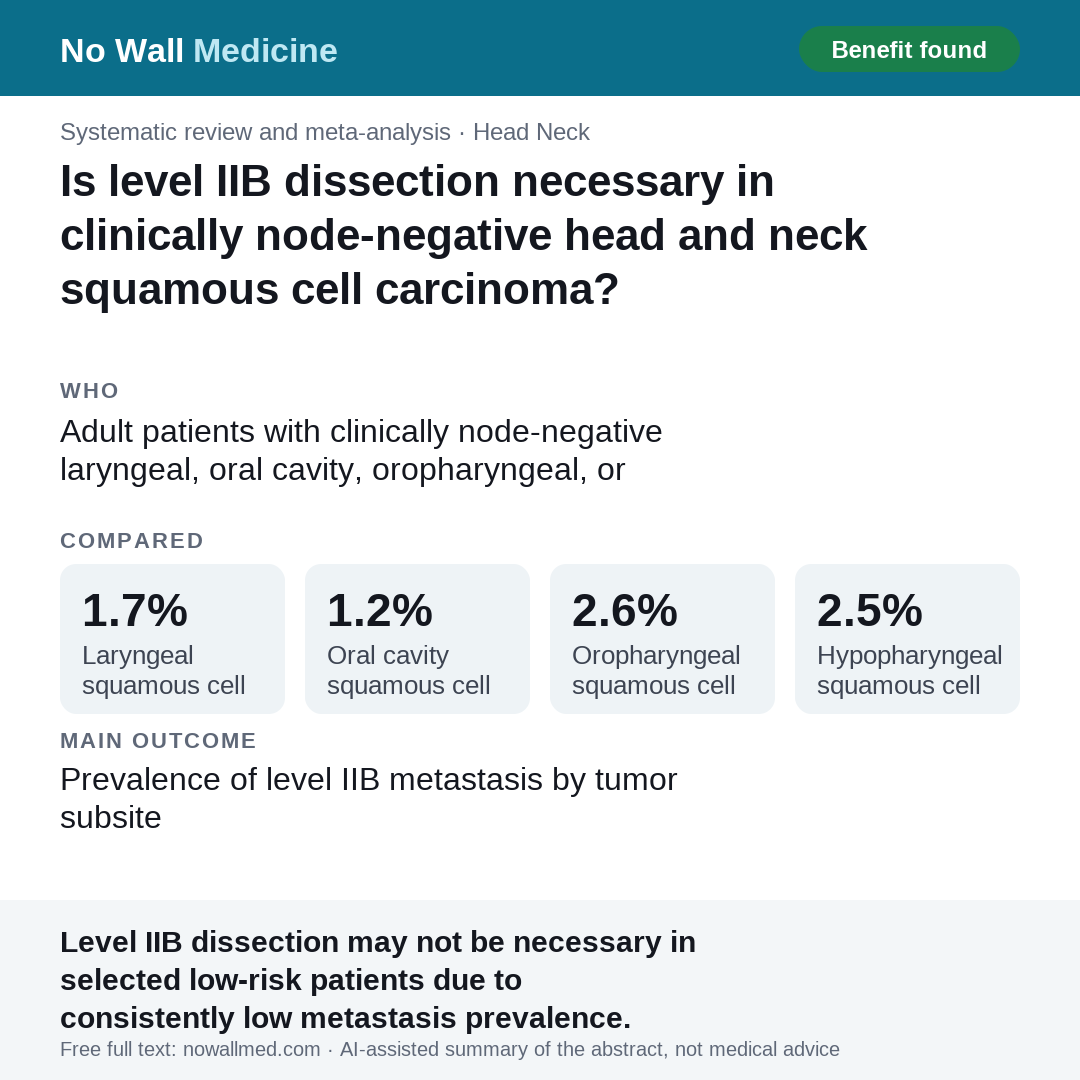
Clinical question: Is level IIB dissection necessary in clinically node-negative head and neck squamous cell carcinoma?
Abstract
Background
The management of sublevel IIB during elective neck dissection (END) for clinically node-negative (cN0) head and neck squamous cell carcinoma (HNSCC) remains debated. Although level IIB metastases are considered uncommon, omission of this sublevel must be balanced against the risk of undertreating occult node metastasis and the potential morbidity related to spinal accessory nerve (SAN) manipulation. Methods
A systematic review was conducted according to PRISMA 2020 guidelines. Embase, PubMed, Scopus, and Cochrane Library were searched for studies published until April 30, 2026. Eligible studies included adult patients with cN0 laryngeal (LSCC), oral cavity (OCSCC), oropharyngeal (OPSCC), or hypopharyngeal squamous cell carcinoma (HSCC) undergoing END with level-specific pathological assessment, including sublevel IIB. A random-effects meta-analysis of proportions was performed to estimate the pooled prevalence of level IIB metastases by tumor subsite. Results
Thirty-five studies were included. The pooled prevalence of level IIB metastasis was 1.7% for LSCC, 1.2% for OCSCC, 2.6% for OPSCC, and 2.5% for HSCC. Across subsites, level IIB showed consistently lower metastatic involvement than adjacent nodal levels. In LSCC and OCSCC, exploratory study-level stratification suggested persistently low level IIB involvement even in cohorts enriched with advanced-stage tumors. SAN-related morbidity was inconsistently reported, with available studies showing rates up to 4%, and postoperative shoulder impairment reported in up to 2% of dissections. Conclusions
Level IIB demonstrates a consistently low prevalence of occult metastasis in cN0 HNSCC, particularly in LSCC and OCSCC. These findings suggest that routine level IIB dissection may not be necessary in carefully selected low-risk patients. Surgical decision-making should be individualized according to tumor subsite, stage, and intraoperative findings.
Topics
Spotted a mistake? Suggest a correction