Isoflurane sedation did not improve oxygenation compared to propofol in patients with respiratory failure
Isoflurane vs. propofol for sedation in invasively ventilated patients with acute hypoxemic respiratory failure: an a priori hypothesis substudy of a randomized controlled trial
Randomized, multicenter, hypothesis substudyNo clear difference
Does isoflurane improve oxygenation compared to propofol in patients with acute hypoxemic respiratory failure?
Who
162
Invasively ventilated patients with acute hypoxemic respiratory failure · Multicenter
Compared
Isoflurane: 199±58 to 219±76 mmHg
Propofol: 202±62 to 236±77 mmHg
Main outcome
Change in ratio of arterial pressure of oxygen to inspired fraction of oxygen
Bottom line: In patients with acute hypoxemic respiratory failure, isoflurane sedation did not improve oxygenation compared to propofol sedation.
Ann Intensive Care · 2022-12-20 · Save PNG
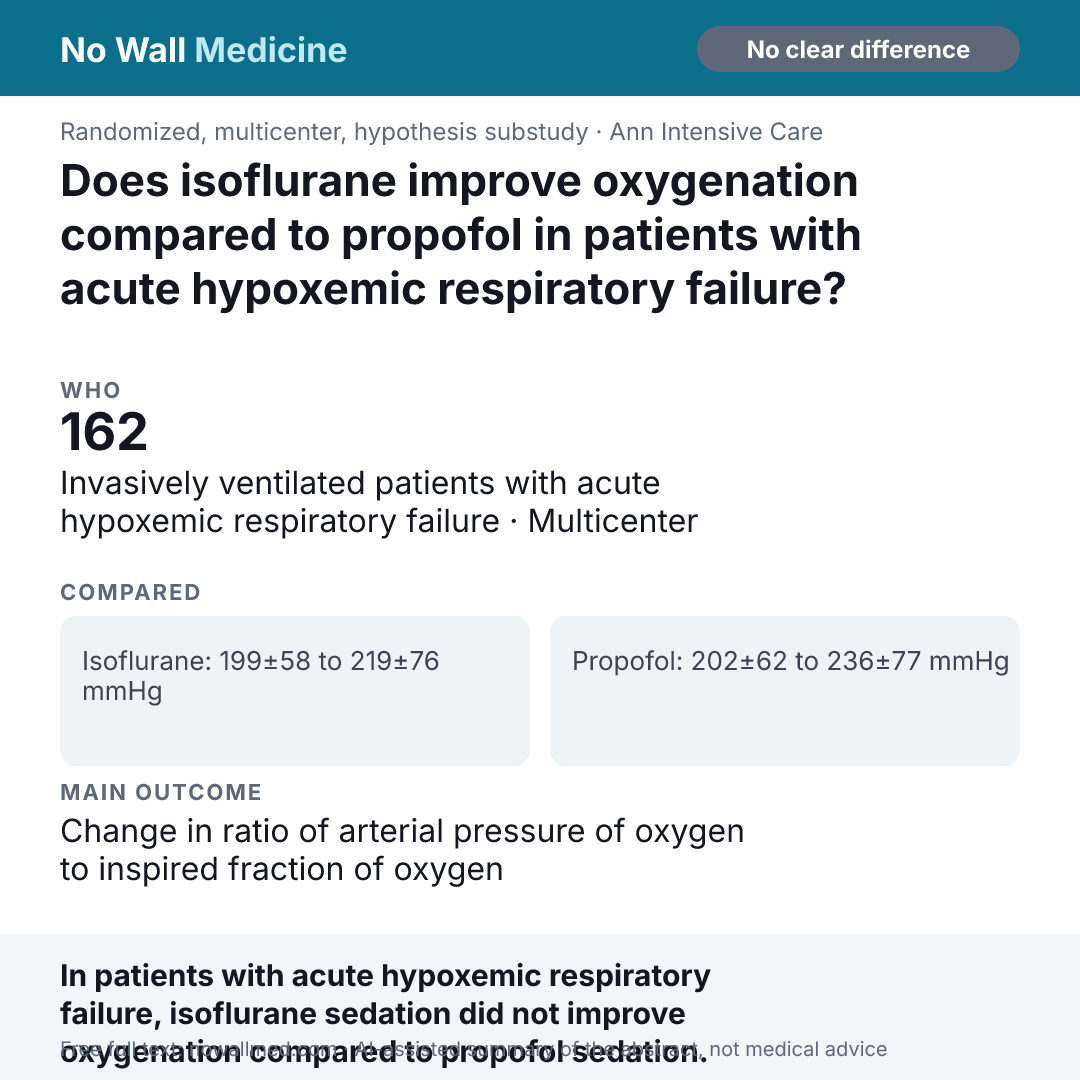
Clinical question: Does isoflurane improve oxygenation compared to propofol in patients with acute hypoxemic respiratory failure?
Key points
- Researchers studied 162 patients on mechanical ventilation who were randomized to receive 48 hours of either isoflurane, an inhaled anesthetic, or propofol, an intravenous sedative.
- The change in the ratio of arterial oxygen to inspired oxygen between baseline and 48 hours was similar for isoflurane (199 ± 58 to 219 ± 76 mmHg) and propofol (202 ± 62 to 236 ± 77 mmHg).
- No significant differences were found between groups for carbon dioxide levels, blood pH, tidal volume, 30-day mortality, or ventilator-free days alive.
Headline and key points written with AI from the paper’s abstract, with every number checked against it. Read the paper before relying on them.
Was this summary helpful?
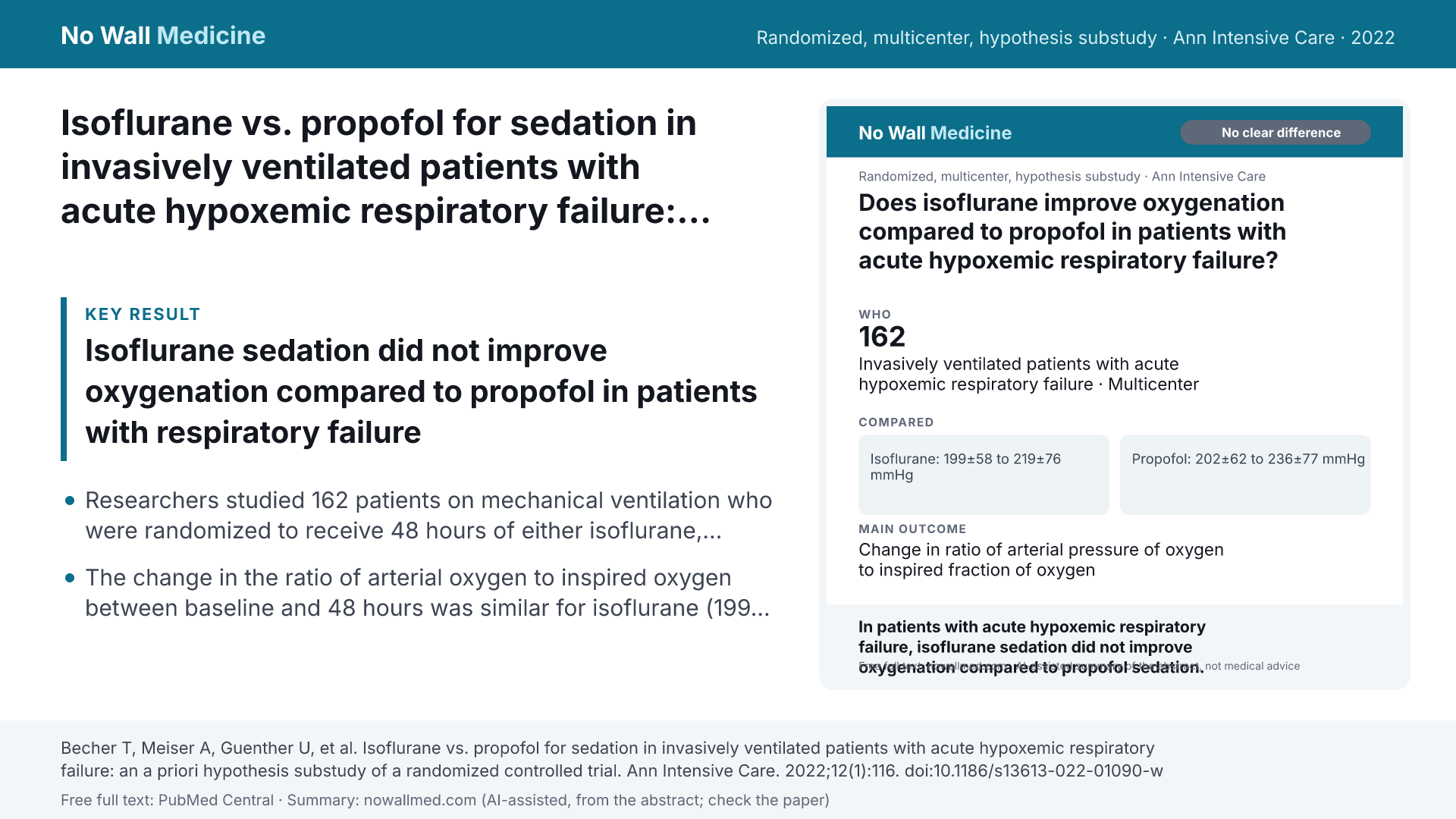
Headline, design, result, key points, caveat and citation as plain text.
Cite this article
Becher T, Meiser A, Guenther U, et al. Isoflurane vs. propofol for sedation in invasively ventilated patients with acute hypoxemic respiratory failure: an a priori hypothesis substudy of a randomized controlled trial. Ann Intensive Care. 2022;12(1):116. doi:10.1186/s13613-022-01090-w
Spotted a mistake? Suggest a correction