Protocol for a trial testing if low-dose ketamine reduces morphine use in trauma patients
Ketamine Low dOse Evaluation on morphine consumption in traumatic patients: study protocol for a randomized, double-blind, placebo-controlled trial (KLOE-Trial)
Randomized, double-blind, placebo-controlled trialUnclear result
Does low-dose intravenous ketamine reduce morphine consumption in traumatic patients?
Who
140
Adult trauma patients with at least two traumatic lesions · single-centre
Compared
ketamine
placebo
Main outcome
cumulative opioid consumption and mean pain intensity
Bottom line: This study protocol describes a trial to evaluate ketamine for opioid reduction in trauma patients.
Limitation: final statistical analyses are ongoing
Scand J Trauma Resusc Emerg Med · 2026-06-17Download image
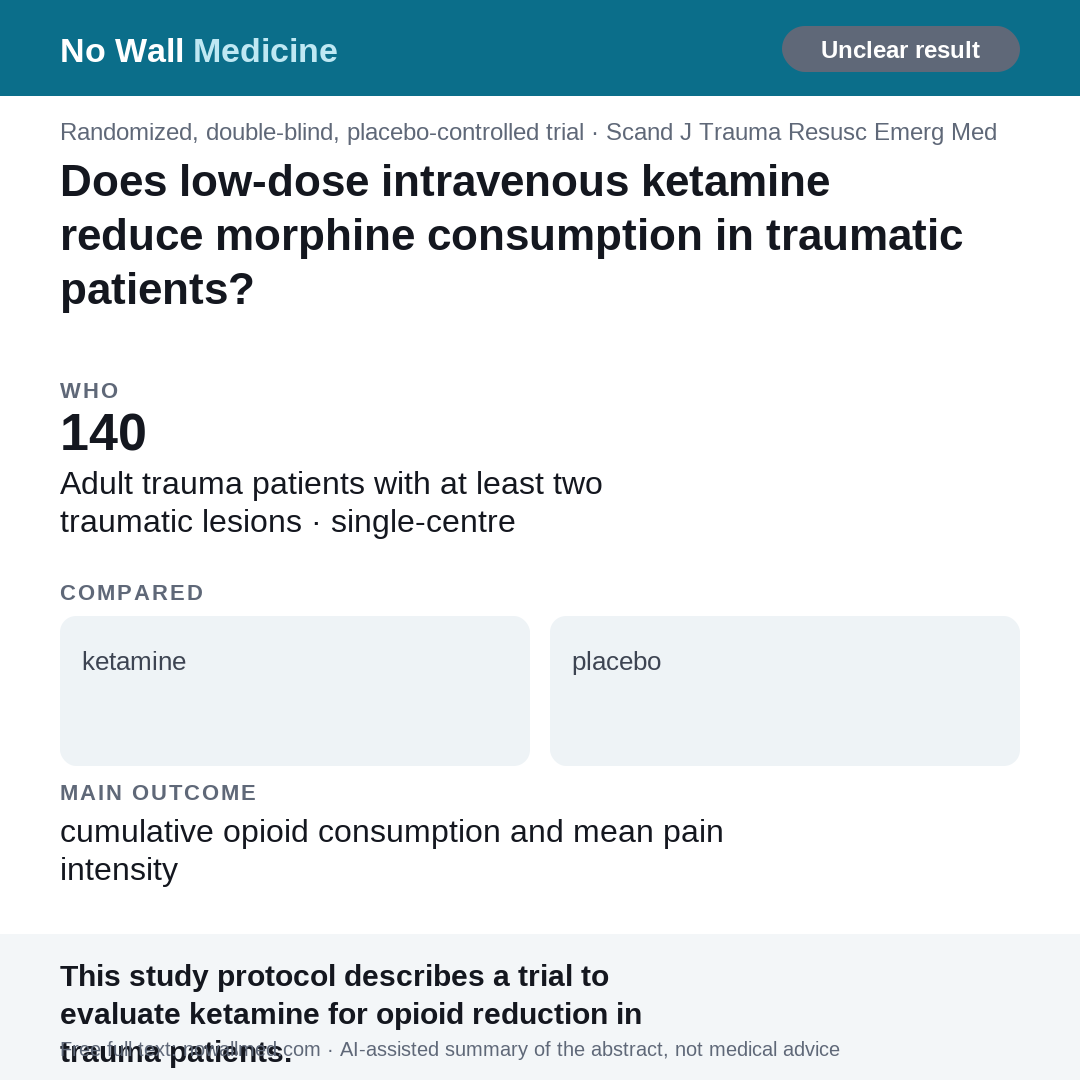
Clinical question: Does low-dose intravenous ketamine reduce morphine consumption in traumatic patients?
Why it matters: Prospective randomized evidence is scarce regarding whether ketamine used as an analgesic adjunct can reduce opioid exposure in critically ill trauma patients.
Key points
- The KLOE trial is a single-centre, randomized, double-blind, placebo-controlled study involving 140 adult trauma patients with multiple injuries.
- Researchers are comparing a ketamine dose of 0.1 mg/kg over 30 min followed by 0.15 mg/kg/h for 48 h against a placebo.
- The study aims to show ketamine is superior for reducing cumulative morphine equivalents and non-inferior for pain intensity over 48 h.
Headline and key points written with AI from the paper’s abstract, with every number checked against it. Read the paper before relying on them.
Topics
Cite this article
Duclos G, Resseguier N, Arbelot C, Pastene B, Zieleskiewicz L, Leone M. Ketamine Low dOse Evaluation on morphine consumption in traumatic patients: study protocol for a randomized, double-blind, placebo-controlled trial (KLOE-Trial). Scand J Trauma Resusc Emerg Med. 2026. doi:10.1186/s13049-026-01649-7
Spotted a mistake? Suggest a correction