E-learning shows similar learning outcomes to conventional psychotherapy training methods in systematic review
Learning Outcomes of e-Learning in Psychotherapy Training and Comparison With Conventional Training Methods: Systematic Review
Systematic reviewNo clear difference
Are e-learning and conventional training methods equivalent for psychotherapy training learning outcomes?
Who
Psychotherapy trainees
Compared
e-learning
conventional training
Main outcome
learning outcomes including trainee experiences, knowledge, skills, and application
Result: overall effect size 0.01
Bottom line: E-learning shows equivalence to conventional training methods for psychotherapy learning outcomes, offering potential for increased accessibility and scalability.
Limitation: high level of heterogeneity in e-learning solutions and assessment methods
J Med Internet Res · 2024-07-29Download image
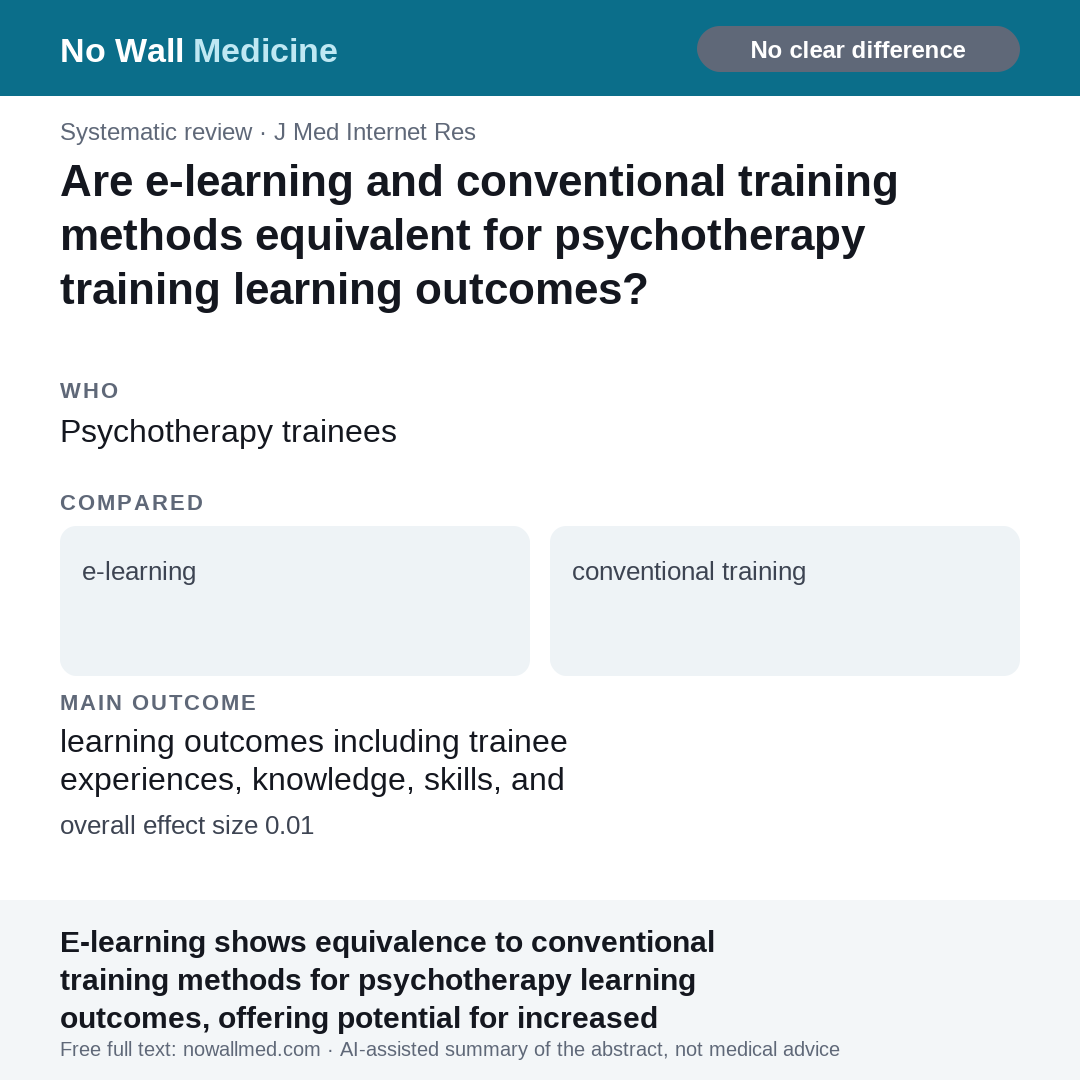
Clinical question: Are e-learning and conventional training methods equivalent for psychotherapy training learning outcomes?
Why it matters: Current psychotherapy training methods are often expensive, time consuming, and dependent on a small number of professionals, creating a gap between the supply and demand for services.
Key points
- Researchers reviewed 34 studies from a search of 3380 publications to compare e-learning with traditional psychotherapy training.
- The review found that e-learning was associated with trainee satisfaction, knowledge, and skill acquisition, showing equivalence to conventional methods.
- The overall effect size was 0.01, which suggests no significant difference between web-based and traditional training.
Limitation the authors note: The existing literature displays a high level of heterogeneity in e-learning solutions and assessment methods.
Headline and key points written with AI from the paper’s abstract, with every number checked against it. Read the paper before relying on them.
Topics
Cite this article
Mikkonen K, Helminen EE, Saarni SI, Saarni SE. Learning Outcomes of e-Learning in Psychotherapy Training and Comparison With Conventional Training Methods: Systematic Review. J Med Internet Res. 2024. doi:10.2196/54473
Spotted a mistake? Suggest a correction
Top studies every Monday
The week’s key trials and guidelines in your specialties, plus any topics you follow. By email, free.
Get the weekly digest