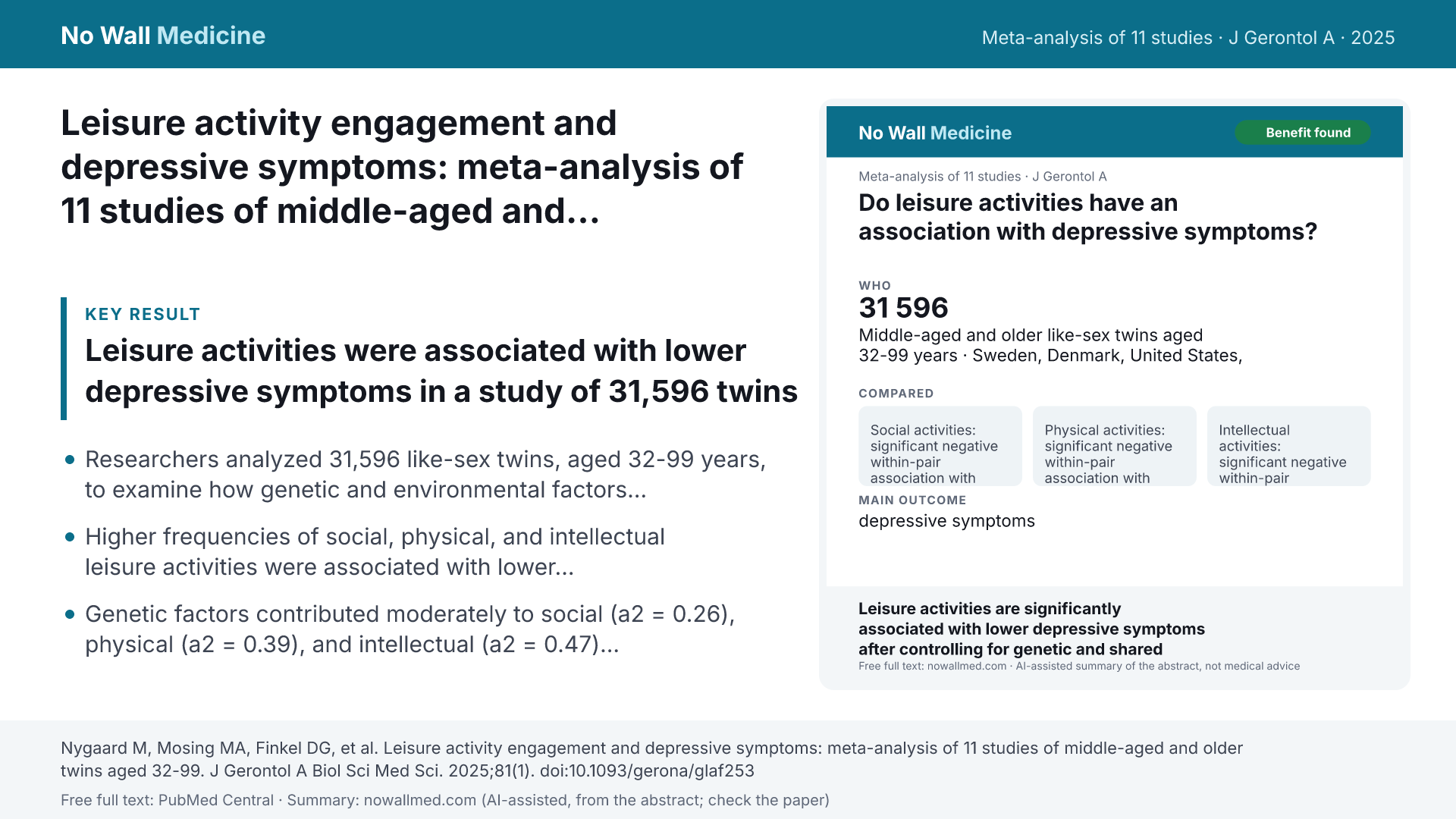
Leisure activities were associated with lower depressive symptoms in a study of 31,596 twins
Leisure activity engagement and depressive symptoms: meta-analysis of 11 studies of middle-aged and older twins aged 32-99
Meta-analysis of 11 studiesBenefit found
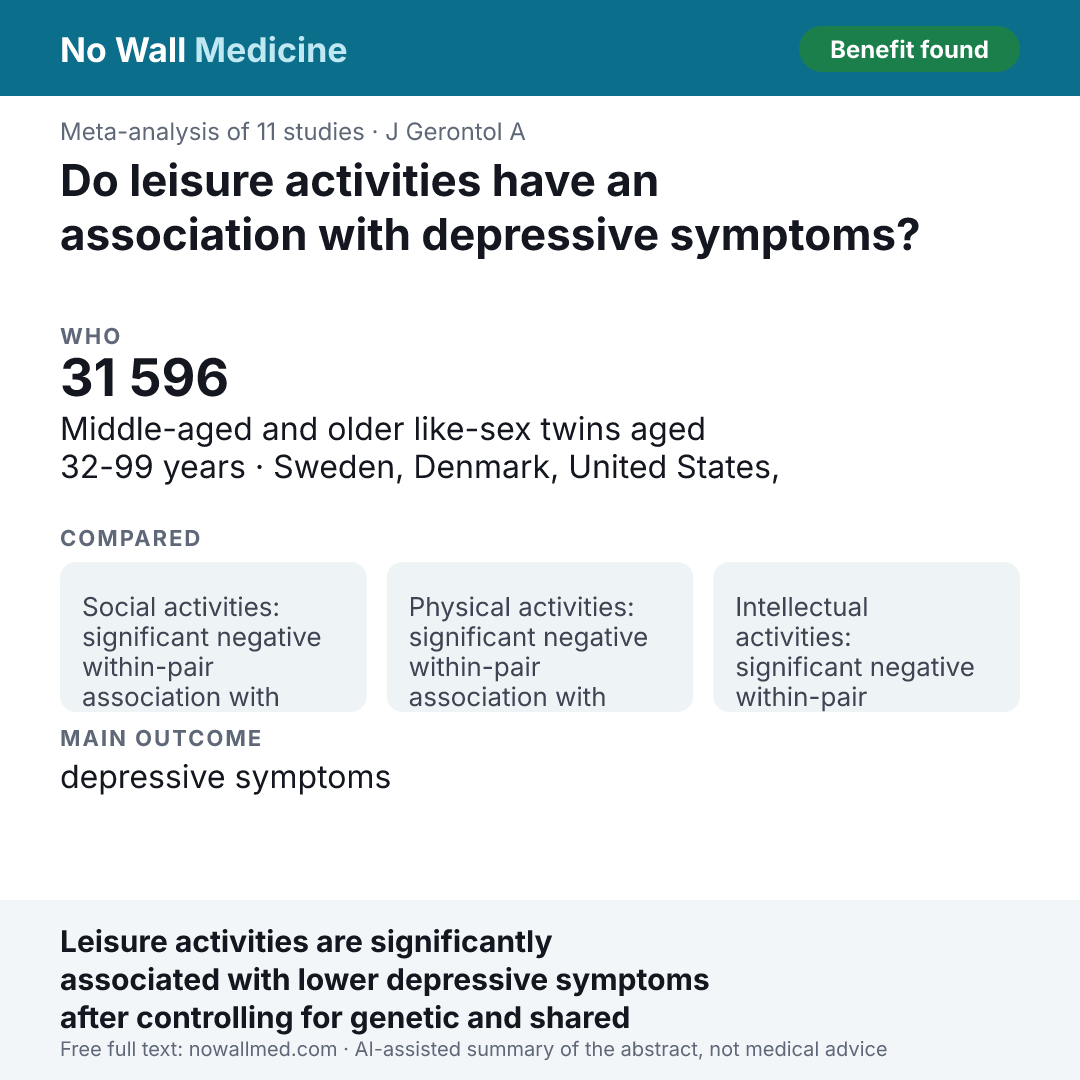
Do leisure activities have an association with depressive symptoms?
Who
31 596
Middle-aged and older like-sex twins aged 32-99 years · Sweden, Denmark, United States, and Australia
Compared
Social activities: significant negative within-pair association with depressive symptoms
Physical activities: significant negative within-pair association with depressive symptoms
Intellectual activities: significant negative within-pair association with depressive symptoms
Main outcome
depressive symptoms
Bottom line: Leisure activities are significantly associated with lower depressive symptoms after controlling for genetic and shared environmental factors.
Limitation: findings are consistent with, albeit not proof of, a causal effect
J Gerontol A · 2025-11-11 · Save PNG
Clinical question: Do leisure activities have an association with depressive symptoms?
Key points
- Researchers analyzed 31,596 like-sex twins, aged 32-99 years, to examine how genetic and environmental factors influence leisure activities and depressive symptoms.
- Higher frequencies of social, physical, and intellectual leisure activities were associated with lower depressive symptoms in co-twin control analyses.
- Genetic factors contributed moderately to social (a2 = 0.26), physical (a2 = 0.39), and intellectual (a2 = 0.47) activity levels.
Headline and key points written with AI from the paper’s abstract, with every number checked against it. Read the paper before relying on them.
Was this summary helpful?
Subject terms
Headline, design, result, key points, caveat and citation as plain text.
Cite this article
Nygaard M, Mosing MA, Finkel DG, et al. Leisure activity engagement and depressive symptoms: meta-analysis of 11 studies of middle-aged and older twins aged 32-99. J Gerontol A Biol Sci Med Sci. 2025;81(1). doi:10.1093/gerona/glaf253
Spotted a mistake? Suggest a correction