Meta-analysis of 3600 patients identifies gene signatures and potential targets for cancer immunotherapy response
Leveraging big data of immune checkpoint blockade response identifies novel potential targets
Comparative meta-analysisBenefit found
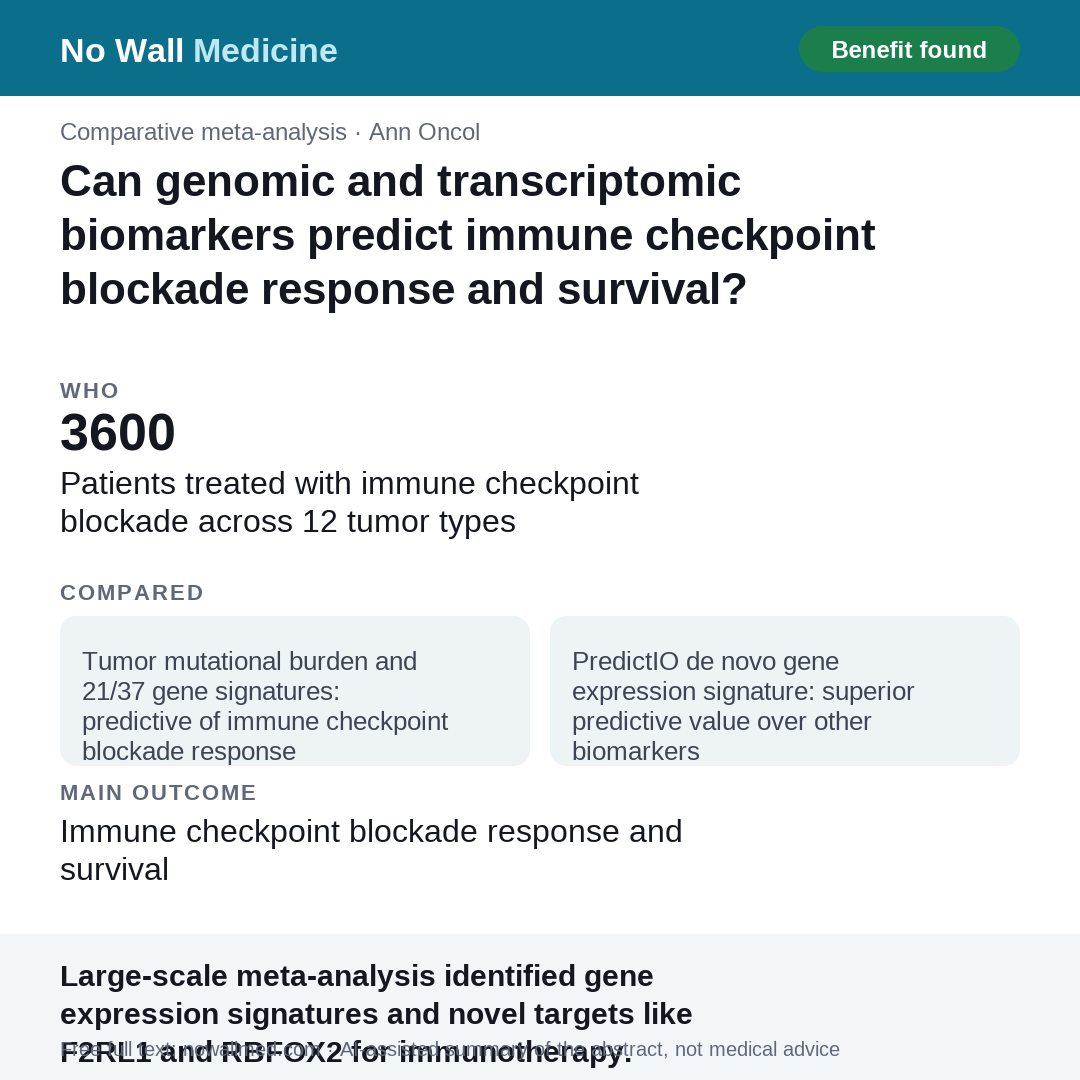
Can genomic and transcriptomic biomarkers predict immune checkpoint blockade response and survival?
Who
3600
Patients treated with immune checkpoint blockade across 12 tumor types
Compared
Tumor mutational burden and 21/37 gene signatures: predictive of immune checkpoint blockade response
PredictIO de novo gene expression signature: superior predictive value over other biomarkers
Main outcome
Immune checkpoint blockade response and survival
Bottom line: Large-scale meta-analysis identified gene expression signatures and novel targets like F2RL1 and RBFOX2 for immunotherapy.
Ann Oncol · 2022-08-30Download image
Clinical question: Can genomic and transcriptomic biomarkers predict immune checkpoint blockade response and survival?
Why it matters: Many patients do not derive clinical benefit from immune checkpoint blockade, and previously identified molecular features have not been investigated in large enough cohorts to be of clinical value.
Key points
- Researchers performed a meta-analysis of over 3600 patients across 12 tumor types to evaluate how tumor mutational burden and gene expression signatures relate to immune checkpoint blockade response.
- The study found that tumor mutational burden and 21 of 37 gene signatures were predictive of immune checkpoint blockade response across different tumor types.
- Two genes, F2RL1 and RBFOX2, were associated with worse clinical outcomes and T-cell dysfunction in patients, as well as resistance to dual PD-1/CTLA-4 blockade in mouse models.
Headline and key points written with AI from the paper’s abstract, with every number checked against it. Read the paper before relying on them.
Was this summary helpful?
Subject terms
Cite this article
Bareche Y, Kelly D, Abbas-Aghababazadeh F, Nakano M, Esfahani PN, Tkachuk D. Leveraging big data of immune checkpoint blockade response identifies novel potential targets. Ann Oncol. 2022. doi:10.1016/j.annonc.2022.08.084
Spotted a mistake? Suggest a correction
Top studies every Monday
The week’s key trials and guidelines in your specialties, plus any topics you follow. By email, free.
Get the weekly digest