Liberal versus restrictive blood transfusion strategies showed no significant difference in mortality after heart attacks
Liberal versus restrictive transfusion strategies in acute myocardial infarction: a systematic review and comparative frequentist and Bayesian meta-analysis of randomized controlled trials
Systematic review and meta-analysis of randomized controlled trialsNo clear difference
Does liberal versus restrictive transfusion strategy impact mortality during acute myocardial infarction?
Who
4324
Participants with acute myocardial infarction
Compared
Liberal transfusion
Restrictive transfusion
Main outcome
90-day mortality following myocardial infarction
Result: risk ratio 1.13 (95% CI 0.67 to 1.91)
Bottom line: Liberal transfusion strategy showed no significant benefit in reducing 90-day mortality compared to restrictive strategy.
Limitation: Low certainty of evidence and results for composite outcomes were driven by a single study.
Ann Intensive Care · 2024-09-28 · Save PNG
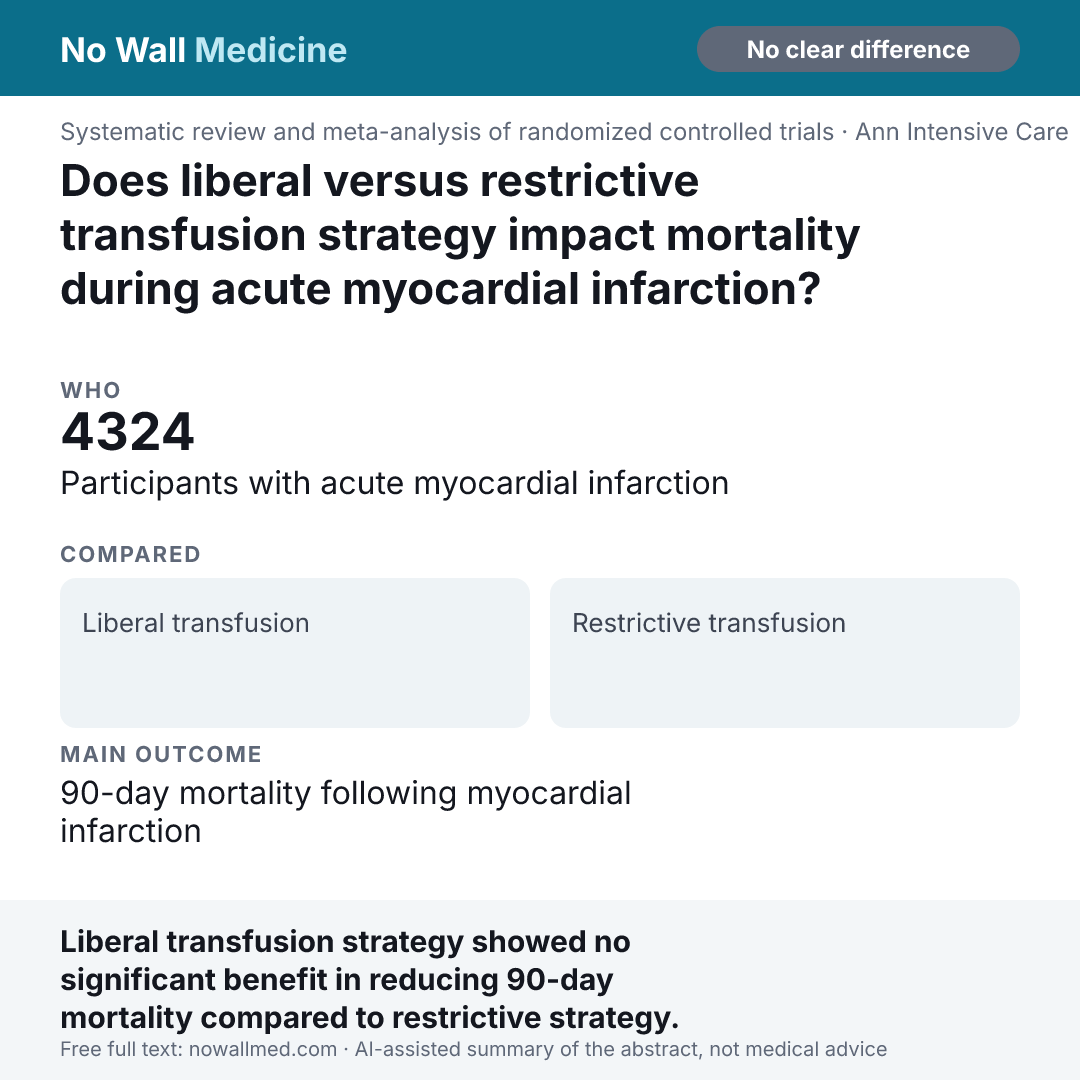
Clinical question: Does liberal versus restrictive transfusion strategy impact mortality during acute myocardial infarction?
Why it matters: Guidelines for blood transfusion strategies during the acute phase of a heart attack are currently non-standardized.
Key points
- Researchers analyzed four randomized controlled trials involving 4324 participants to compare liberal and restrictive blood transfusion strategies during the acute phase of a heart attack.
- Neither fixed-effect nor random-effects models showed a significant reduction in mortality, with risk ratios of 1.16 (95% CI 0.95-1.40) and 1.13 (95% CI 0.67-1.91) respectively.
- A composite outcome of death or recurrent heart attack showed a statistically significant risk ratio of 1.18 (95% CI 1.01-1.37), though this was primarily driven by one study.
Limitation the authors note: The certainty of evidence for the primary mortality outcome was low and for the composite outcome was very low.
Headline and key points written with AI from the paper’s abstract, with every number checked against it. Read the paper before relying on them.
Was this summary helpful?
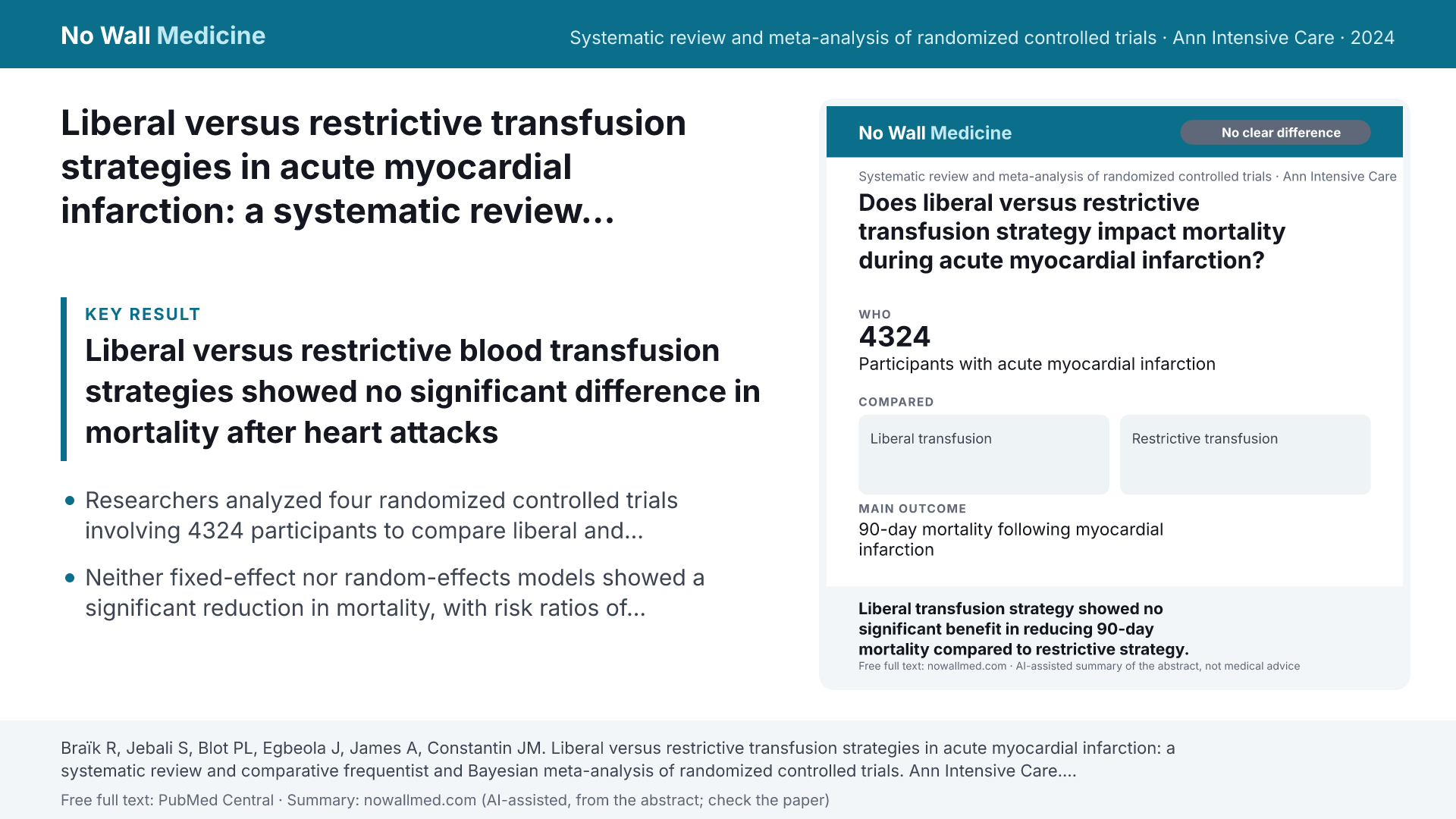
Headline, design, result, key points, caveat and citation as plain text.
Cite this article
Braïk R, Jebali S, Blot PL, Egbeola J, James A, Constantin JM. Liberal versus restrictive transfusion strategies in acute myocardial infarction: a systematic review and comparative frequentist and Bayesian meta-analysis of randomized controlled trials. Ann Intensive Care. 2024;14(1):150. doi:10.1186/s13613-024-01376-1
Spotted a mistake? Suggest a correction