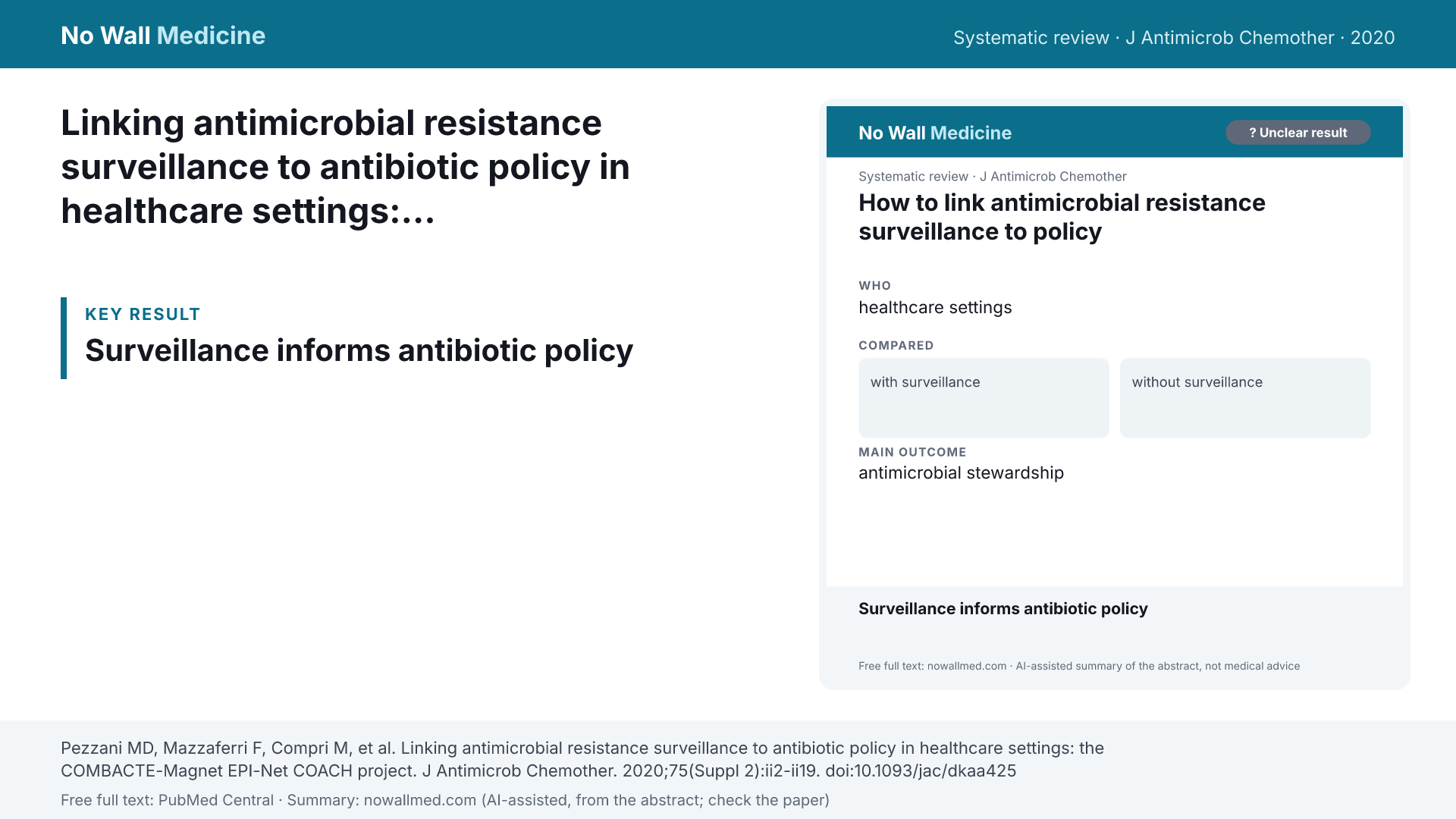
Linking antimicrobial resistance surveillance to antibiotic policy in healthcare settings: the COMBACTE-Magnet EPI-Net COACH project
Systematic reviewUnclear result
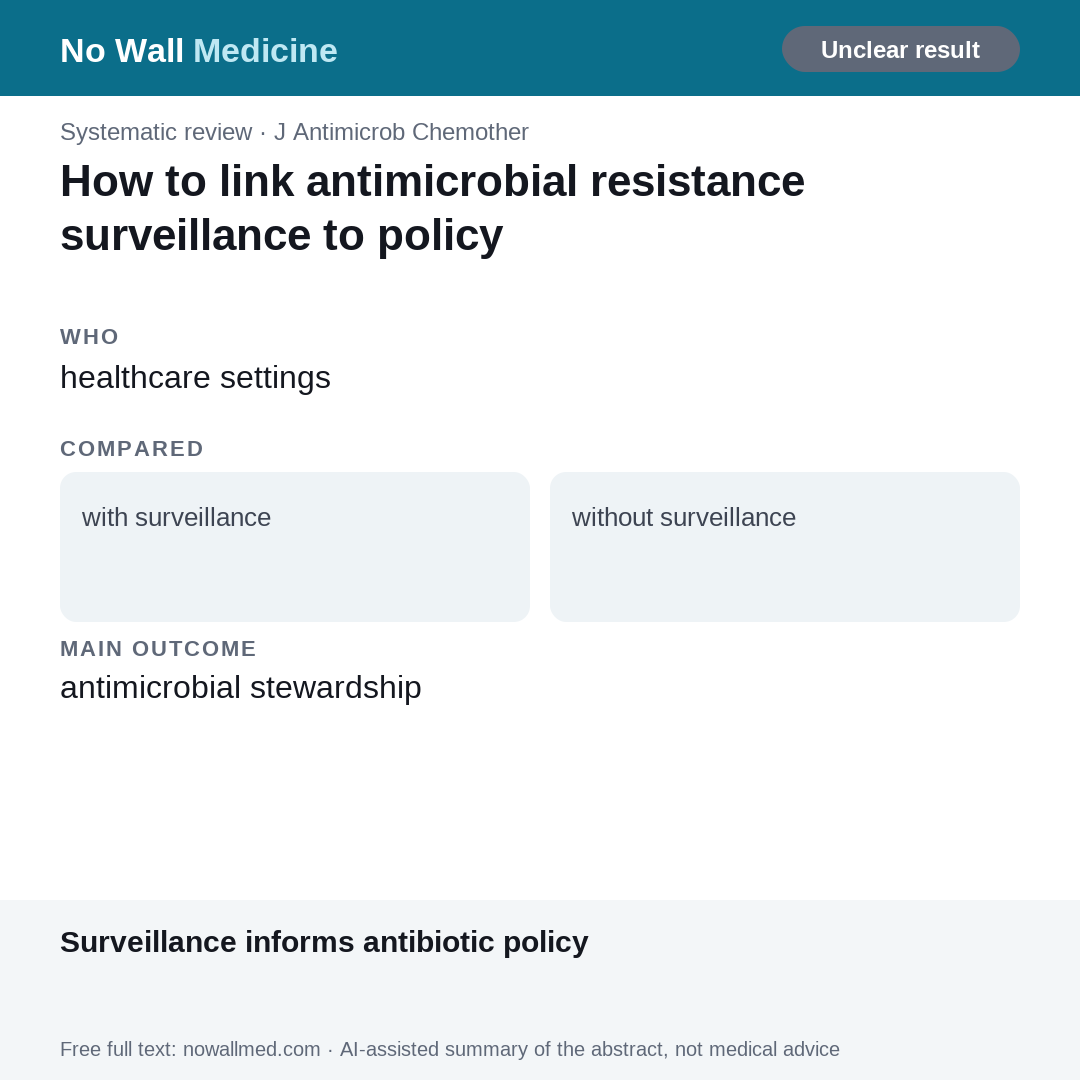
How to link antimicrobial resistance surveillance to policy
Who
healthcare settings
Compared
with surveillance
without surveillance
Main outcome
antimicrobial stewardship
Bottom line: Surveillance informs antibiotic policy
J Antimicrob Chemother · 2020-12-06Download image
Abstract
Objectives
To systematically summarize the evidence on how to collect, analyse and report antimicrobial resistance (AMR) surveillance data to inform antimicrobial stewardship (AMS) teams providing guidance on empirical antibiotic treatment in healthcare settings. Methods
The research group identified 10 key questions about the link between AMR surveillance and AMS using a checklist of 9 elements for good practice in health research priority settings and a modified 3D combined approach matrix, and conducted a systematic review of published original studies and guidelines on the link between AMR surveillance and AMS. Results
The questions identified focused on AMS team composition; minimum infrastructure requirements for AMR surveillance; organisms, samples and susceptibility patterns to report; data stratification strategies; reporting frequency; resistance thresholds to drive empirical therapy; surveillance in high-risk hospital units, long-term care, outpatient and veterinary settings; and surveillance data from other countries. Twenty guidelines and seven original studies on the implementation of AMR surveillance as part of an AMS programme were included in the literature review. Conclusions
The evidence summarized in this review provides a useful basis for a more integrated process of developing procedures to report AMR surveillance data to drive AMS interventions. These procedures should be extended to settings outside the acute-care institutions, such as long-term care, outpatient and veterinary. Without proper AMR surveillance, implementation of AMS policies cannot contribute effectively to the fight against MDR pathogens and may even worsen the burden of adverse events from such interventions.
Subject terms
Cite this article
Pezzani MD, Mazzaferri F, Compri M, et al. Linking antimicrobial resistance surveillance to antibiotic policy in healthcare settings: the COMBACTE-Magnet EPI-Net COACH project. J Antimicrob Chemother. 2020. doi:10.1093/jac/dkaa425
Spotted a mistake? Suggest a correction