Linzagolix maintains reduction in heavy menstrual bleeding through 52 weeks of treatment
Linzagolix with and without hormonal add-back therapy for symptomatic uterine fibroids: PRIMROSE 1 & 2 long-term extension and withdrawal study
Randomized, double-blind, placebo-controlled phase 3 trialsBenefit found
Can linzagolix with or without add-back therapy maintain efficacy and tolerability for uterine fibroids?
Who
1012
Women with uterine fibroid-associated heavy menstrual bleeding
Compared
55.0%100 mg linzagolix alone
86.1%100 mg linzagolix with add-back therapy
76.7%200 mg linzagolix alone or with add-back therapy
89.9%200 mg linzagolix with add-back therapy
Main outcome
Menstrual blood loss reduction to less than 80 mL
Bottom line: Linzagolix with or without add-back therapy maintained heavy menstrual bleeding reduction through 52 weeks of treatment.
Fertil Steril · 2025-06-19Download image
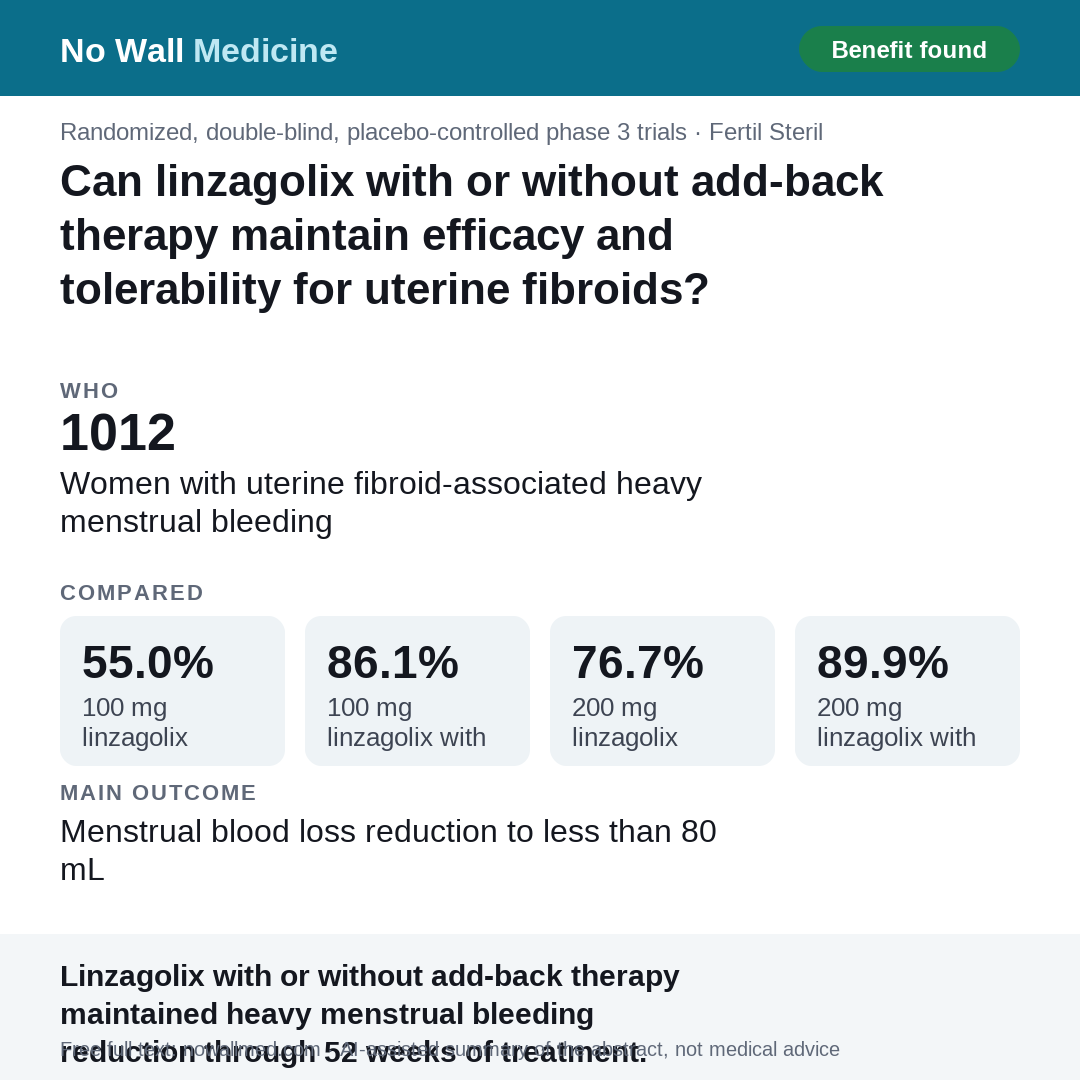
Clinical question: Can linzagolix with or without add-back therapy maintain efficacy and tolerability for uterine fibroids?
Key points
- The study analyzed 1,012 women with uterine fibroids and heavy menstrual bleeding across two phase 3 trials.
- At week 52, the proportion of women with reduced menstrual blood loss was 55.0% for 100 mg linzagolix, 86.1% for 100 mg with add-back therapy, 76.7% for 200 mg linzagolix, and 89.9% for 200 mg with add-back therapy.
- Hot flushes were the most common adverse events up to week 52, but their incidence returned to baseline values by week 64.
Headline and key points written with AI from the paper’s abstract, with every number checked against it. Read the paper before relying on them.
Topics
Cite this article
Donnez J, Petraglia F, Taylor H, Becker CM, Becker S, Herrera FC. Linzagolix with and without hormonal add-back therapy for symptomatic uterine fibroids: PRIMROSE 1 & 2 long-term extension and withdrawal study. Fertil Steril. 2025. doi:10.1016/j.fertnstert.2025.06.016
Spotted a mistake? Suggest a correction
Top studies every Monday
The week’s key trials and guidelines in your specialties, by email. Free.
Get the weekly digest