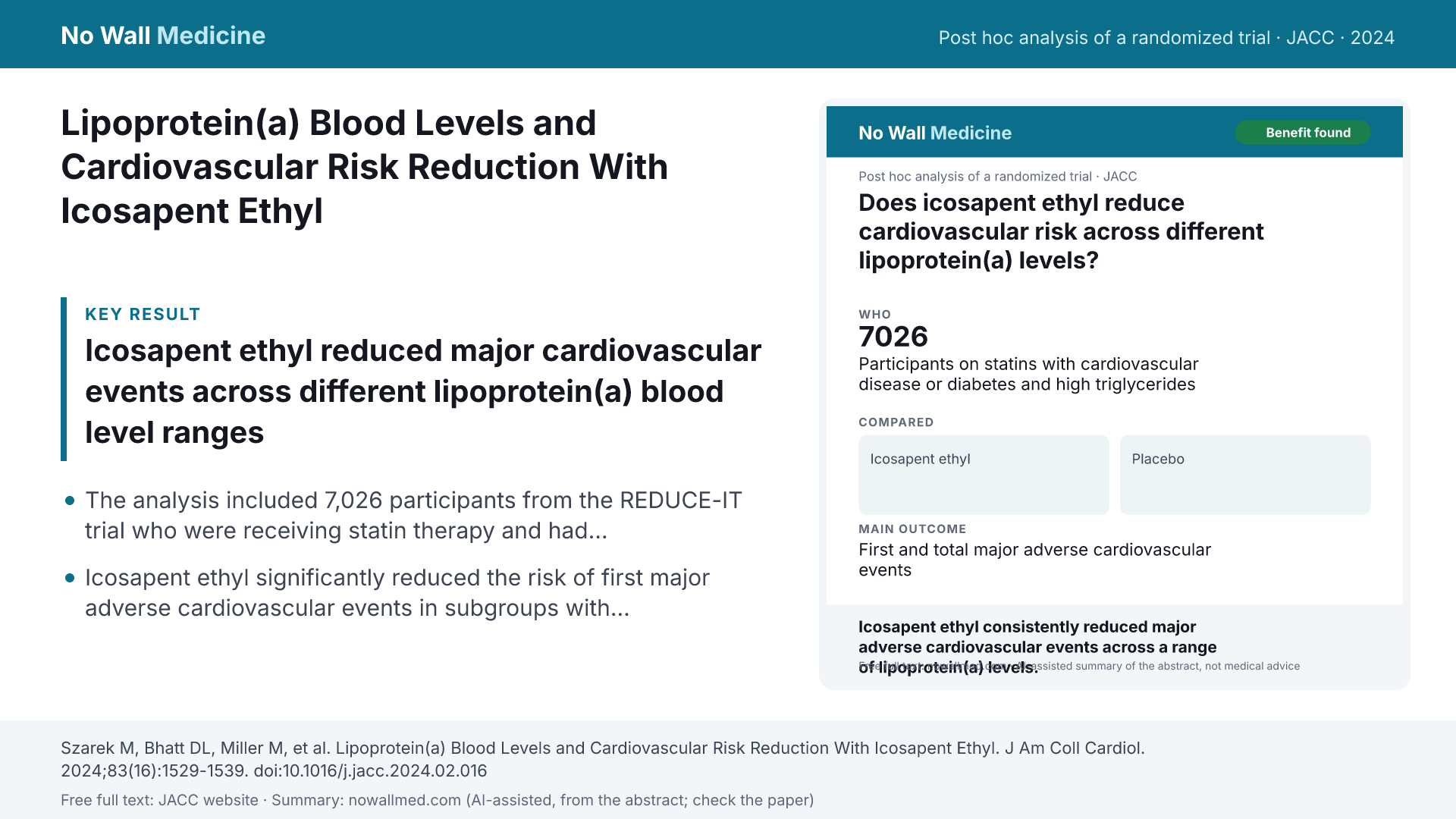
Icosapent ethyl reduced major cardiovascular events across different lipoprotein(a) blood level ranges
Lipoprotein(a) Blood Levels and Cardiovascular Risk Reduction With Icosapent Ethyl
Post hoc analysis of a randomized trialBenefit found
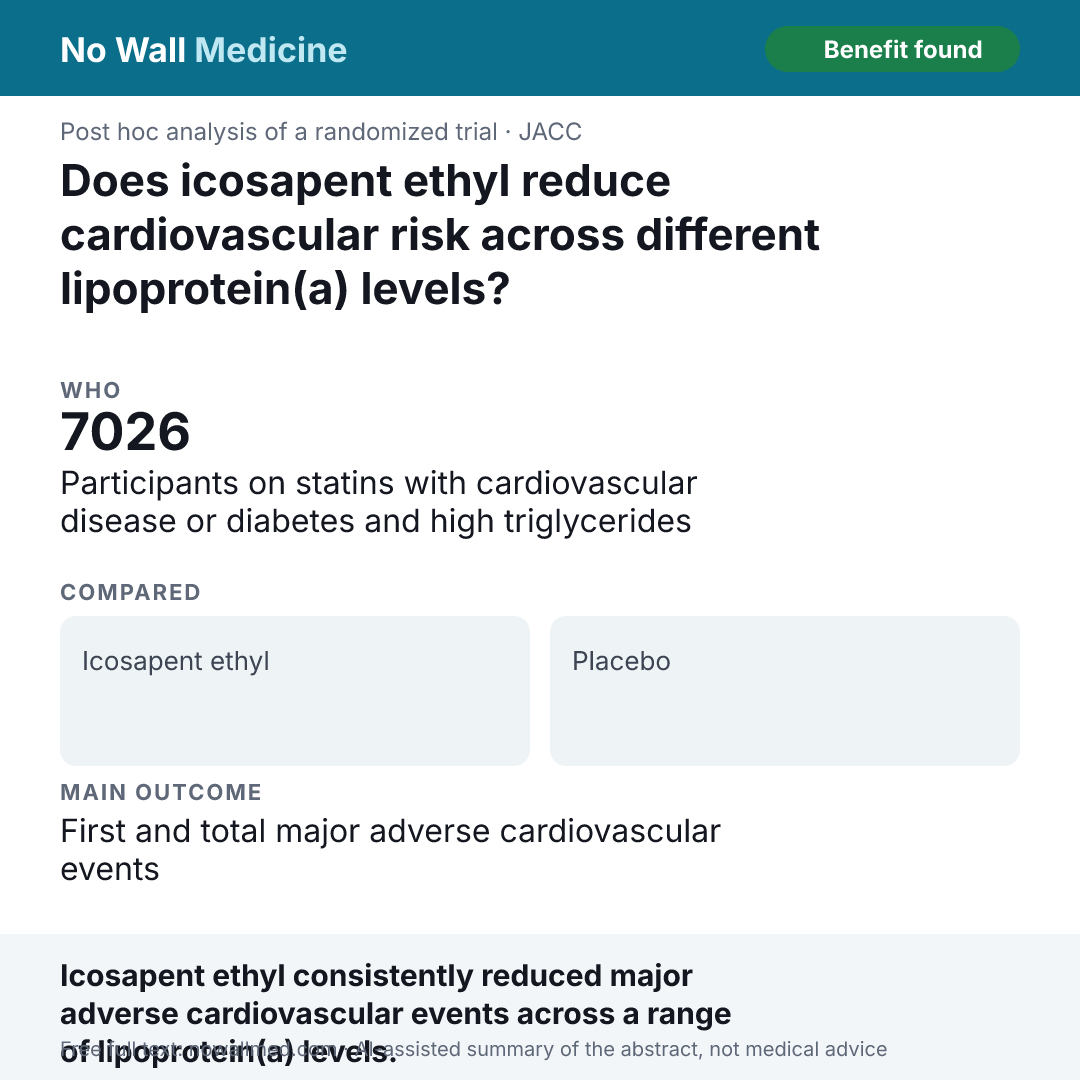
Does icosapent ethyl reduce cardiovascular risk across different lipoprotein(a) levels?
Who
7026
Participants on statins with cardiovascular disease or diabetes and high triglycerides
Compared
Icosapent ethyl
Placebo
Main outcome
First and total major adverse cardiovascular events
Bottom line: Icosapent ethyl consistently reduced major adverse cardiovascular events across a range of lipoprotein(a) levels.
JACC · 2024-03-25 · Save PNG
Clinical question: Does icosapent ethyl reduce cardiovascular risk across different lipoprotein(a) levels?
Key points
- The analysis included 7,026 participants from the REDUCE-IT trial who were receiving statin therapy and had baseline lipoprotein(a) measurements.
- Icosapent ethyl significantly reduced the risk of first major adverse cardiovascular events in subgroups with lipoprotein(a) concentrations both ≥50 mg/dL and <50 mg/dL.
- Higher baseline lipoprotein(a) concentrations were associated with a higher risk of first and total major adverse cardiovascular events.
Headline and key points written with AI from the paper’s abstract, with every number checked against it. Read the paper before relying on them.
Was this summary helpful?
Subject terms
Headline, design, result, key points, caveat and citation as plain text.
Cite this article
Szarek M, Bhatt DL, Miller M, et al. Lipoprotein(a) Blood Levels and Cardiovascular Risk Reduction With Icosapent Ethyl. J Am Coll Cardiol. 2024;83(16):1529-1539. doi:10.1016/j.jacc.2024.02.016
Spotted a mistake? Suggest a correction