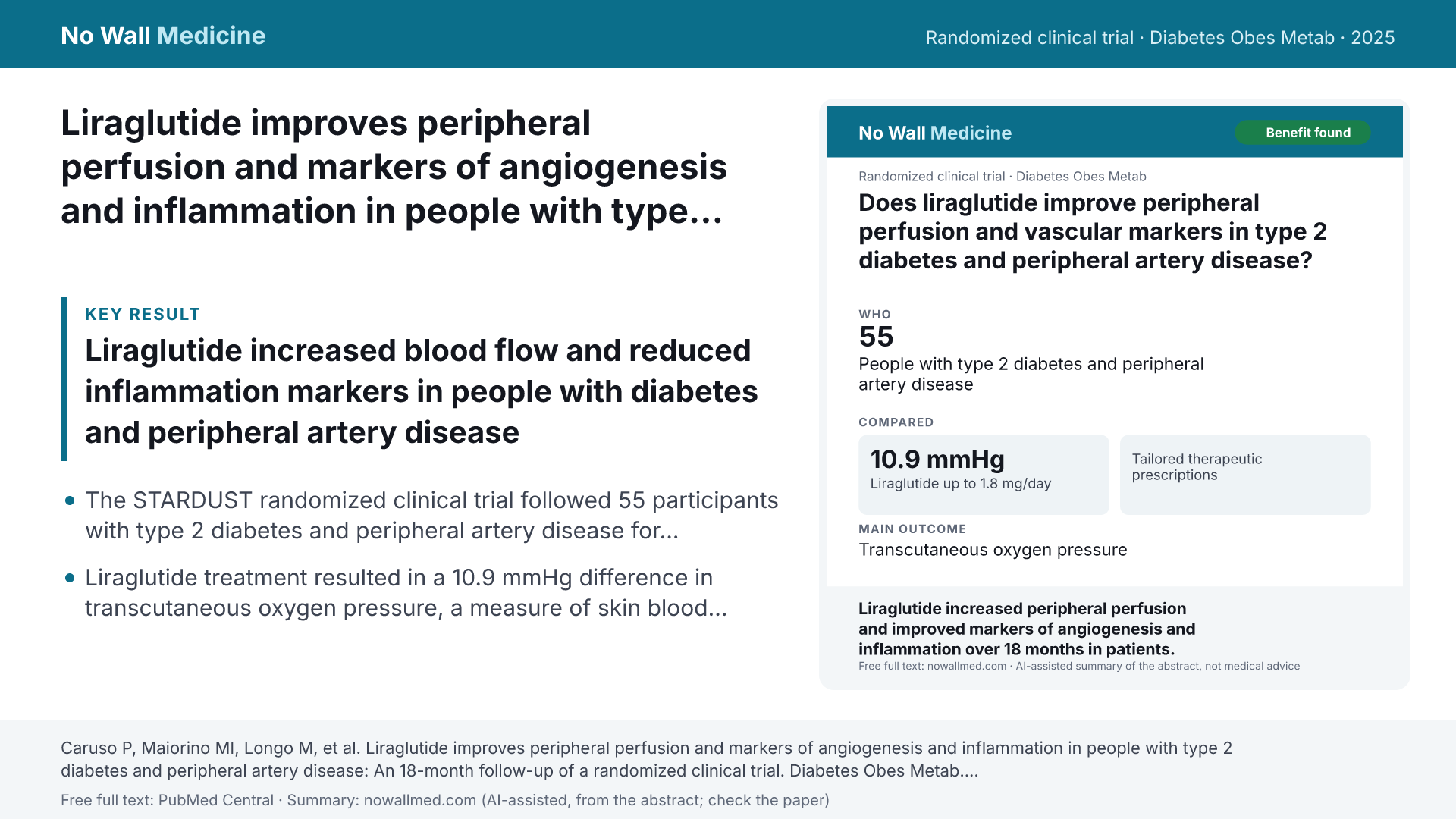
Liraglutide increased blood flow and reduced inflammation markers in people with diabetes and peripheral artery disease
Liraglutide improves peripheral perfusion and markers of angiogenesis and inflammation in people with type 2 diabetes and peripheral artery disease: An 18-month follow-up of a randomized clinical trial
Randomized clinical trialBenefit found
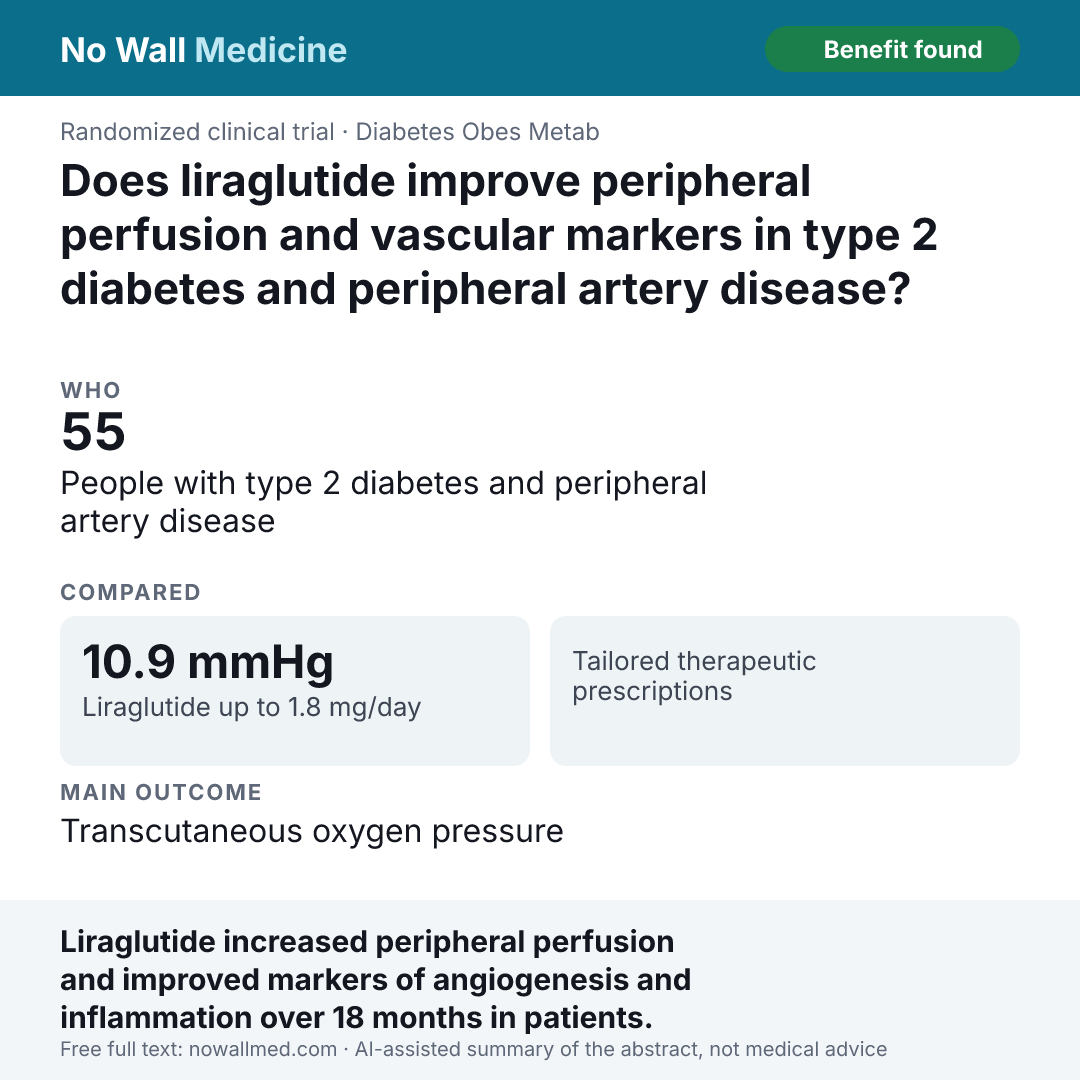
Does liraglutide improve peripheral perfusion and vascular markers in type 2 diabetes and peripheral artery disease?
Who
55
People with type 2 diabetes and peripheral artery disease
Compared
10.9 mmHgLiraglutide up to 1.8 mg/day (95% CI, 7.6 to 14.1 mmHg)
Tailored therapeutic prescriptions
Main outcome
Transcutaneous oxygen pressure
Result: estimated treated difference (95% CI), 10.9 mmHg (7.6 to 14.1 mmHg)
Bottom line: Liraglutide increased peripheral perfusion and improved markers of angiogenesis and inflammation over 18 months in patients.
Diabetes Obes Metab · 2025-04-25 · Save PNG
Clinical question: Does liraglutide improve peripheral perfusion and vascular markers in type 2 diabetes and peripheral artery disease?
Why it matters: Researchers wanted to evaluate the durability of liraglutide's effects on blood flow and the underlying biological mechanisms over an 18-month period.
Key points
- The STARDUST randomized clinical trial followed 55 participants with type 2 diabetes and peripheral artery disease for 18 months.
- Liraglutide treatment resulted in a 10.9 mmHg difference in transcutaneous oxygen pressure, a measure of skin blood flow, compared to the control group.
- Liraglutide was associated with lower C-reactive protein and interleukin-6 levels, and higher vascular endothelial growth factor A at 18 months.
Headline and key points written with AI from the paper’s abstract, with every number checked against it. Read the paper before relying on them.
Was this summary helpful?
Subject terms
Headline, design, result, key points, caveat and citation as plain text.
Cite this article
Caruso P, Maiorino MI, Longo M, et al. Liraglutide improves peripheral perfusion and markers of angiogenesis and inflammation in people with type 2 diabetes and peripheral artery disease: An 18-month follow-up of a randomized clinical trial. Diabetes Obes Metab. 2025;27(7):3891-3900. doi:10.1111/dom.16419
Spotted a mistake? Suggest a correction