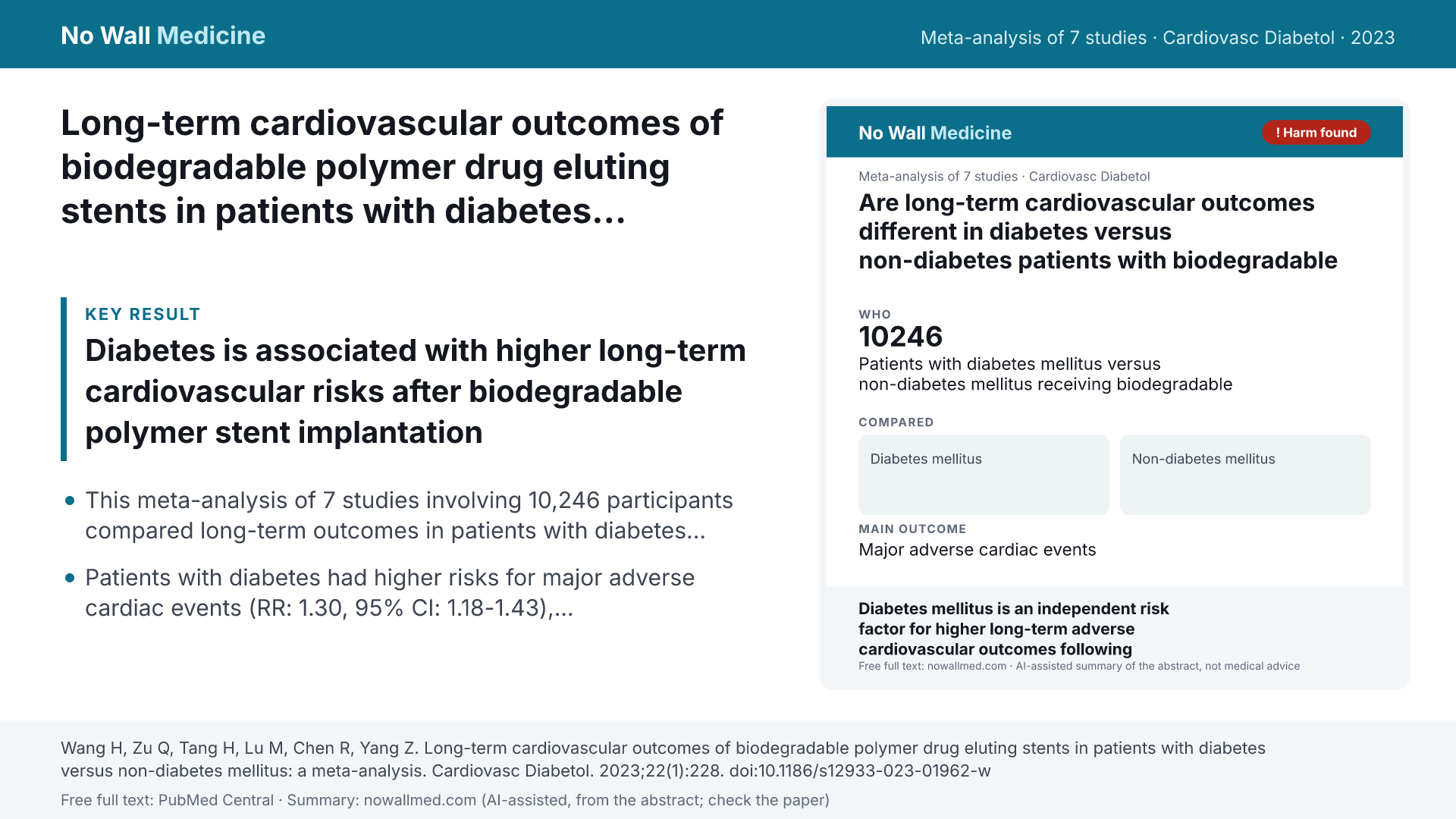
Diabetes is associated with higher long-term cardiovascular risks after biodegradable polymer stent implantation
Long-term cardiovascular outcomes of biodegradable polymer drug eluting stents in patients with diabetes versus non-diabetes mellitus: a meta-analysis
Meta-analysis of 7 studiesHarm found
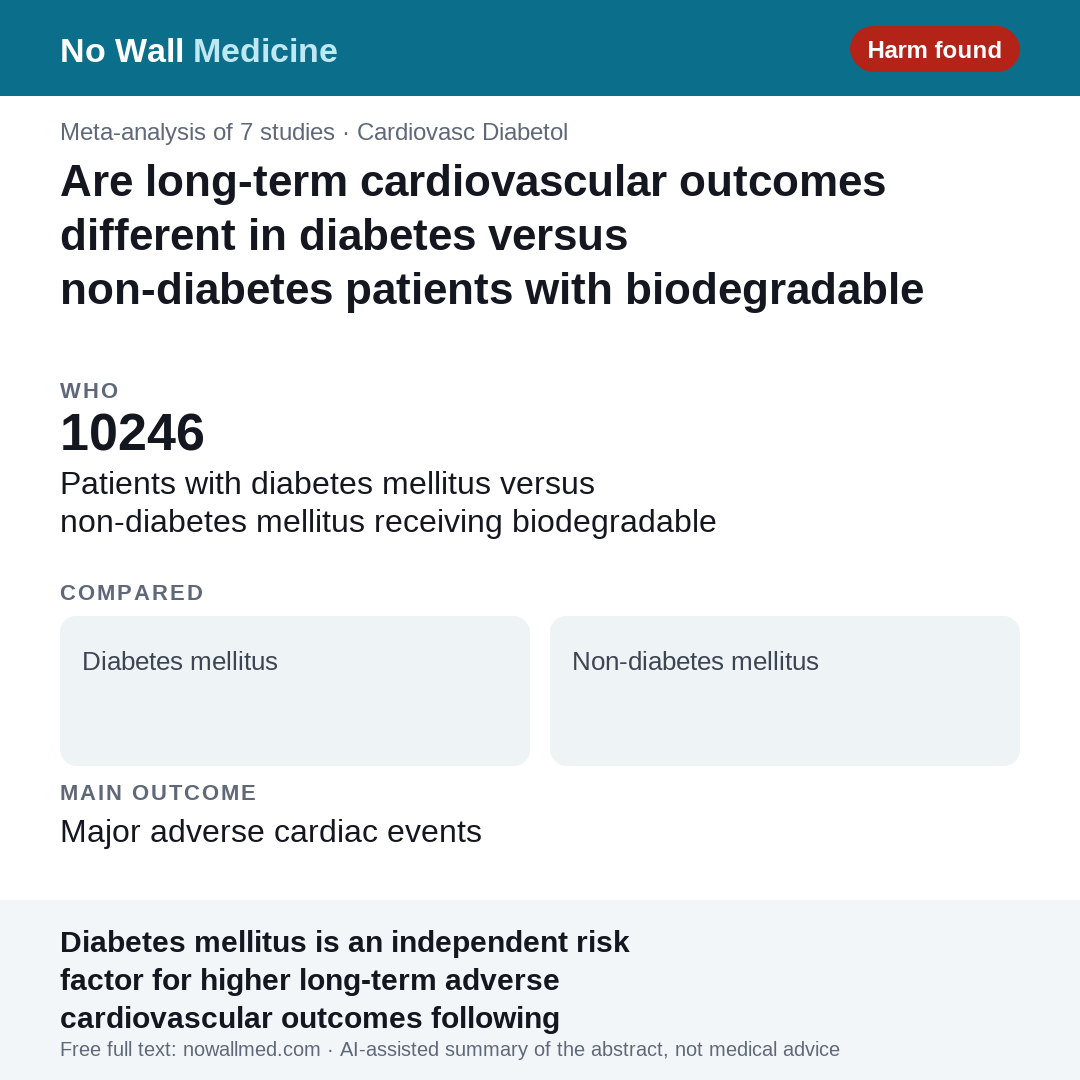
Are long-term cardiovascular outcomes different in diabetes versus non-diabetes patients with biodegradable polymer drug eluting stents?
Who
10246
Patients with diabetes mellitus versus non-diabetes mellitus receiving biodegradable polymer drug eluting stents
Compared
Diabetes mellitus
Non-diabetes mellitus
Main outcome
Major adverse cardiac events
Result: risk ratio 1.30 (95% CI 1.18-1.43)
Bottom line: Diabetes mellitus is an independent risk factor for higher long-term adverse cardiovascular outcomes following biodegradable polymer drug eluting stent implantation.
Cardiovasc Diabetol · 2023-08-29Download image
Clinical question: Are long-term cardiovascular outcomes different in diabetes versus non-diabetes patients with biodegradable polymer drug eluting stents?
Why it matters: It is unknown how diabetes mellitus affects long-term cardiovascular outcomes in patients receiving biodegradable polymer drug eluting stents during percutaneous coronary intervention.
Key points
- This meta-analysis of 7 studies involving 10,246 participants compared long-term outcomes in patients with diabetes versus those without diabetes receiving biodegradable polymer drug eluting stents.
- Patients with diabetes had higher risks for major adverse cardiac events (RR: 1.30, 95% CI: 1.18-1.43), myocardial infarction (RR: 1.48, 95% CI: 1.14-1.93), and all-cause mortality (RR: 1.70, 95% CI: 1.29-2.23).
- Diabetes was also associated with increased risks for cardiac death (RR: 1.93, 95% CI: 1.28-2.93), target lesion failure (RR: 1.79, 95% CI: 1.52-2.12), and stent thrombosis (RR: 1.80, 95% CI: 1.28-2.55).
Headline and key points written with AI from the paper’s abstract, with every number checked against it. Read the paper before relying on them.
Was this summary helpful?
Subject terms
Cite this article
Wang H, Zu Q, Tang H, Lu M, Chen R, Yang Z. Long-term cardiovascular outcomes of biodegradable polymer drug eluting stents in patients with diabetes versus non-diabetes mellitus: a meta-analysis. Cardiovasc Diabetol. 2023. doi:10.1186/s12933-023-01962-w
Spotted a mistake? Suggest a correction