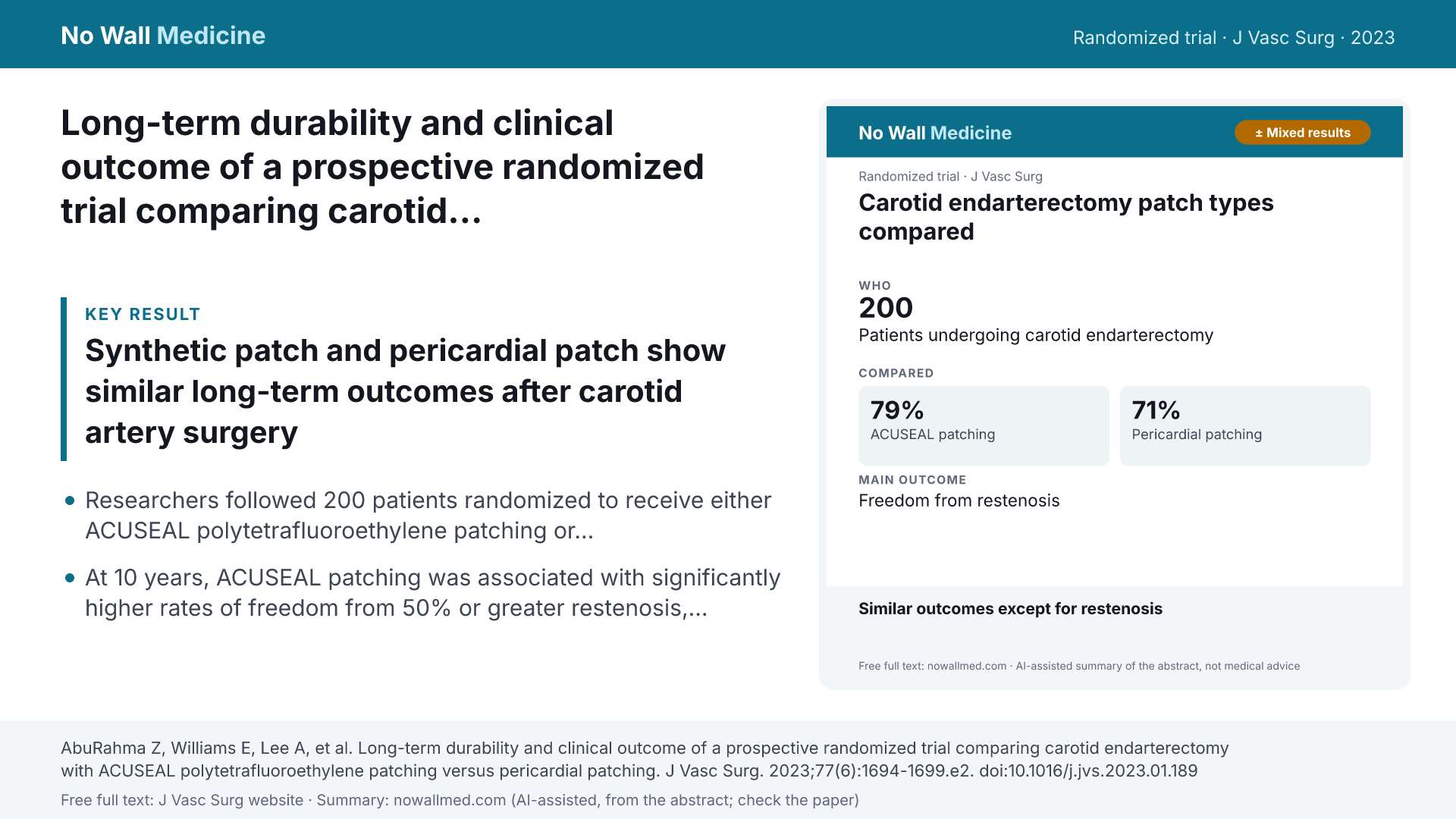
Synthetic patch and pericardial patch show similar long-term outcomes after carotid artery surgery
Long-term durability and clinical outcome of a prospective randomized trial comparing carotid endarterectomy with ACUSEAL polytetrafluoroethylene patching versus pericardial patching
Randomized trialMixed results
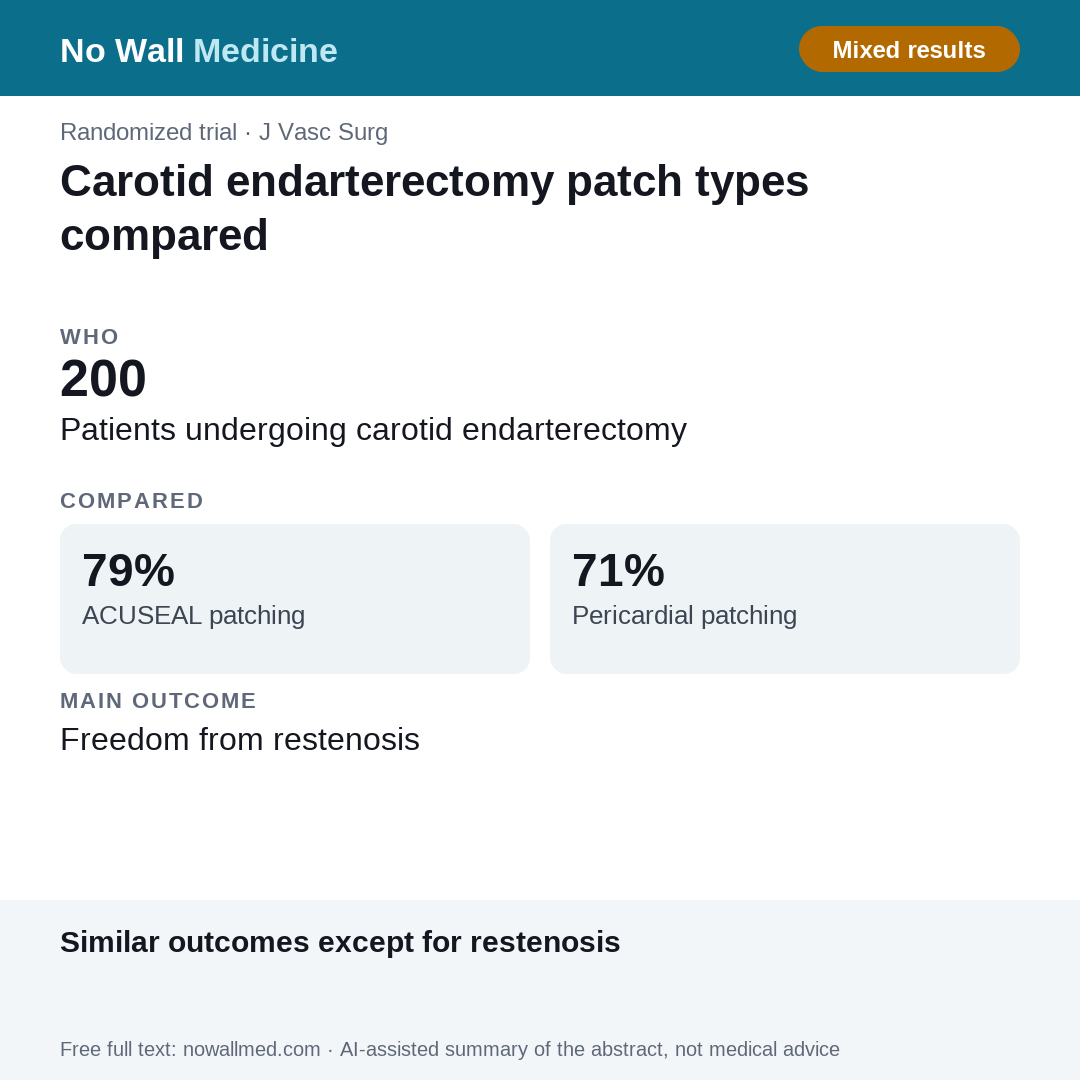
Carotid endarterectomy patch types compared
Who
200
Patients undergoing carotid endarterectomy
Compared
79%ACUSEAL patching (freedom from ≥50% restenosis at 10 years)
71%Pericardial patching (freedom from ≥50% restenosis at 10 years)
Main outcome
Freedom from restenosis
Bottom line: Similar outcomes except for restenosis
J Vasc Surg · 2023-03-21Download image
Why it matters: It is unknown if different types of patches used during carotid endarterectomy result in different long-term clinical outcomes.
Key points
- Researchers followed 200 patients randomized to receive either ACUSEAL polytetrafluoroethylene patching or pericardial patching during carotid endarterectomy, a procedure to remove plaque from the carotid artery.
- At 10 years, ACUSEAL patching was associated with significantly higher rates of freedom from 50% or greater restenosis, which is the re-narrowing of the artery, compared to pericardial patching (79% vs 71%).
- No significant differences were found between the two patch types regarding stroke-free survival, stroke or death, 80% or greater restenosis, or overall survival rates.
Headline and key points written with AI from the paper’s abstract, with every number checked against it. Read the paper before relying on them.
Was this summary helpful?
Subject terms
Cite this article
AbuRahma Z, Williams E, Lee A, et al. Long-term durability and clinical outcome of a prospective randomized trial comparing carotid endarterectomy with ACUSEAL polytetrafluoroethylene patching versus pericardial patching. J Vasc Surg. 2023. doi:10.1016/j.jvs.2023.01.189
Spotted a mistake? Suggest a correction