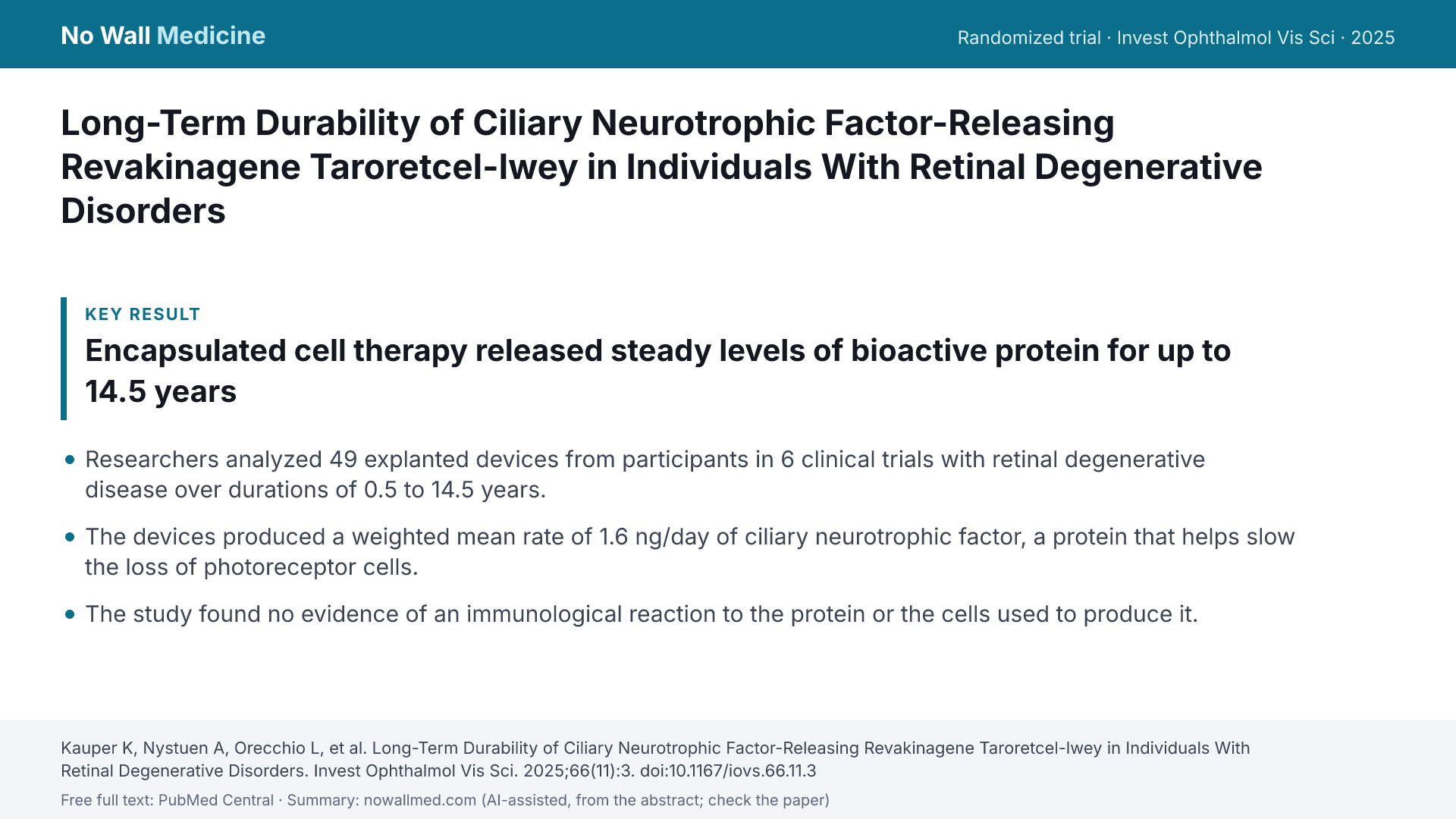
Long-Term Durability of Ciliary Neurotrophic Factor-Releasing Revakinagene Taroretcel-lwey in Individuals With Retinal Degenerative Disorders
Key result: Encapsulated cell therapy released steady levels of bioactive protein for up to 14.5 years
Key points
- Researchers analyzed 49 explanted devices from participants in 6 clinical trials with retinal degenerative disease over durations of 0.5 to 14.5 years.
- The devices produced a weighted mean rate of 1.6 ng/day of ciliary neurotrophic factor, a protein that helps slow the loss of photoreceptor cells.
- The study found no evidence of an immunological reaction to the protein or the cells used to produce it.
Why it matters: The durability and long-term function of encapsulated cell therapy for treating chronic retinal degenerative diseases needed to be assessed.
Discussion prompts
- Would these patients look like yours? Who was left out?
- Is the main outcome one that matters to patients?
- Is the difference large enough to change what you do?
Cite: Kauper K, Nystuen A, Orecchio L, et al. Long-Term Durability of Ciliary Neurotrophic Factor-Releasing Revakinagene Taroretcel-lwey in Individuals With Retinal Degenerative Disorders. Invest Ophthalmol Vis Sci. 2025;66(11):3. doi:10.1167/iovs.66.11.3
Free full text: PubMed Central · Summary and visual abstract: nowallmed.com/a/long-term-durability-of-ciliary-neurotrophic-factor-releasing-1ab2r1q/ (AI-assisted from the abstract; check the paper before relying on it).