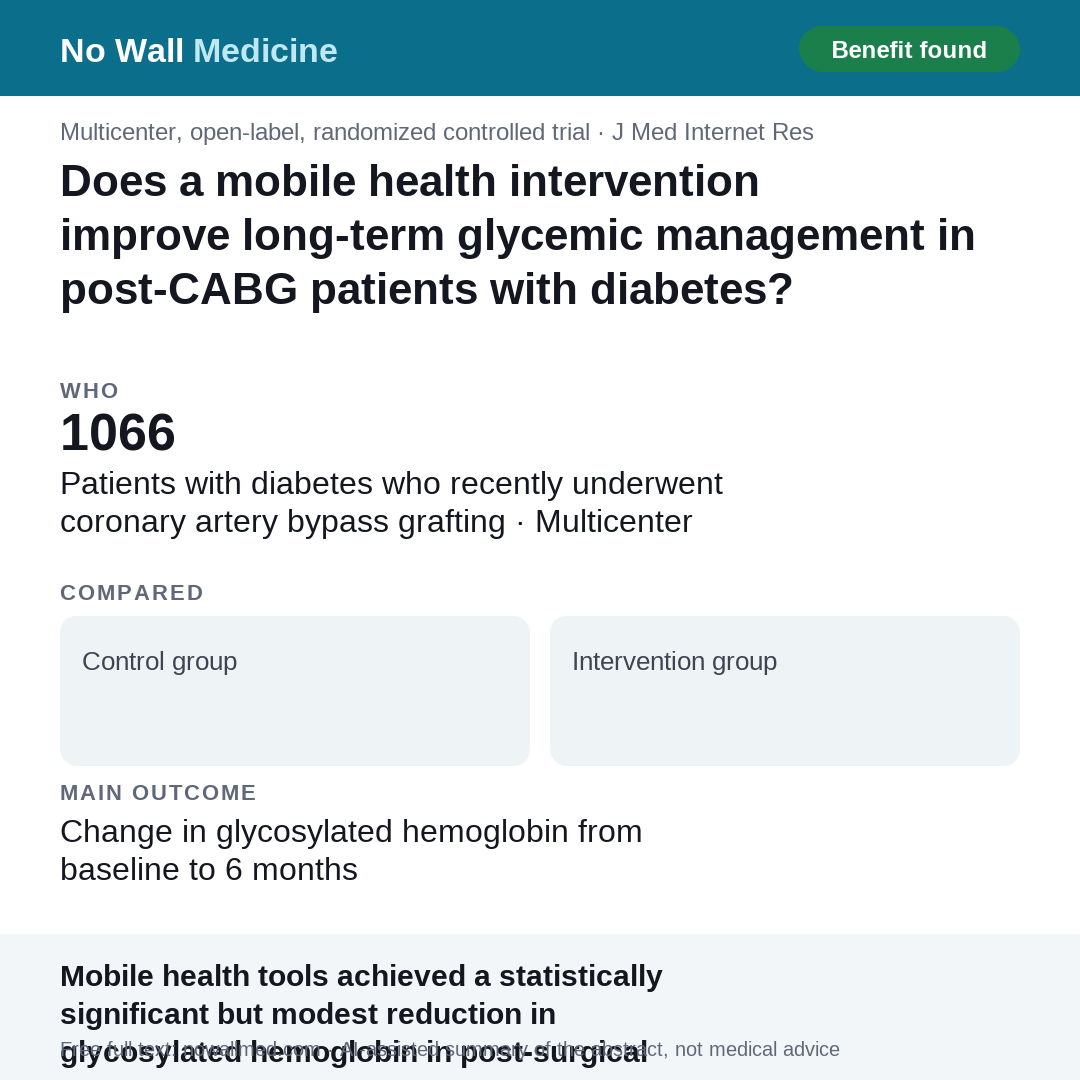
Multicenter, open-label, randomized controlled trialBenefit found
Does a mobile health intervention improve long-term glycemic management in post-CABG patients with diabetes?
Who
1066
Patients with diabetes who recently underwent coronary artery bypass grafting · Multicenter
Compared
Control group
Intervention group
Main outcome
Change in glycosylated hemoglobin from baseline to 6 months
Result: adjusted between-group mean difference -0.13 (95% CI -0.25 to -0.01)
Bottom line: Mobile health tools achieved a statistically significant but modest reduction in glycosylated hemoglobin in post-surgical diabetes patients.
Clinical question: Does a mobile health intervention improve long-term glycemic management in post-CABG patients with diabetes?
Why it matters: Evidence is scarce regarding whether mobile health tools can help manage blood sugar levels in high-risk patients after heart bypass surgery.
Key points
Researchers studied 1066 patients with diabetes who recently underwent coronary artery bypass surgery, comparing conventional education to a smartphone app intervention.
The intervention group showed a greater reduction in glycosylated hemoglobin, which is a measure of long-term blood sugar, with an adjusted mean difference of -0.13.
Medication adherence was higher in the intervention group at 96.1% compared to 93.2% in the control group.
Headline and key points written with AI from the paper’s abstract, with every number checked against it. Read the paper before relying on them.
ClinicalAge, a framework for modelling ageing trajectories from longitudinal electronic health records in the UK: a model development and validation study
A prognostic model for use at labour onset to estimate the risk of severe fetal compromise at birth: a retrospective, model development and validation study