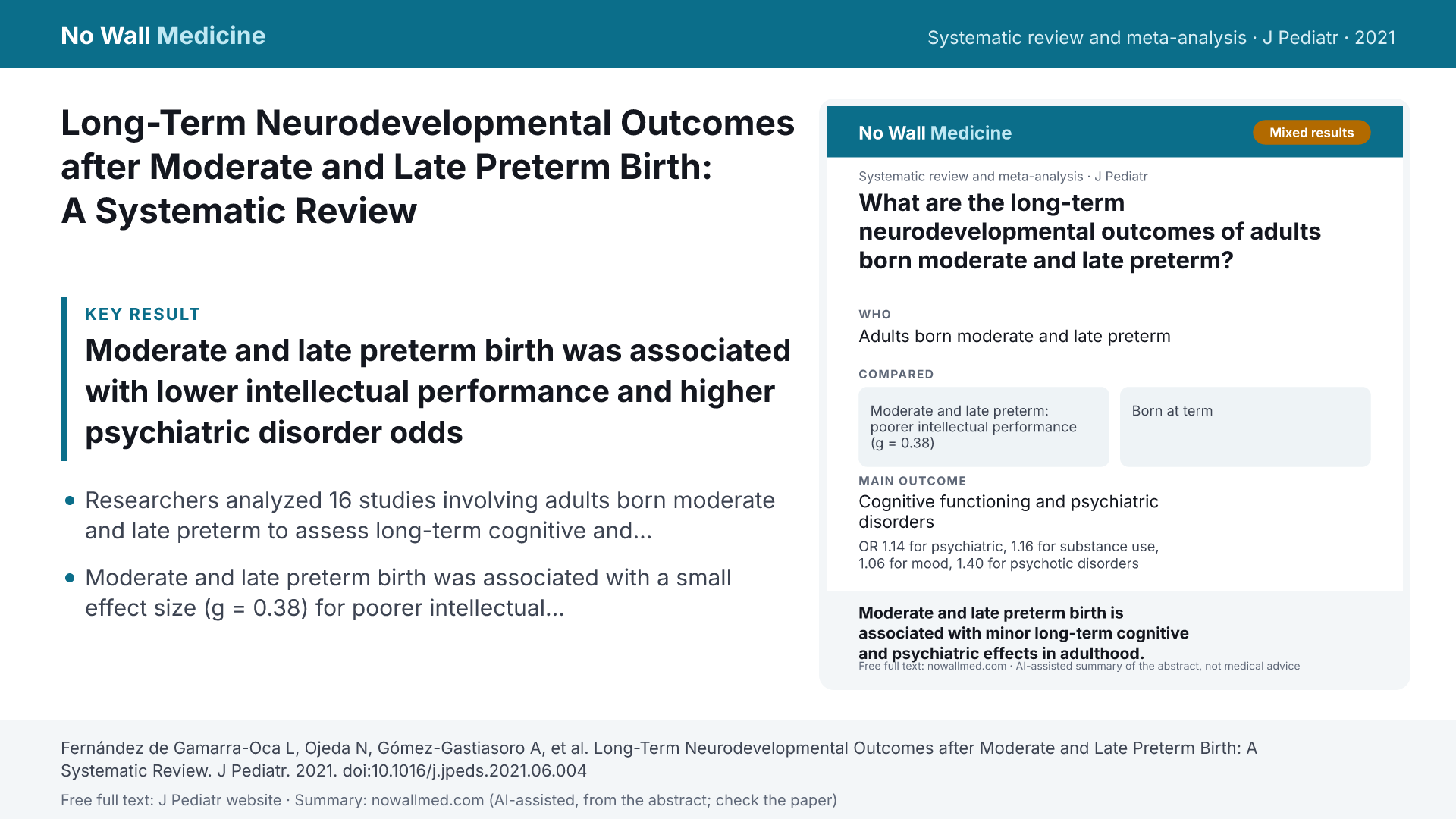
Long-Term Neurodevelopmental Outcomes after Moderate and Late Preterm Birth: A Systematic Review
Key result: Moderate and late preterm birth was associated with lower intellectual performance and higher psychiatric disorder odds
Key points
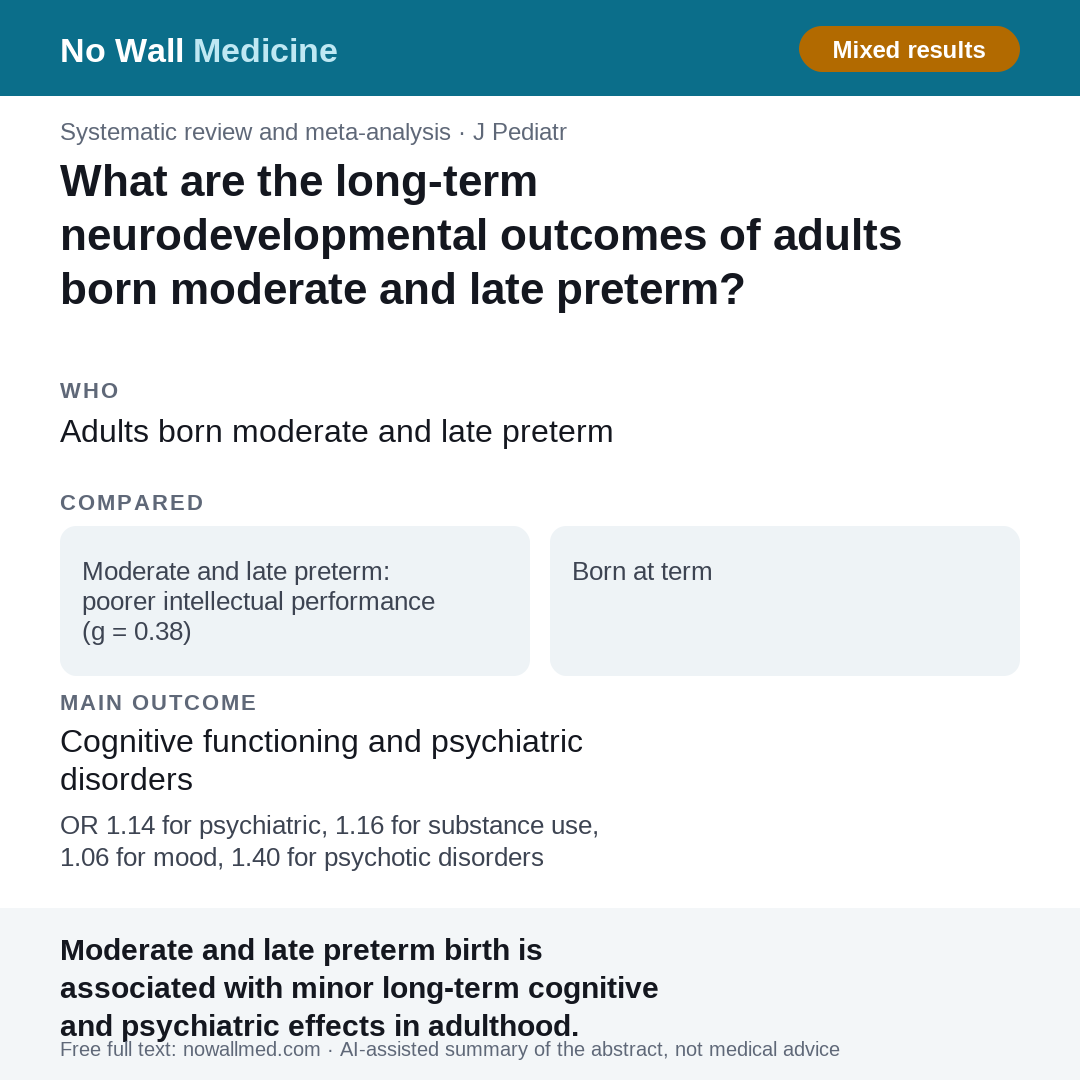
- Researchers analyzed 16 studies involving adults born moderate and late preterm to assess long-term cognitive and mental health outcomes.
- Moderate and late preterm birth was associated with a small effect size (g = 0.38) for poorer intellectual performance compared to those born at term.
- Being born moderate and late preterm was associated with greater odds for psychotic disorders (OR 1.40), substance use (OR 1.16), any psychiatric disorder (OR 1.14), and mood disorders (OR 1.06).
Why it matters: The long-term effects of being born moderate and late preterm on cognitive functioning and psychiatric disorders in adulthood were not fully established.
Limitation the authors note: The results showed inconsistency due to the methodologic differences between the selected studies.
Discussion prompts
- Would these patients look like yours? Who was left out?
- Is the main outcome one that matters to patients?
- Is the difference large enough to change what you do?
Cite: Fernández de Gamarra-Oca L, Ojeda N, Gómez-Gastiasoro A, et al. Long-Term Neurodevelopmental Outcomes after Moderate and Late Preterm Birth: A Systematic Review. J Pediatr. 2021. doi:10.1016/j.jpeds.2021.06.004
Free full text: J Pediatr website · Summary and visual abstract: nowallmed.com/a/long-term-neurodevelopmental-outcomes-after-moderate-and-late-preterm-2t187m/ (AI-assisted from the abstract; check the paper before relying on it).