ECPR linked to improved long-term neurologically intact survival after cardiac arrest
Long-term neurologically intact survival after extracorporeal cardiopulmonary resuscitation for in-hospital or out-of-hospital cardiac arrest: A systematic review and meta-analysis
Systematic review and meta-analysisBenefit found
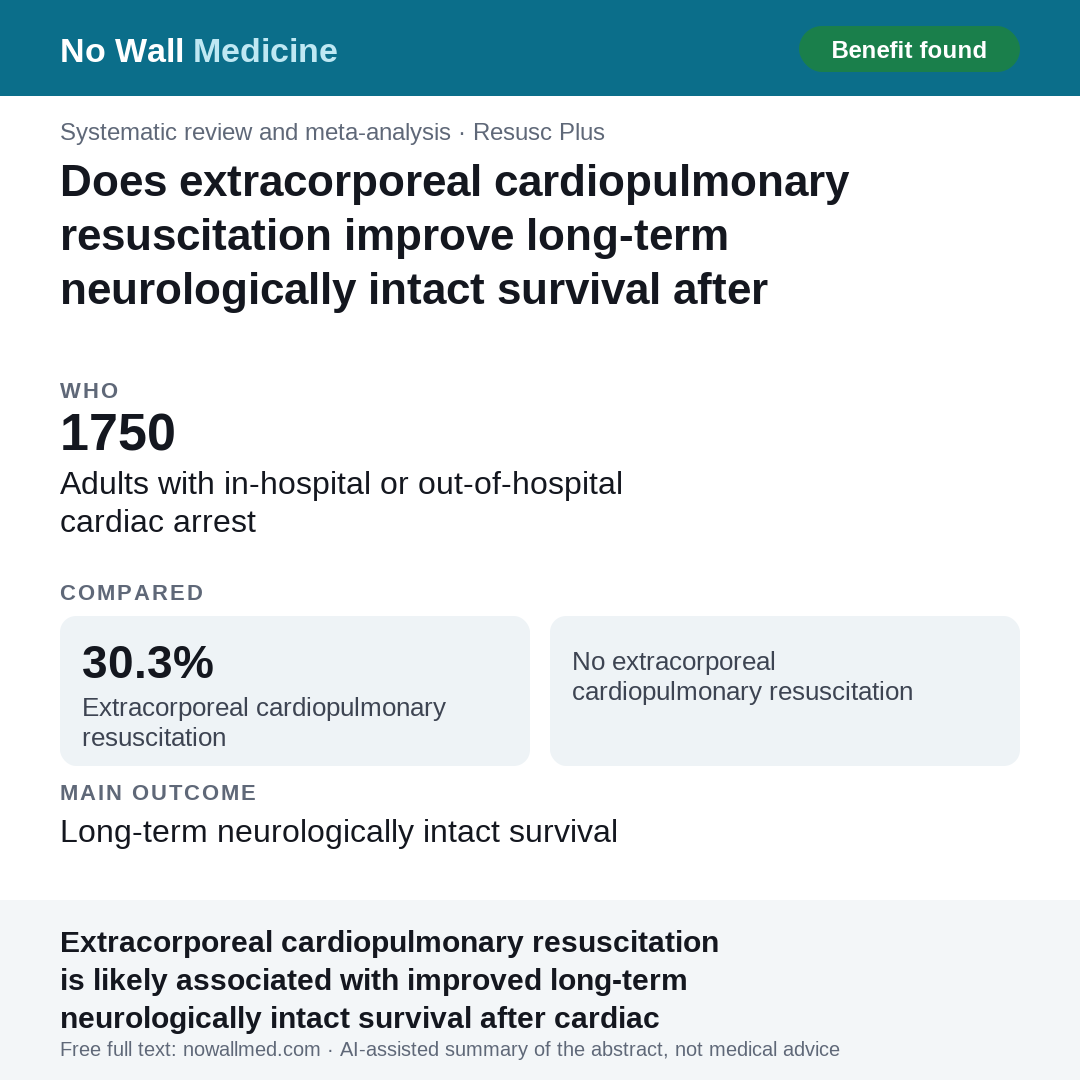
Does extracorporeal cardiopulmonary resuscitation improve long-term neurologically intact survival after cardiac arrest?
Who
1750
Adults with in-hospital or out-of-hospital cardiac arrest
Compared
30.3%Extracorporeal cardiopulmonary resuscitation
No extracorporeal cardiopulmonary resuscitation
Main outcome
Long-term neurologically intact survival
Result: risk ratio 3.11 (95% CI 2.06-4.69)
Bottom line: Extracorporeal cardiopulmonary resuscitation is likely associated with improved long-term neurologically intact survival after cardiac arrest.
Limitation: The quality of evidence was very low based on GRADE guidelines.
Resusc Plus · 2020-12-11Download image
Clinical question: Does extracorporeal cardiopulmonary resuscitation improve long-term neurologically intact survival after cardiac arrest?
Why it matters: Effectiveness of ECPR for cardiac arrest remains uncertain
Key points
- Six cohort studies with 1750 patients were analyzed, comparing ECPR to no ECPR or standard care.
- ECPR was associated with a risk ratio of 3.11 for long-term neurologically intact survival.
- 91 of 530 ECPR patients survived with long-term neurologically intact survival, or 17.2%.
Limitation the authors note: Quality of evidence was very low due to observational design
Headline and key points written with AI from the paper’s abstract, with every number checked against it. Read the paper before relying on them.
Was this summary helpful?
Cite this article
Miraglia D, Miguel LA, Alonso W. Long-term neurologically intact survival after extracorporeal cardiopulmonary resuscitation for in-hospital or out-of-hospital cardiac arrest: A systematic review and meta-analysis. Resusc Plus. 2020. doi:10.1016/j.resplu.2020.100045
Spotted a mistake? Suggest a correction
Top studies every Monday
The week’s key trials and guidelines in your specialties, plus any topics you follow. By email, free.
Get the weekly digest