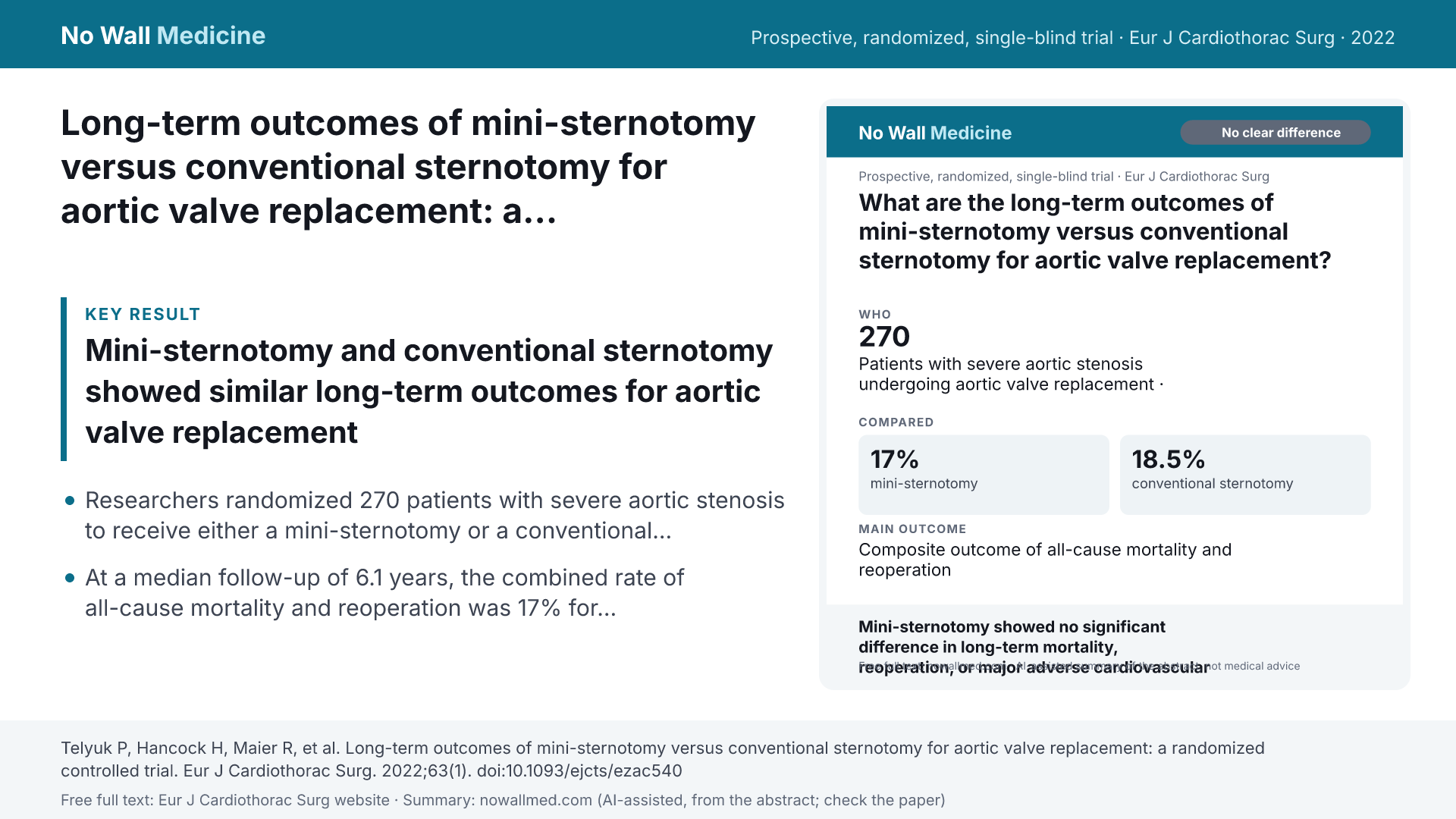
Mini-sternotomy and conventional sternotomy showed similar long-term outcomes for aortic valve replacement
Long-term outcomes of mini-sternotomy versus conventional sternotomy for aortic valve replacement: a randomized controlled trial
Prospective, randomized, single-blind trialNo clear difference
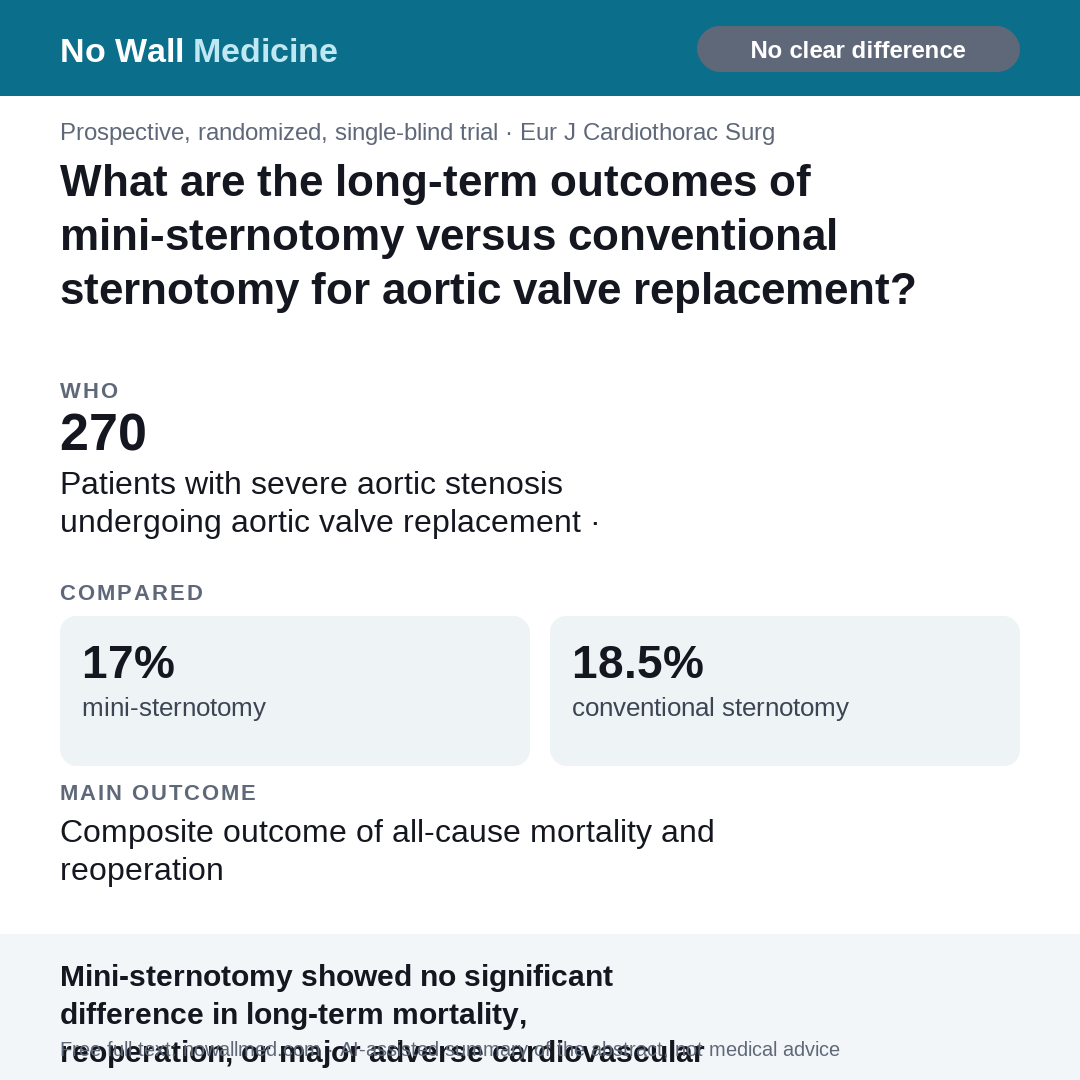
What are the long-term outcomes of mini-sternotomy versus conventional sternotomy for aortic valve replacement?
Who
270
Patients with severe aortic stenosis undergoing aortic valve replacement · Single-centre
Compared
17%mini-sternotomy (23/135)
18.5%conventional sternotomy (25/135)
Main outcome
Composite outcome of all-cause mortality and reoperation
Bottom line: Mini-sternotomy showed no significant difference in long-term mortality, reoperation, or major adverse cardiovascular events compared to conventional sternotomy.
Limitation: This was an exploratory long-term analysis.
Eur J Cardiothorac Surg · 2022-11-18Download image
Clinical question: What are the long-term outcomes of mini-sternotomy versus conventional sternotomy for aortic valve replacement?
Why it matters: It was unknown if a smaller incision for aortic valve replacement leads to different long-term mortality, reoperation, or heart function outcomes compared to a standard full chest incision.
Key points
- Researchers randomized 270 patients with severe aortic stenosis to receive either a mini-sternotomy or a conventional median sternotomy for aortic valve replacement.
- At a median follow-up of 6.1 years, the combined rate of all-cause mortality and reoperation was 17% for mini-sternotomy and 18.5% for conventional sternotomy.
- There were no significant differences between the two surgical approaches regarding major adverse cardiovascular events, kidney disease, stroke, or heart attack.
Limitation the authors note: The study was a single-centre, single-blind randomized trial using exploratory analyses for the long-term outcomes.
Headline and key points written with AI from the paper’s abstract, with every number checked against it. Read the paper before relying on them.
Was this summary helpful?
Subject terms
Cite this article
Telyuk P, Hancock H, Maier R, et al. Long-term outcomes of mini-sternotomy versus conventional sternotomy for aortic valve replacement: a randomized controlled trial. Eur J Cardiothorac Surg. 2022. doi:10.1093/ejcts/ezac540
Spotted a mistake? Suggest a correction