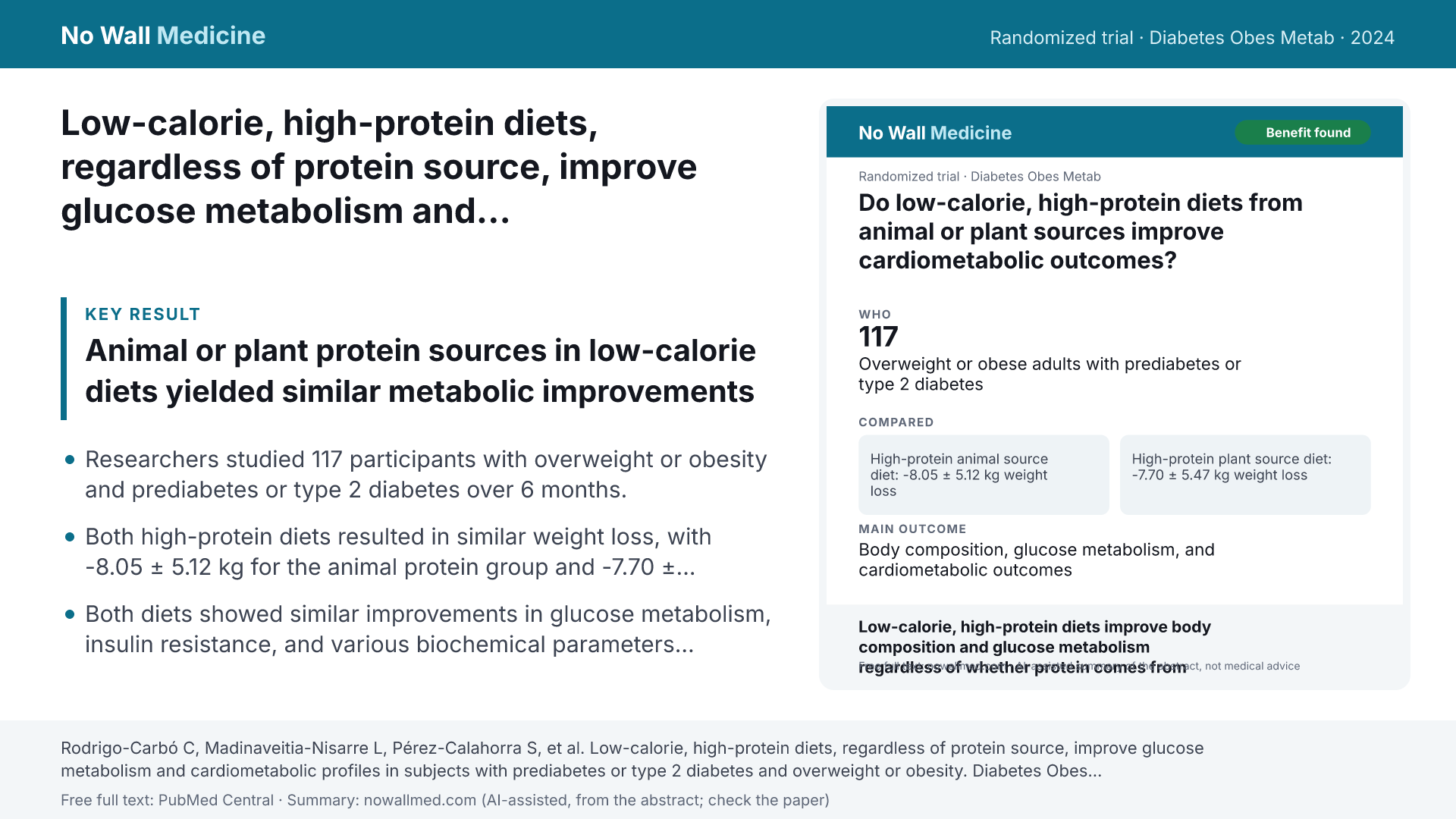
Animal or plant protein sources in low-calorie diets yielded similar metabolic improvements
Low-calorie, high-protein diets, regardless of protein source, improve glucose metabolism and cardiometabolic profiles in subjects with prediabetes or type 2 diabetes and overweight or obesity
Randomized trialBenefit found
Do low-calorie, high-protein diets from animal or plant sources improve cardiometabolic outcomes?
Who
117
Overweight or obese adults with prediabetes or type 2 diabetes
Compared
High-protein animal source diet: -8.05 ± 5.12 kg weight loss
High-protein plant source diet: -7.70 ± 5.47 kg weight loss
Main outcome
Body composition, glucose metabolism, and cardiometabolic outcomes
Bottom line: Low-calorie, high-protein diets improve body composition and glucose metabolism regardless of whether protein comes from animal or plant sources.
Diabetes Obes Metab · 2024-10-17Download image
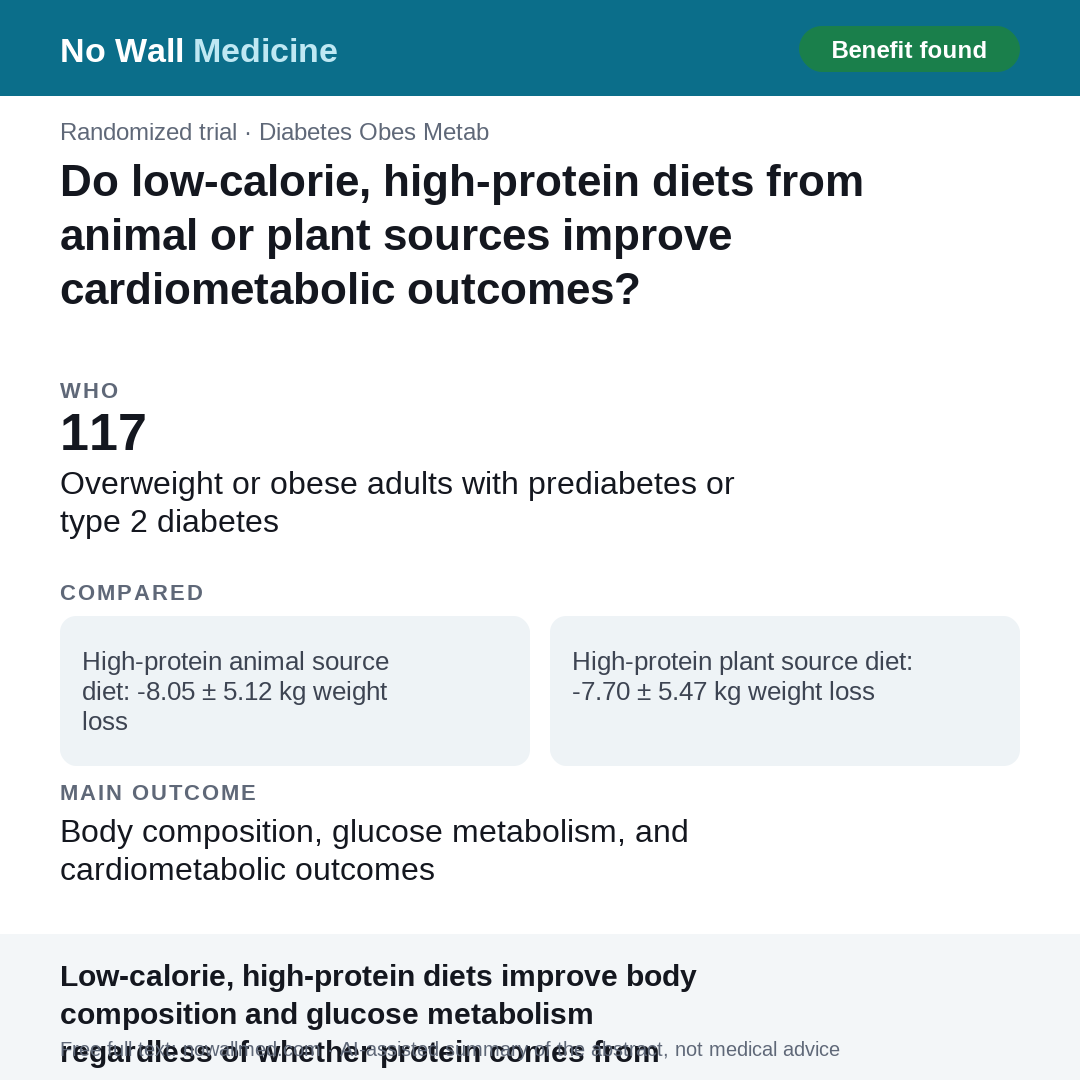
Clinical question: Do low-calorie, high-protein diets from animal or plant sources improve cardiometabolic outcomes?
Why it matters: It was unknown if the source of protein, specifically animal versus plant, changes the effectiveness of low-calorie, high-protein diets for glucose metabolism and cardiometabolic health.
Key points
- Researchers studied 117 participants with overweight or obesity and prediabetes or type 2 diabetes over 6 months.
- Both high-protein diets resulted in similar weight loss, with -8.05 ± 5.12 kg for the animal protein group and -7.70 ± 5.47 kg for the plant protein group.
- Both diets showed similar improvements in glucose metabolism, insulin resistance, and various biochemical parameters like lipid profiles and inflammatory biomarkers.
Headline and key points written with AI from the paper’s abstract, with every number checked against it. Read the paper before relying on them.
Was this summary helpful?
Subject terms
Cite this article
Rodrigo-Carbó C, Madinaveitia-Nisarre L, Pérez-Calahorra S, et al. Low-calorie, high-protein diets, regardless of protein source, improve glucose metabolism and cardiometabolic profiles in subjects with prediabetes or type 2 diabetes and overweight or obesity. Diabetes Obes Metab. 2024. doi:10.1111/dom.16013
Spotted a mistake? Suggest a correction