Low valine levels linked to high risk of hip fractures
Low Circulating Valine Associate With High Risk of Hip Fractures
Discovery and replication cohort studyBenefit found
Are circulating amino acids associated with incident hip fractures?
Who
111257
UK Biobank participants and Umeå Fracture and Osteoporosis study participants · United Kingdom and Sweden
Compared
UK Biobank (per standard deviation increase): hazard ratio 0.79 (95% CI 0.73-0.84)
UFO study (per standard deviation increase): odds ratio 0.84 (95% CI 0.80-0.88)
Main outcome
incident hip fractures
Result: hazard ratio 0.79 (95% CI 0.73-0.84)
Bottom line: Low circulating valine is a robust predictor of incident hip fractures.
J Clin Endocrinol Metab · 2023-05-14Download image
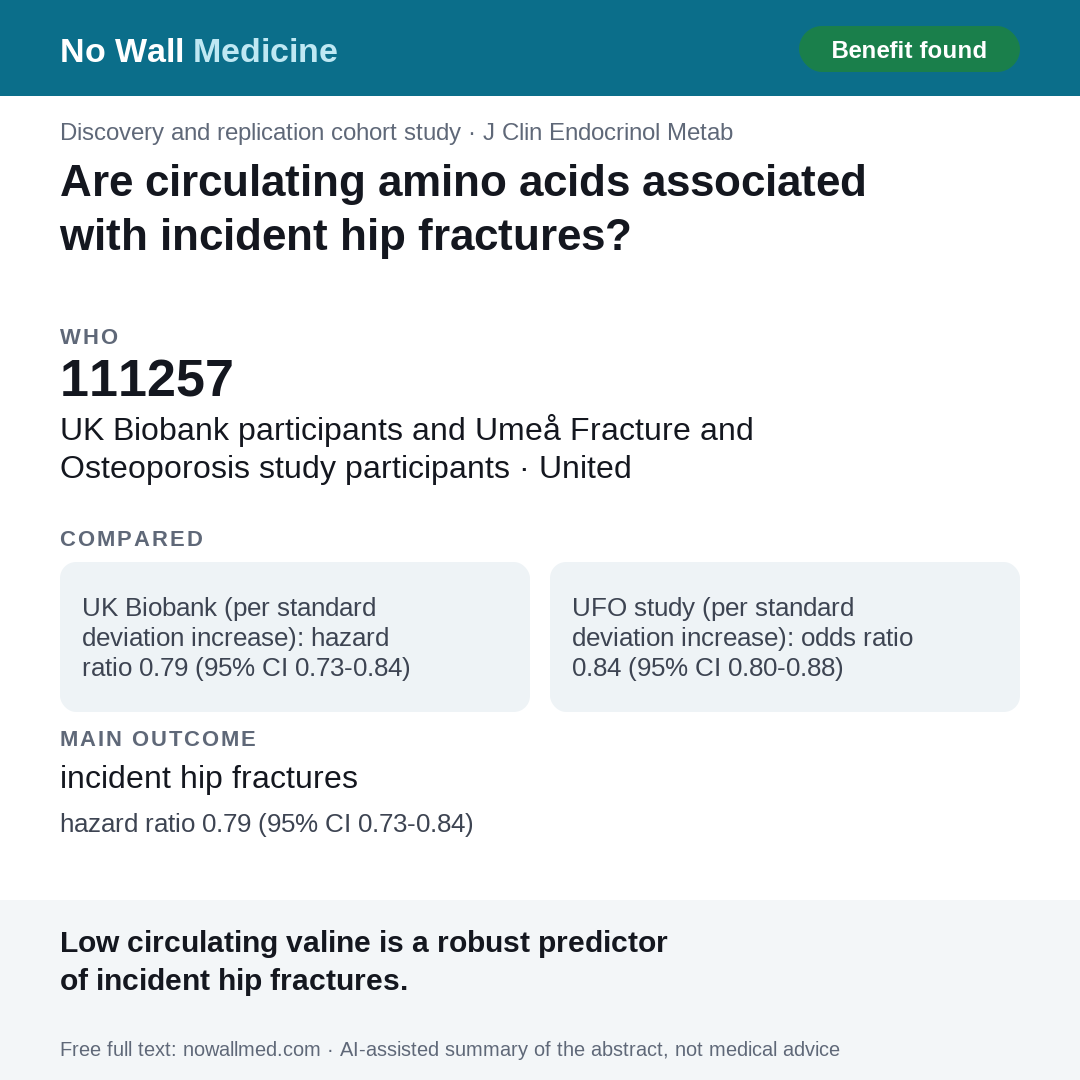
Clinical question: Are circulating amino acids associated with incident hip fractures?
Why it matters: Data on amino acids predicting incident fractures are scarce
Key points
- 111,257 people were studied in the UK Biobank, with 901 hip fracture cases.
- Low circulating valine was associated with hip fractures, with a hazard ratio of 0.79 per standard deviation increase.
- High circulating valine was linked to high cortical bone area and trabecular thickness.
Headline and key points written with AI from the paper’s abstract, with every number checked against it. Read the paper before relying on them.
Was this summary helpful?
Subject terms
Cite this article
Grahnemo L, Eriksson AL, Nethander M, Johansson R, Lorentzon M, Mellström D. Low Circulating Valine Associate With High Risk of Hip Fractures. J Clin Endocrinol Metab. 2023. doi:10.1210/clinem/dgad268
Spotted a mistake? Suggest a correction
Top studies every Monday
The week’s key trials and guidelines in your specialties, plus any topics you follow. By email, free.
Get the weekly digest