LPA1 antagonist BMS-986020 changes collagen dynamics and exerts antifibrotic effects in vitro and in patients with idiopathic pulmonary fibrosis
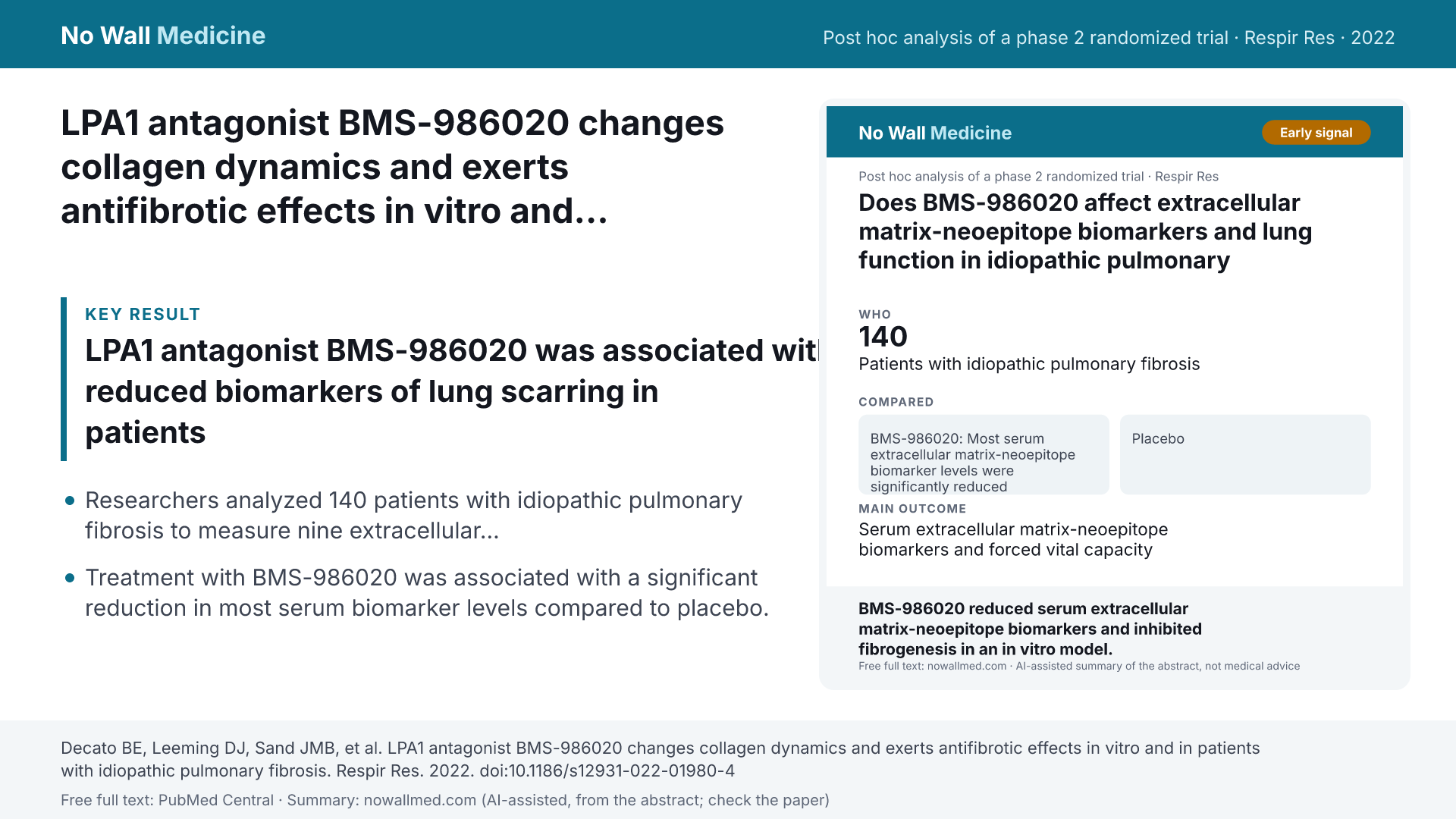
Key result: LPA1 antagonist BMS-986020 was associated with reduced biomarkers of lung scarring in patients
Post hoc analysis of a phase 2 randomized trialEarly signal
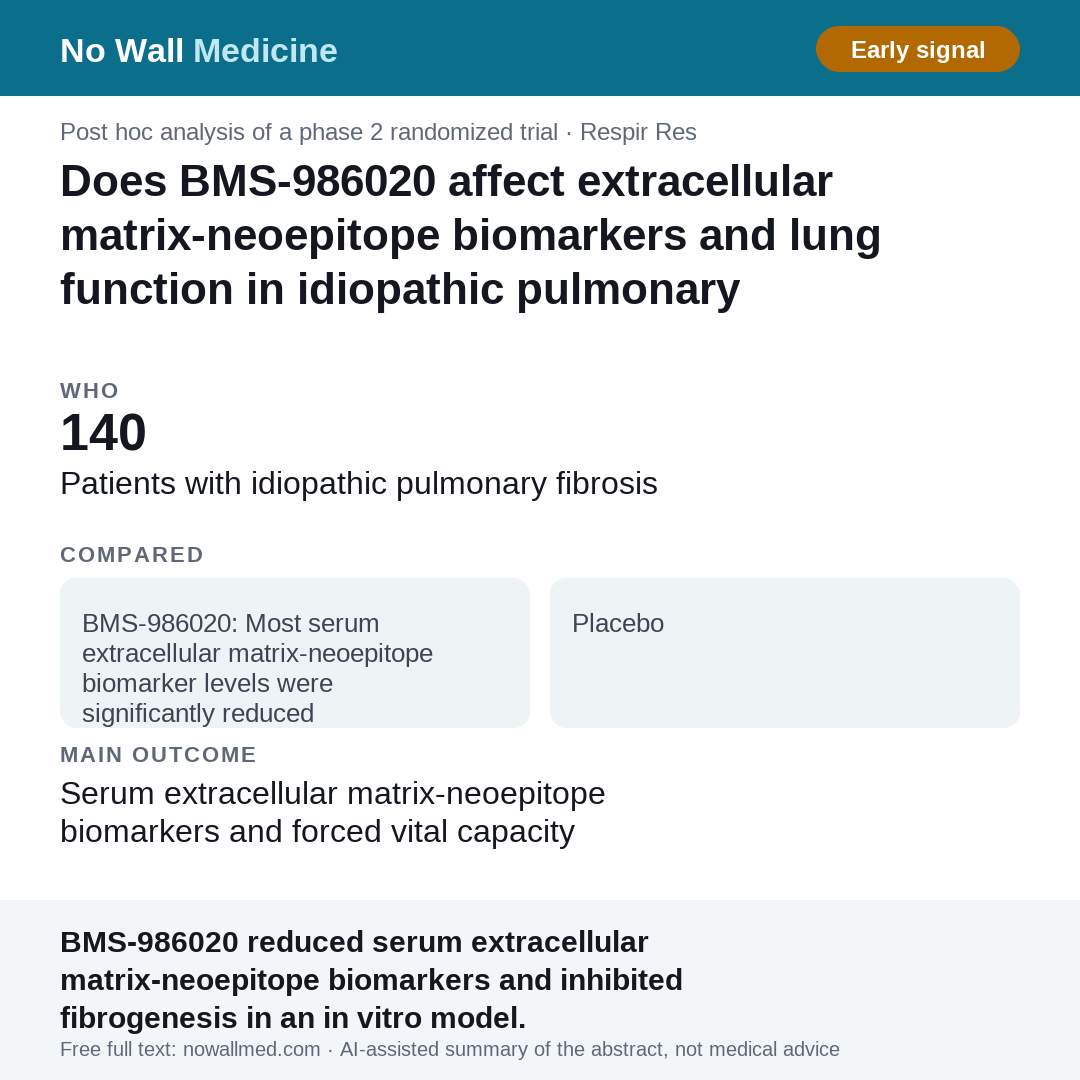
Does BMS-986020 affect extracellular matrix-neoepitope biomarkers and lung function in idiopathic pulmonary fibrosis?
Who
140
Patients with idiopathic pulmonary fibrosis
Compared
BMS-986020: Most serum extracellular matrix-neoepitope biomarker levels were significantly reduced
Placebo
Main outcome
Serum extracellular matrix-neoepitope biomarkers and forced vital capacity
Bottom line: BMS-986020 reduced serum extracellular matrix-neoepitope biomarkers and inhibited fibrogenesis in an in vitro model.
Respir Res · 2022-03-18Download image
Key points
- Researchers analyzed 140 patients with idiopathic pulmonary fibrosis to measure nine extracellular matrix-neoepitope biomarkers, which are proteins that indicate tissue remodeling.
- Treatment with BMS-986020 was associated with a significant reduction in most serum biomarker levels compared to placebo.
- In a laboratory model, the drug inhibited fibrogenesis, which is the formation of excess fibrous connective tissue.
Discussion prompts
- Would these patients look like yours? Who was left out?
- Is the main outcome one that matters to patients?
- Is the difference large enough to change what you do?
Cite: Decato BE, Leeming DJ, Sand JMB, et al. LPA1 antagonist BMS-986020 changes collagen dynamics and exerts antifibrotic effects in vitro and in patients with idiopathic pulmonary fibrosis. Respir Res. 2022. doi:10.1186/s12931-022-01980-4
Free full text: PubMed Central · Summary and visual abstract: nowallmed.com/a/lpa1-antagonist-bms-986020-changes-collagen-dynamics-and-exerts-1f30w8x/ (AI-assisted from the abstract; check the paper before relying on it).