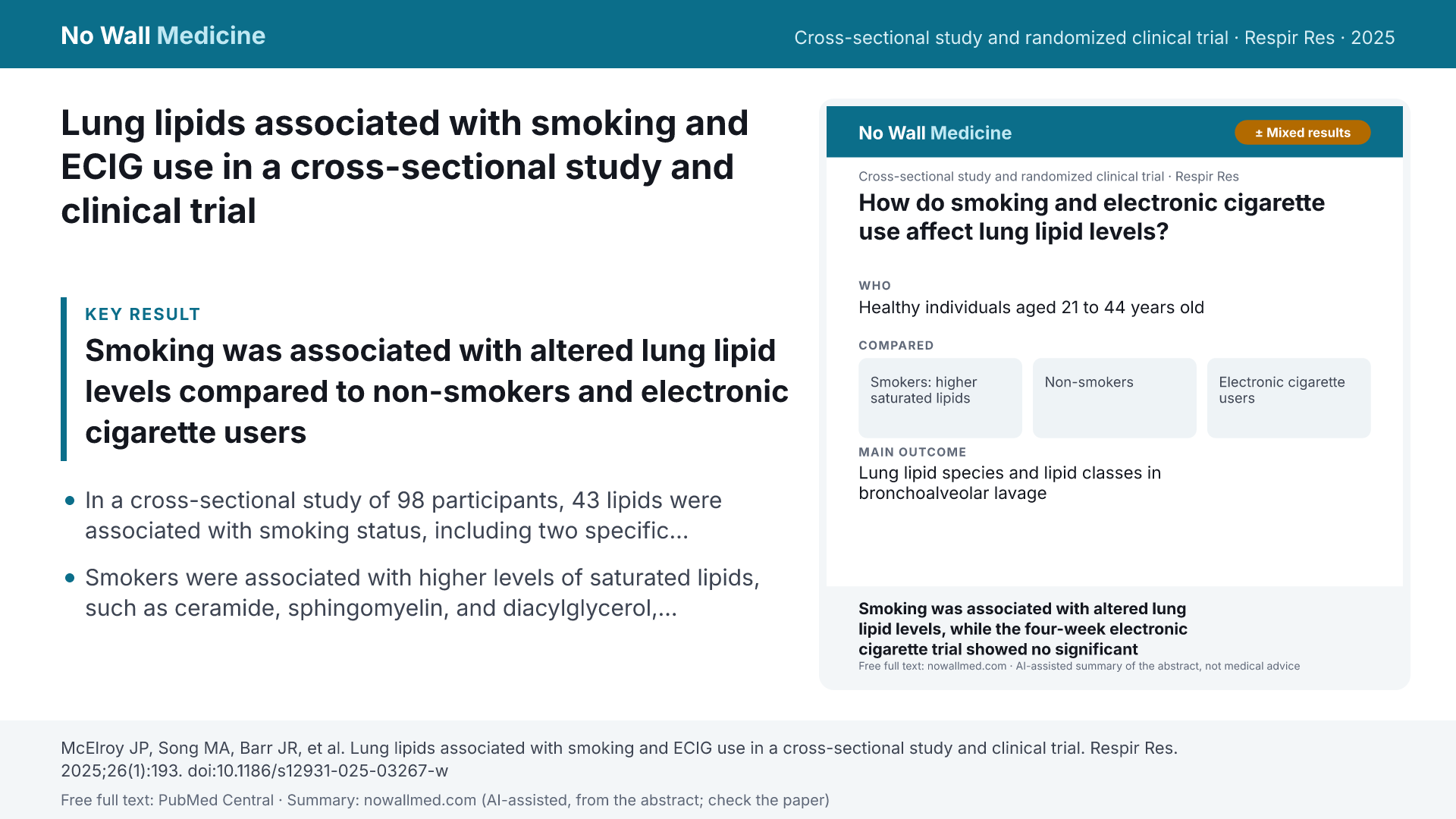
Smoking was associated with altered lung lipid levels compared to non-smokers and electronic cigarette users
Lung lipids associated with smoking and ECIG use in a cross-sectional study and clinical trial
Cross-sectional study and randomized clinical trialMixed results
How do smoking and electronic cigarette use affect lung lipid levels?
Who
Healthy individuals aged 21 to 44 years old
Compared
Smokers: higher saturated lipids
Non-smokers
Electronic cigarette users
Main outcome
Lung lipid species and lipid classes in bronchoalveolar lavage
Bottom line: Smoking was associated with altered lung lipid levels, while the four-week electronic cigarette trial showed no significant associations.
Respir Res · 2025-05-20 · Save PNG
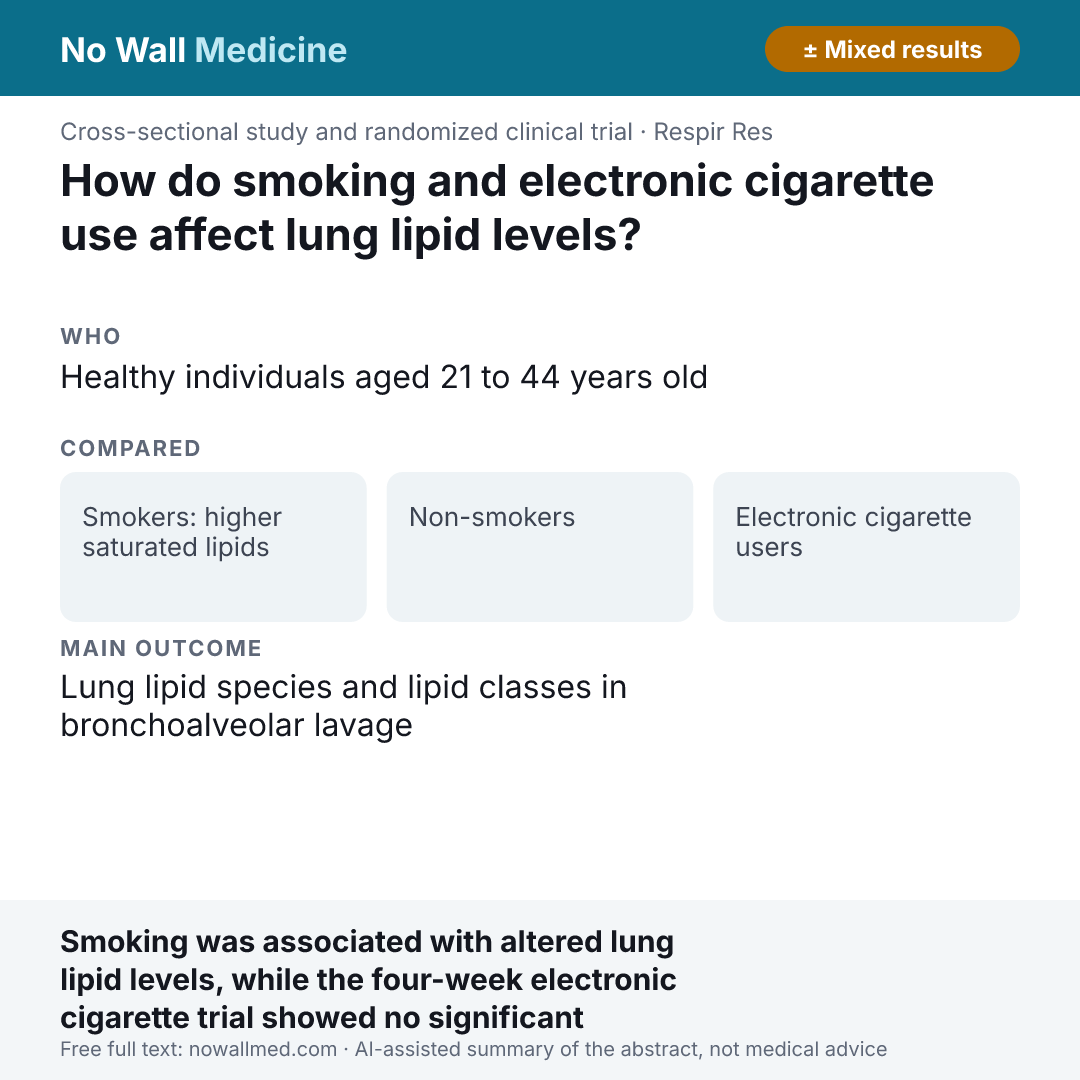
Clinical question: How do smoking and electronic cigarette use affect lung lipid levels?
Key points
- In a cross-sectional study of 98 participants, 43 lipids were associated with smoking status, including two specific lipids that differed between electronic cigarette users and non-smokers.
- Smokers were associated with higher levels of saturated lipids, such as ceramide, sphingomyelin, and diacylglycerol, compared to non-smokers and electronic cigarette users.
- A 4-week clinical trial involving 30 non-smokers assigned to use nicotine-free, flavorless electronic cigarettes or nothing showed no significant associations.
Headline and key points written with AI from the paper’s abstract, with every number checked against it. Read the paper before relying on them.
Was this summary helpful?
Subject terms
Headline, design, result, key points, caveat and citation as plain text.
Cite this article
McElroy JP, Song MA, Barr JR, et al. Lung lipids associated with smoking and ECIG use in a cross-sectional study and clinical trial. Respir Res. 2025;26(1):193. doi:10.1186/s12931-025-03267-w
Spotted a mistake? Suggest a correction