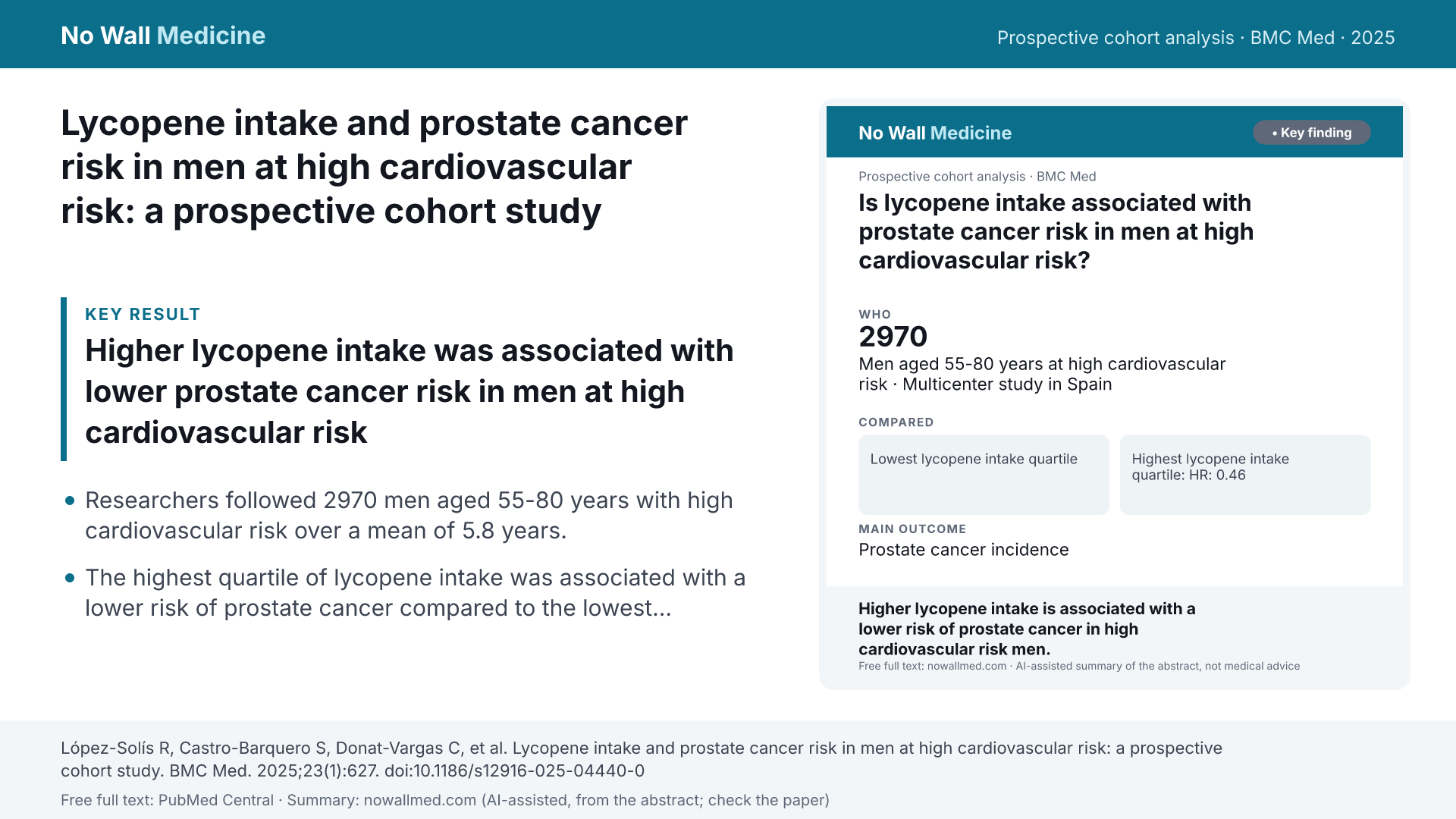
Higher lycopene intake was associated with lower prostate cancer risk in men at high cardiovascular risk
Lycopene intake and prostate cancer risk in men at high cardiovascular risk: a prospective cohort study
Prospective cohort analysisKey finding
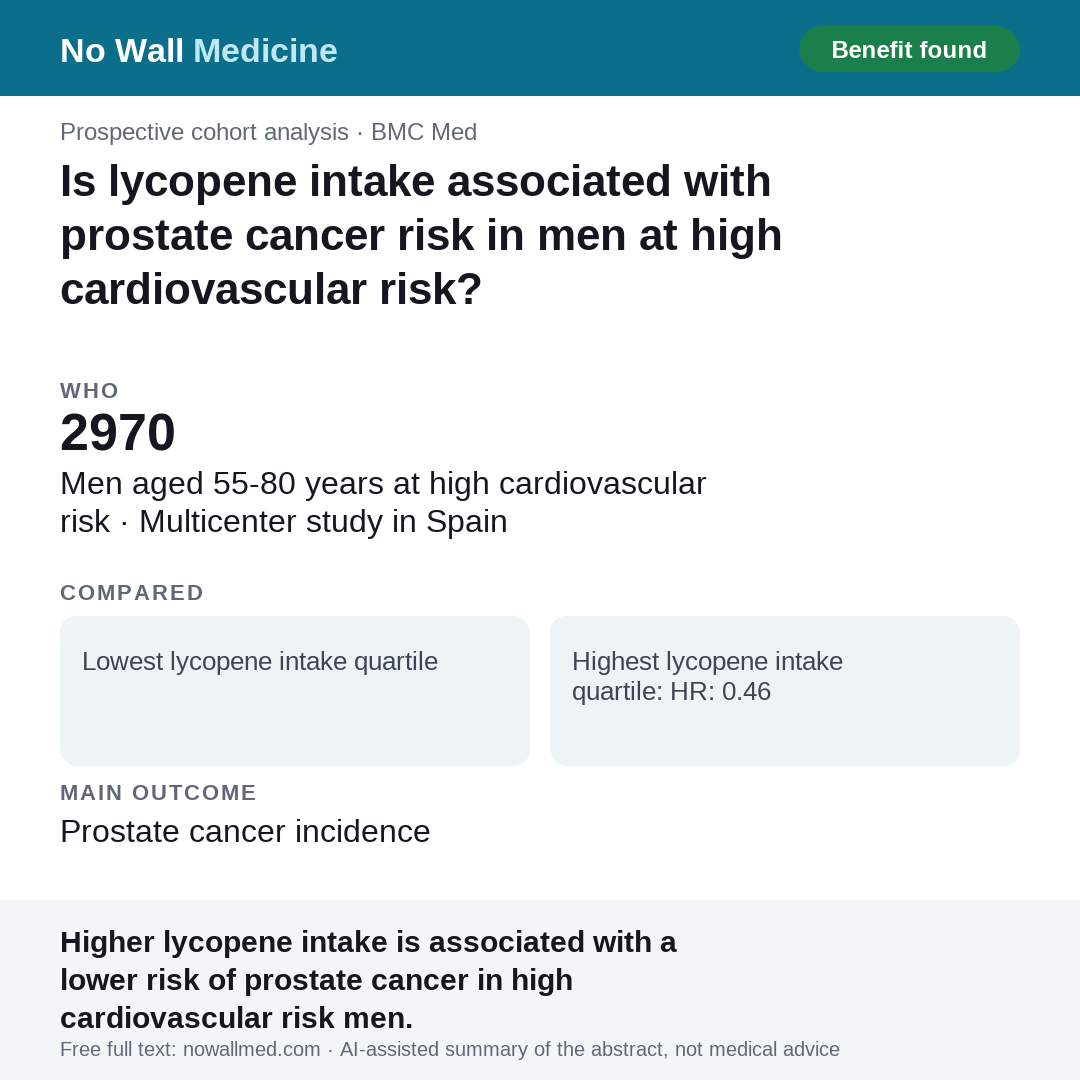
Is lycopene intake associated with prostate cancer risk in men at high cardiovascular risk?
Who
2970
Men aged 55-80 years at high cardiovascular risk · Multicenter study in Spain
Compared
Lowest lycopene intake quartile
Highest lycopene intake quartile: HR: 0.46
Main outcome
Prostate cancer incidence
Result: hazard ratio 0.46 (95% CI 0.23-0.95)
Bottom line: Higher lycopene intake is associated with a lower risk of prostate cancer in high cardiovascular risk men.
BMC Med · 2025-11-10Download image
Same trial (ISRCTN35739639)
Papers we list that report this registered trial, oldest first. Read a secondary analysis alongside the main results.
- Related report
Mediterranean diet with olive oil or nuts lowered major cardiovascular events in high-risk adults NEJM 2018-06 - Secondary analysis Key finding
This paper BMC Med 2025-11 - Related report
Adherence to Different Dietary Patterns and Subsequent Risk of Total, Ischemic, and Hemorrhagic Stroke Stroke 2026-02
Clinical question: Is lycopene intake associated with prostate cancer risk in men at high cardiovascular risk?
Key points
- Researchers followed 2970 men aged 55-80 years with high cardiovascular risk over a mean of 5.8 years.
- The highest quartile of lycopene intake was associated with a lower risk of prostate cancer compared to the lowest quartile (HR: 0.46; 95% CI: 0.23-0.95; p-trend = 0.035).
- An inverse association was observed at lycopene intakes above 4.9 mg/day (HR: 0.36; 95% CI: 0.13-0.98).
Headline and key points written with AI from the paper’s abstract, with every number checked against it. Read the paper before relying on them.
Was this summary helpful?
Subject terms
Headline, design, result, key points, caveat and citation as plain text.
Cite this article
López-Solís R, Castro-Barquero S, Donat-Vargas C, et al. Lycopene intake and prostate cancer risk in men at high cardiovascular risk: a prospective cohort study. BMC Med. 2025. doi:10.1186/s12916-025-04440-0
Spotted a mistake? Suggest a correction