Machine Learning Analysis to Identify Digital Behavioral Phenotypes for Engagement and Health Outcome Efficacy of an mHealth Intervention for Obesity: Randomized Controlled Trial
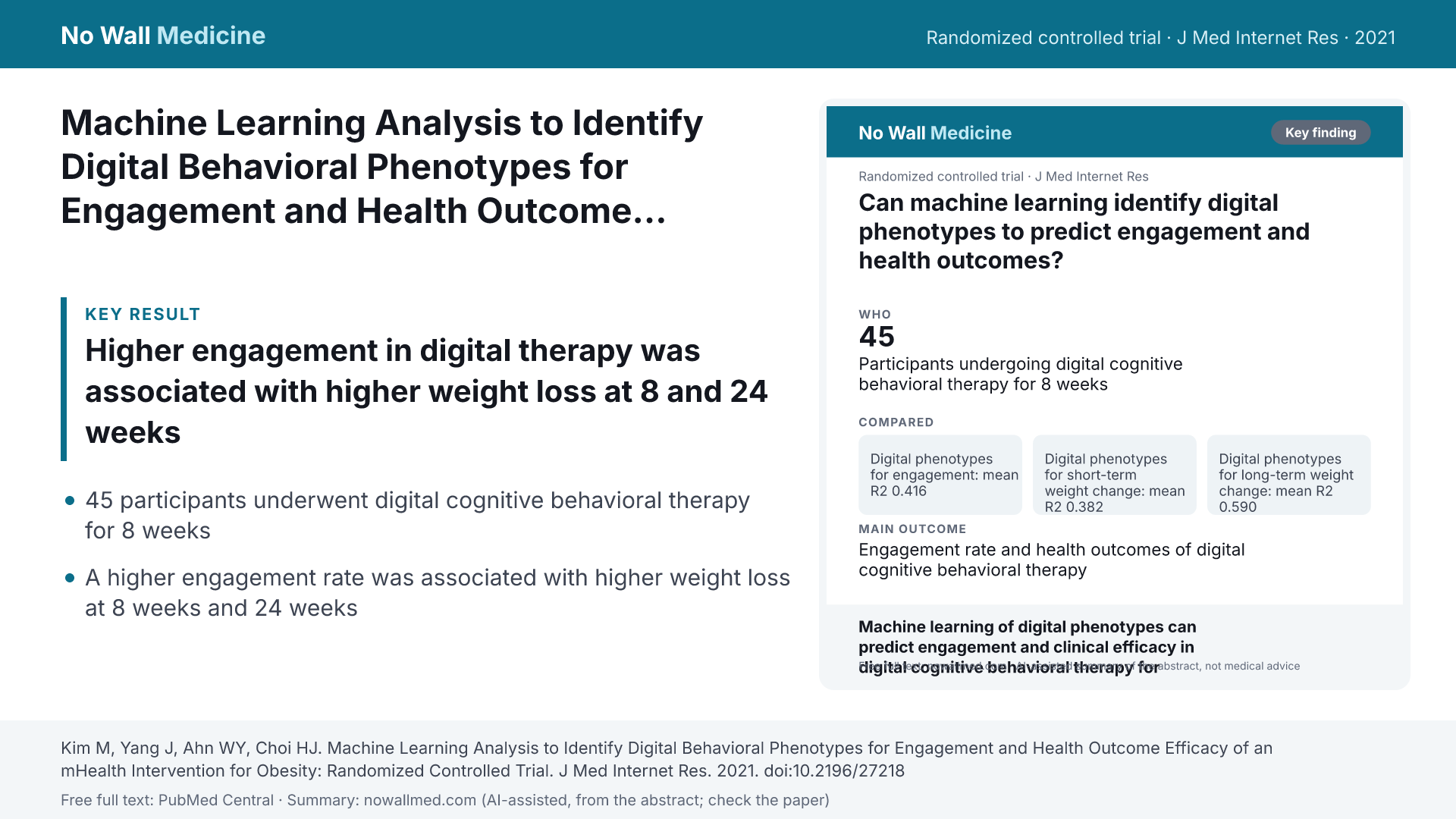
Key result: Higher engagement in digital therapy was associated with higher weight loss at 8 and 24 weeks
Randomized controlled trialKey finding
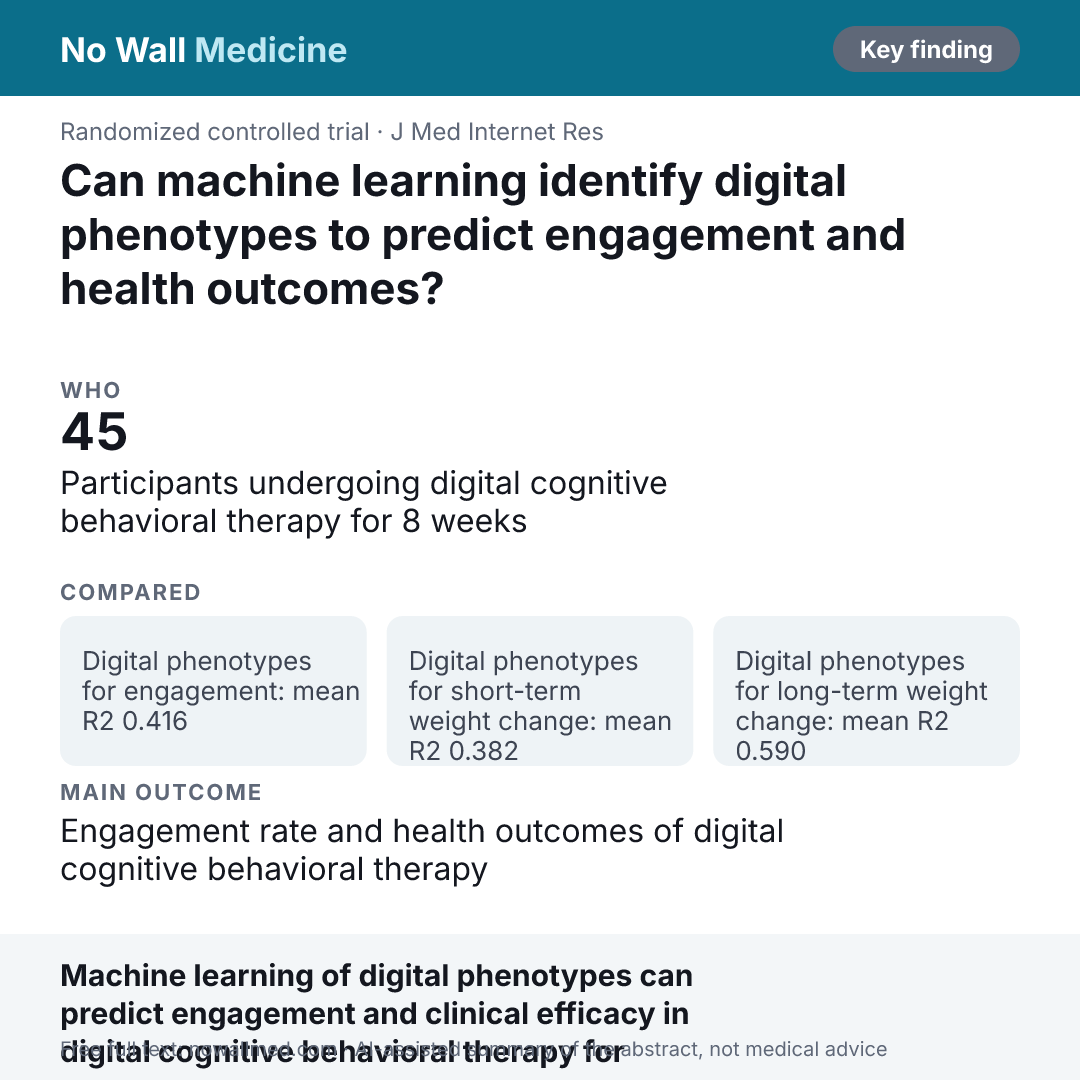
Can machine learning identify digital phenotypes to predict engagement and health outcomes?
Who
45
Participants undergoing digital cognitive behavioral therapy for 8 weeks
Compared
Digital phenotypes for engagement: mean R2 0.416
Digital phenotypes for short-term weight change: mean R2 0.382
Digital phenotypes for long-term weight change: mean R2 0.590
Main outcome
Engagement rate and health outcomes of digital cognitive behavioral therapy
Bottom line: Machine learning of digital phenotypes can predict engagement and clinical efficacy in digital cognitive behavioral therapy for obesity.
J Med Internet Res · 2021-06-24 · Save PNG
Key points
- 45 participants underwent digital cognitive behavioral therapy for 8 weeks.
- A higher engagement rate was associated with higher weight loss at 8 weeks and 24 weeks.
- 16 digital phenotypes predicted engagement rates with a mean R2 of 0.416.
Limitation the authors note: The study had a small sample of 45 participants
Discussion prompts
- Would these patients look like yours? Who was left out?
- Is the main outcome one that matters to patients?
- Is the difference large enough to change what you do?
Cite: Kim M, Yang J, Ahn WY, Choi HJ. Machine Learning Analysis to Identify Digital Behavioral Phenotypes for Engagement and Health Outcome Efficacy of an mHealth Intervention for Obesity: Randomized Controlled Trial. J Med Internet Res. 2021. doi:10.2196/27218
Free full text: PubMed Central · Summary and visual abstract: nowallmed.com/a/machine-learning-analysis-to-identify-digital-behavioral-phenotypes-1abbk29/ (AI-assisted from the abstract; check the paper before relying on it).