Machine learning and deep learning show satisfactory performance for diagnosing cervical degenerative diseases
Machine Learning and Deep Learning for the Diagnosis of Cervical Degenerative Diseases: Systematic Review and Meta-Analysis
Meta-analysis of 30 studiesBenefit found
Do machine learning models diagnose cervical diseases accurately?
Who
25301
patients with cervical degenerative diseases
Compared
Traditional machine learning
Deep learning
Main outcome
diagnostic accuracy
Bottom line: Machine learning models diagnose cervical diseases accurately
Limitation: low certainty of evidence
J Med Internet Res · 2026-10-05Download image
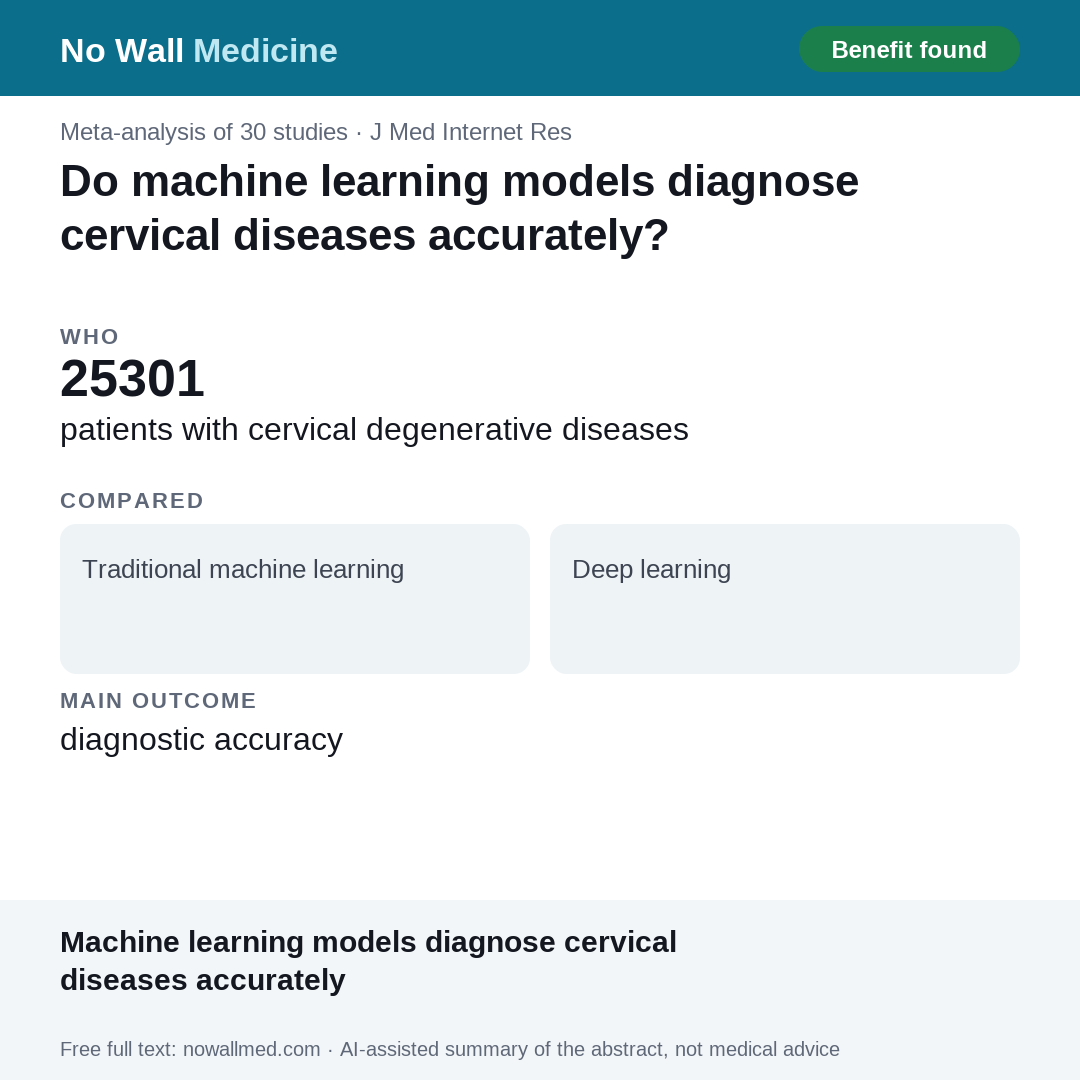
Clinical question: Do machine learning models diagnose cervical diseases accurately?
Why it matters: The performance of traditional machine learning and deep learning models for detecting cervical degenerative diseases has not yet been systematically analyzed.
Key points
- Researchers analyzed 30 studies involving 25,301 patients to evaluate traditional machine learning and deep learning for diagnosing cervical degenerative diseases.
- The pooled sensitivity was 0.92 and the pooled specificity was 0.88 for these diagnostic models.
- The area under the summary receiver operating characteristic curve was 0.96, though the overall certainty of evidence was rated as low.
Limitation the authors note: The authors state that external validation was limited and identified a high risk of bias in several studies.
Headline and key points written with AI from the paper’s abstract, with every number checked against it. Read the paper before relying on them.
Topics
Spotted a mistake? Suggest a correction