Machine learning risk scores improved the identification of high-risk patients during ambulance dispatch shortages
Machine learning assisted differentiation of low acuity patients at dispatch: The MADLAD randomized controlled trial
Parallel-group, randomized trialBenefit found
Does machine learning risk scores improve dispatchers' ability to identify high-risk patients?
Who
1245
Adult patients requiring low-priority ambulance response in resource constrained situations · Two study sites in Sweden
Compared
68.3%Machine learning-based risk assessment tool
62.5%Current clinical practice
Main outcome
First available ambulance sent to patient with highest National Early Warning Score
Result: odds ratio 1.28 (95% CI 1.00 to 1.63)
Bottom line: Machine learning decision support may improve capacity to differentiate high- and low-risk patients at dispatch.
Limitation: Limited to low-priority ambulance response in two Swedish regions and underpowered due to small sample size.
PLOS Med · 2026-03-31Download image
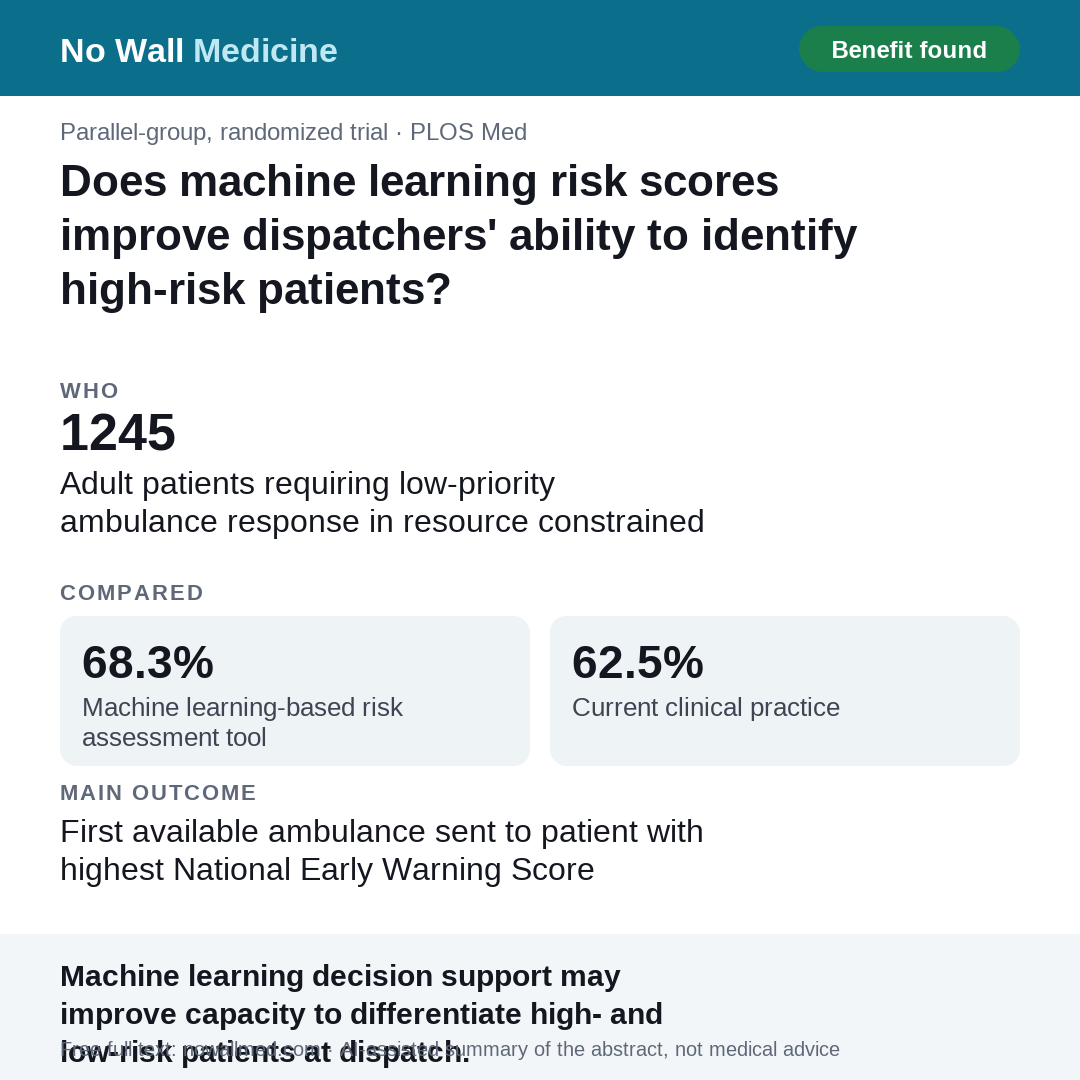
Clinical question: Does machine learning risk scores improve dispatchers' ability to identify high-risk patients?
Why it matters: Emergency dispatch centers often face situations where more patients require an ambulance than there are available vehicles to respond.
Key points
- Researchers conducted a randomized trial of 1,245 adult patients in Sweden who required low-priority ambulance responses during resource-constrained situations.
- The machine learning tool helped dispatchers correctly identify the highest-risk patient 68.3% of the time compared to 62.5% using current clinical practice.
- The intervention resulted in an odds ratio of 1.28 (95% CI [1.00, 1.63], p = 0.047) for the primary outcome.
Limitation the authors note: The study was limited to low-priority patients in two Swedish regions and was underpowered for the primary outcome due to a smaller than expected sample size.
Headline and key points written with AI from the paper’s abstract, with every number checked against it. Read the paper before relying on them.
Topics
Spotted a mistake? Suggest a correction