Pilot trial to test machine learning model for predicting 31-day mortality in emergency departments
Machine learning for risk stratification in the emergency department (MARS-ED) study protocol for a randomized controlled pilot trial on the implementation of a prediction model based on machine learning technology predicting 31-day mortality in the emergency department
Prospective, randomized, open-label, non-inferiority pilot clinical trialUnclear result
Does a machine learning prediction model impact 31-day mortality in the emergency department?
Who
Adult patients 18 years or older in the emergency department · emergency department
Compared
control group
intervention group
Main outcome
31-day mortality
Bottom line: This pilot trial aims to investigate the clinical impact of the RISKINDEX machine learning model.
Scand J Trauma Resusc Emerg Med · 2024-01-23Download image
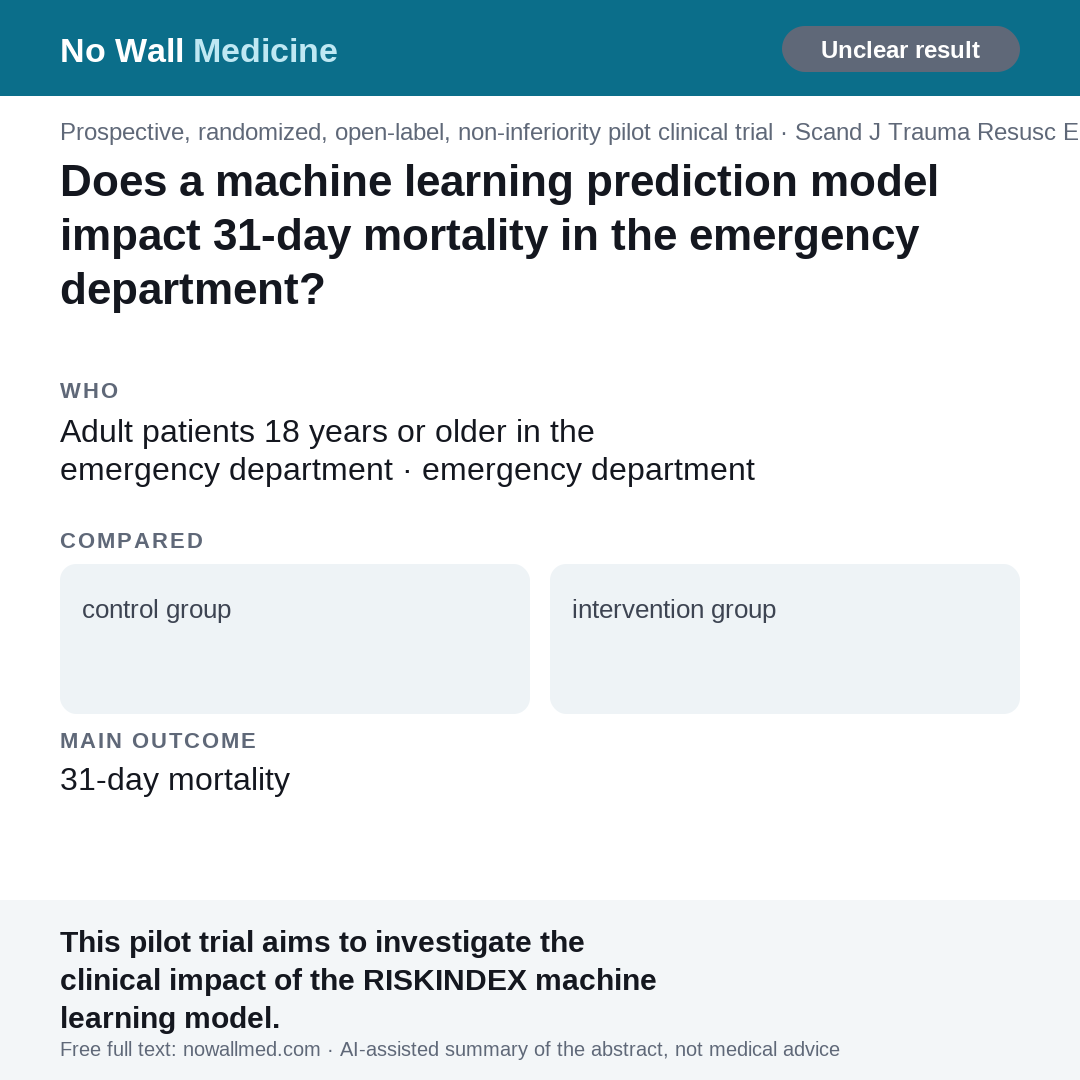
Clinical question: Does a machine learning prediction model impact 31-day mortality in the emergency department?
Why it matters: It is unknown if machine learning prediction models for 31-day mortality actually have a clinical impact when implemented in emergency department practice.
Key points
- Adult patients aged 18 years or older will be randomly assigned to either a control group receiving usual care or an intervention group receiving the RISKINDEX machine learning tool.
- The study will compare the clinical impact and prognostic accuracy of the RISKINDEX, a model using laboratory tests and demographic data, against standard clinical intuition.
Headline and key points written with AI from the paper’s abstract, with every number checked against it. Read the paper before relying on them.
Topics
Cite this article
van Dam PMEL, van Doorn WPTM, van Gils F, Sevenich L, Lambriks L, Meex SJR. Machine learning for risk stratification in the emergency department (MARS-ED) study protocol for a randomized controlled pilot trial on the implementation of a prediction model based on machine learning technology predicting 31-day mortality in the emergency department. Scand J Trauma Resusc Emerg Med. 2024. doi:10.1186/s13049-024-01177-2
Spotted a mistake? Suggest a correction
Top studies every Monday
The week’s key trials and guidelines in your specialties, plus any topics you follow. By email, free.
Get the weekly digest