Machine learning in vascular surgery: a systematic review and critical appraisal
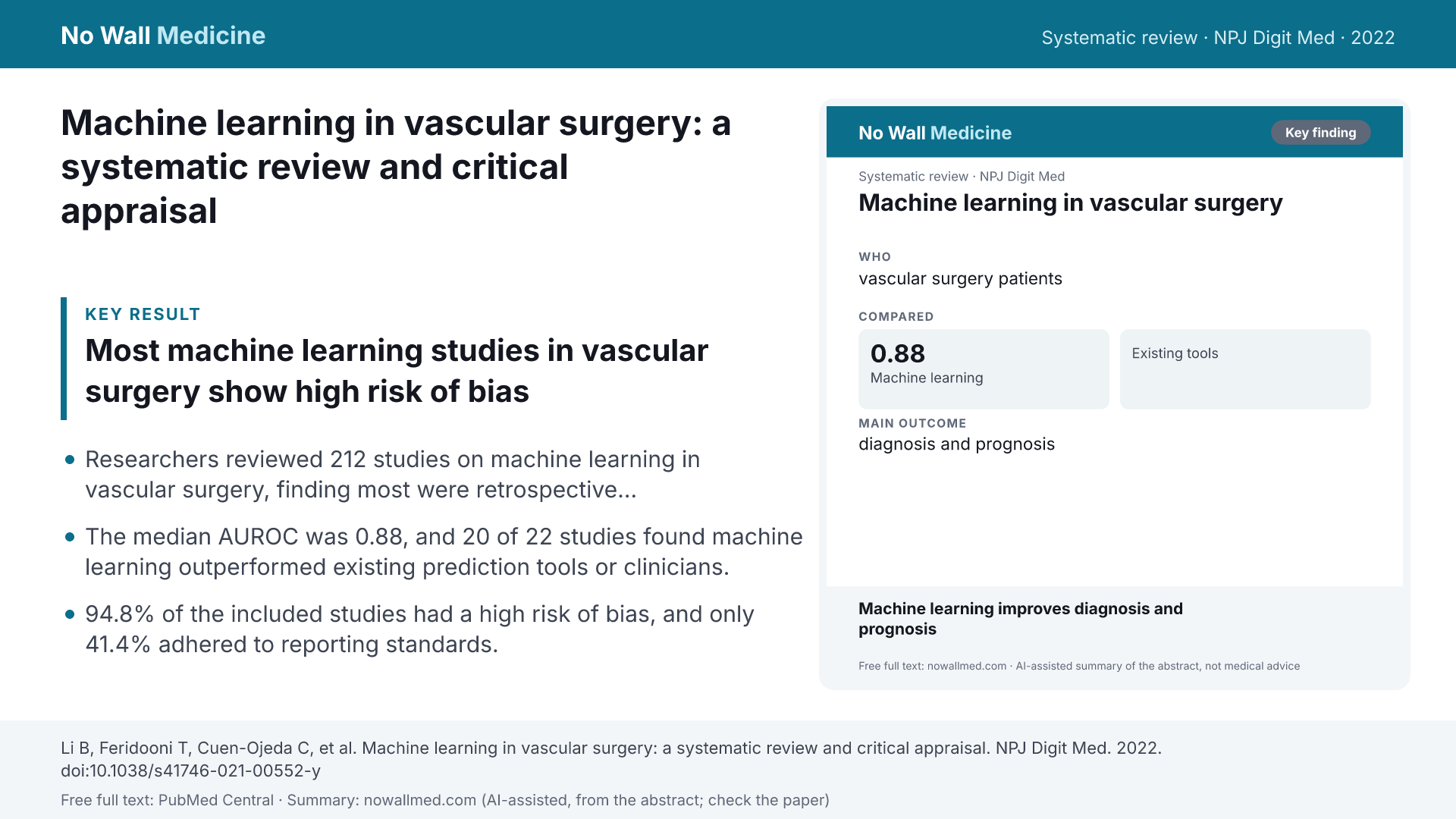
Key result: Most machine learning studies in vascular surgery show high risk of bias
Key points
- Researchers reviewed 212 studies on machine learning in vascular surgery, finding most were retrospective and single-center.
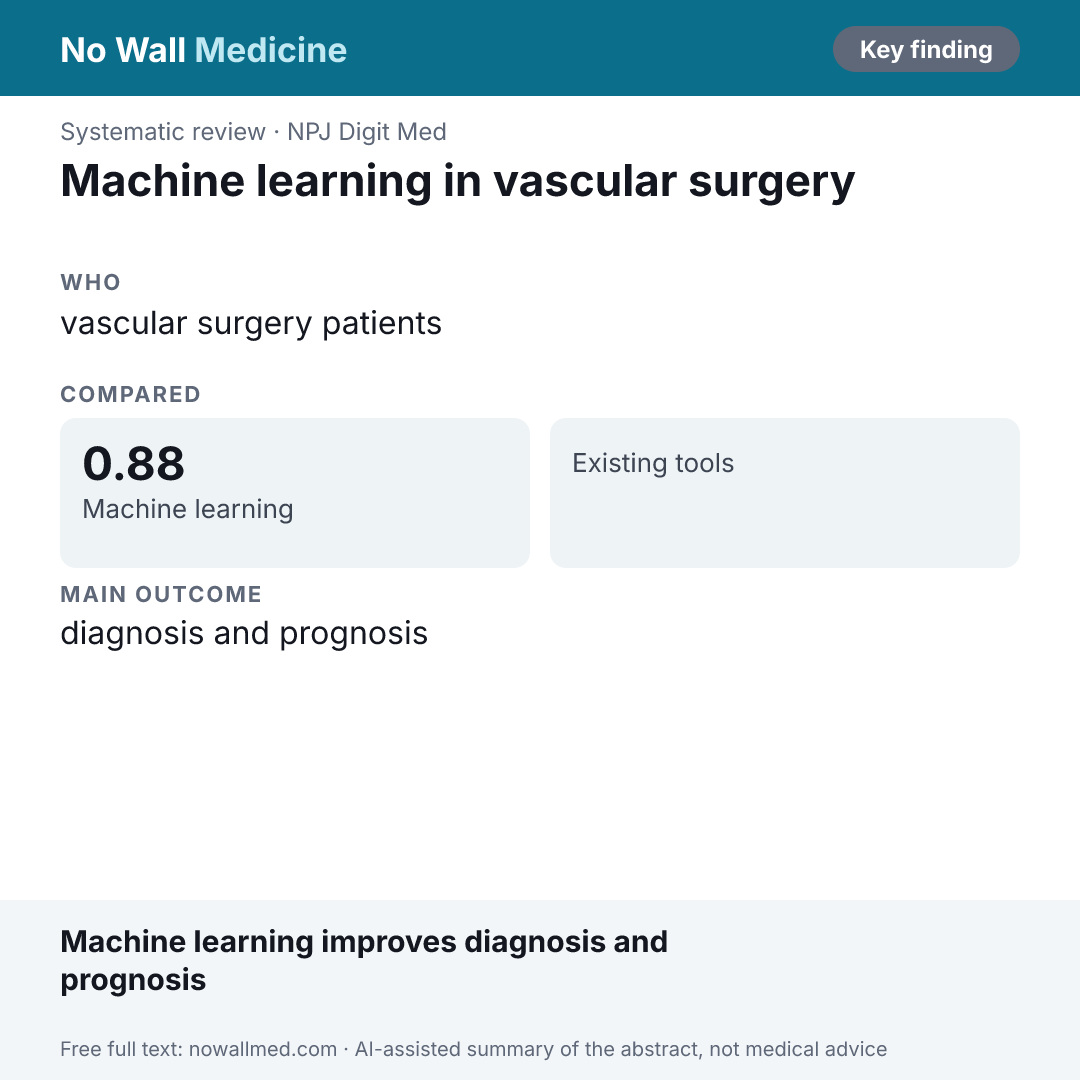
- The median AUROC was 0.88, and 20 of 22 studies found machine learning outperformed existing prediction tools or clinicians.
- 94.8% of the included studies had a high risk of bias, and only 41.4% adhered to reporting standards.
Why it matters: While machine learning use is rising, it was unclear how many studies met quality standards or outperformed existing clinical tools.
Limitation the authors note: The review found that most included studies were retrospective and single-center, with no randomized controlled trials.
Discussion prompts
- Would these patients look like yours? Who was left out?
- Is the main outcome one that matters to patients?
- Is the difference large enough to change what you do?
Cite: Li B, Feridooni T, Cuen-Ojeda C, et al. Machine learning in vascular surgery: a systematic review and critical appraisal. NPJ Digit Med. 2022. doi:10.1038/s41746-021-00552-y
Free full text: PubMed Central · Summary and visual abstract: nowallmed.com/a/machine-learning-in-vascular-surgery-a-systematic-review-and-critical-1a22knn/ (AI-assisted from the abstract; check the paper before relying on it).