Baseline symptom severity and number of training sessions influence cognitive training effectiveness for anxiety and depression
Machine learning meta-analysis identifies individual characteristics moderating cognitive intervention efficacy for anxiety and depression symptoms
Individual-level meta-analysisBenefit found
What factors moderate cognitive training efficacy for anxiety and depression symptoms?
Who
1544
Participants undergoing working memory, attention, interpretation, or inhibitory control training
Compared
Cognitive trainings
Control conditions
Main outcome
Improvement in anxiety and depression symptoms
Bottom line: Cognitive trainings are associated with higher predicted improvement than control conditions, especially for those with severe baseline symptoms.
Limitation: heterogeneous datasets
NPJ Digit Med · 2025-01-28Download image
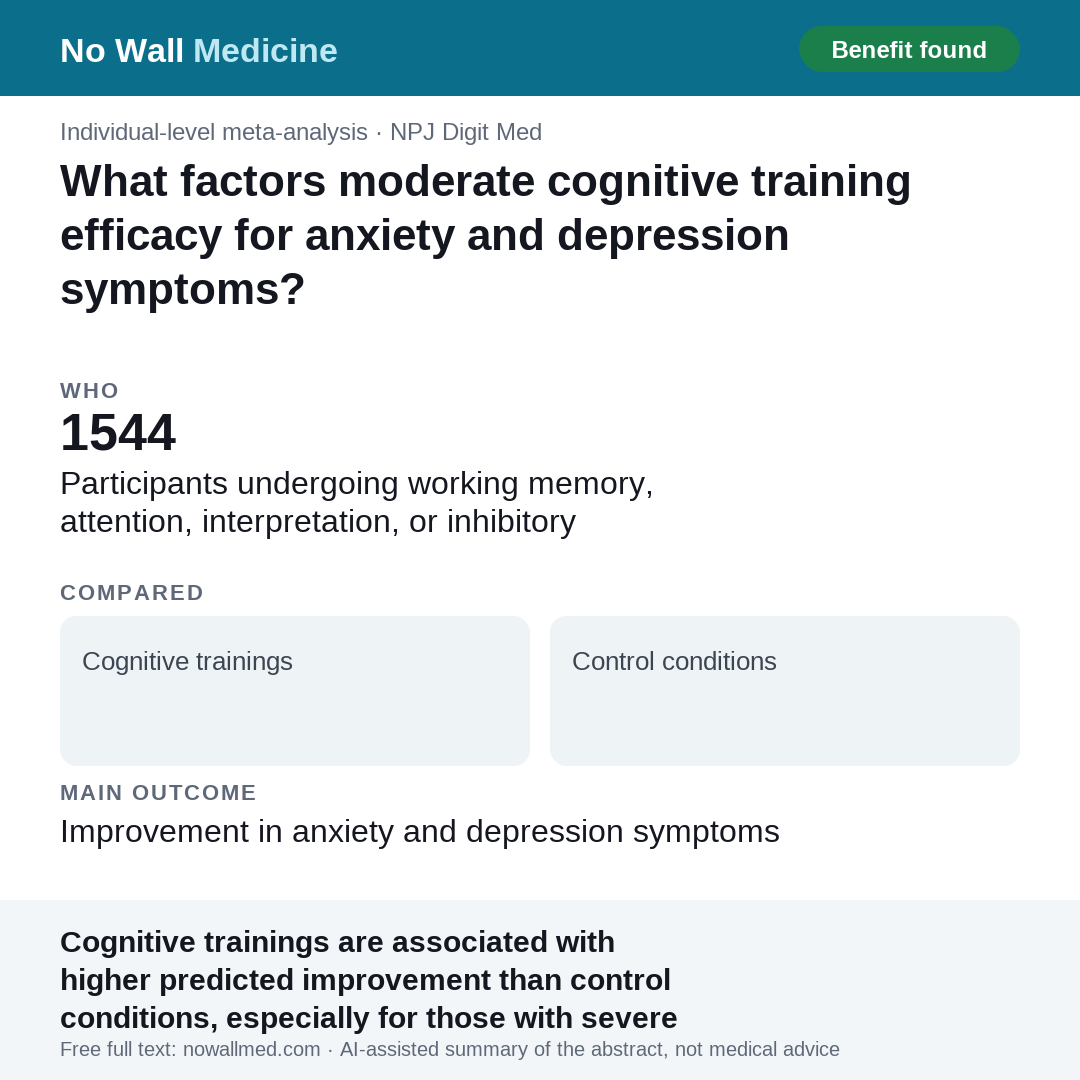
Clinical question: What factors moderate cognitive training efficacy for anxiety and depression symptoms?
Why it matters: The effectiveness of cognitive training for anxiety and depression symptoms has yielded inconsistent outcomes across different studies.
Key points
- Researchers analyzed 22 datasets involving 1544 participants who underwent working memory training, attention bias modification, interpretation bias modification, or inhibitory control training.
- Cognitive trainings were associated with higher predicted improvement than control conditions, particularly for attention and interpretation bias modification.
- Baseline depression and anxiety symptoms were the most influential factors, with more severe symptoms associated with greater improvement.
Limitation the authors note: The investigation was limited by the use of heterogeneous datasets.
Headline and key points written with AI from the paper’s abstract, with every number checked against it. Read the paper before relying on them.
Cite this article
Richter T, Shani R, Tal S, Derakshan N, Cohen N, Enock PM. Machine learning meta-analysis identifies individual characteristics moderating cognitive intervention efficacy for anxiety and depression symptoms. NPJ Digit Med. 2025. doi:10.1038/s41746-025-01449-w
Spotted a mistake? Suggest a correction
Top studies every Monday
The week’s key trials and guidelines in your specialties, plus any topics you follow. By email, free.
Get the weekly digest