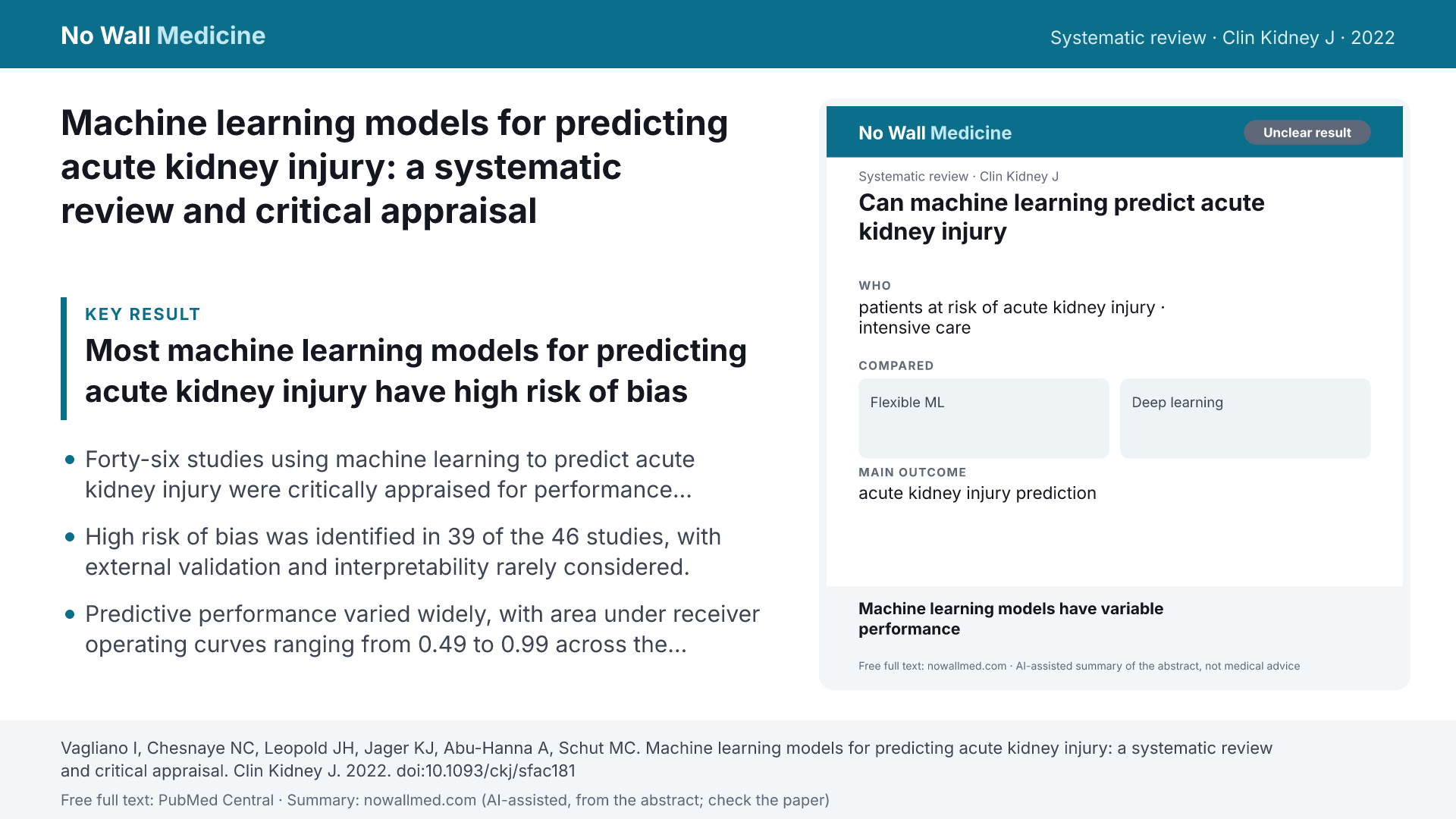
Machine learning models for predicting acute kidney injury: a systematic review and critical appraisal
Key result: Most machine learning models for predicting acute kidney injury have high risk of bias
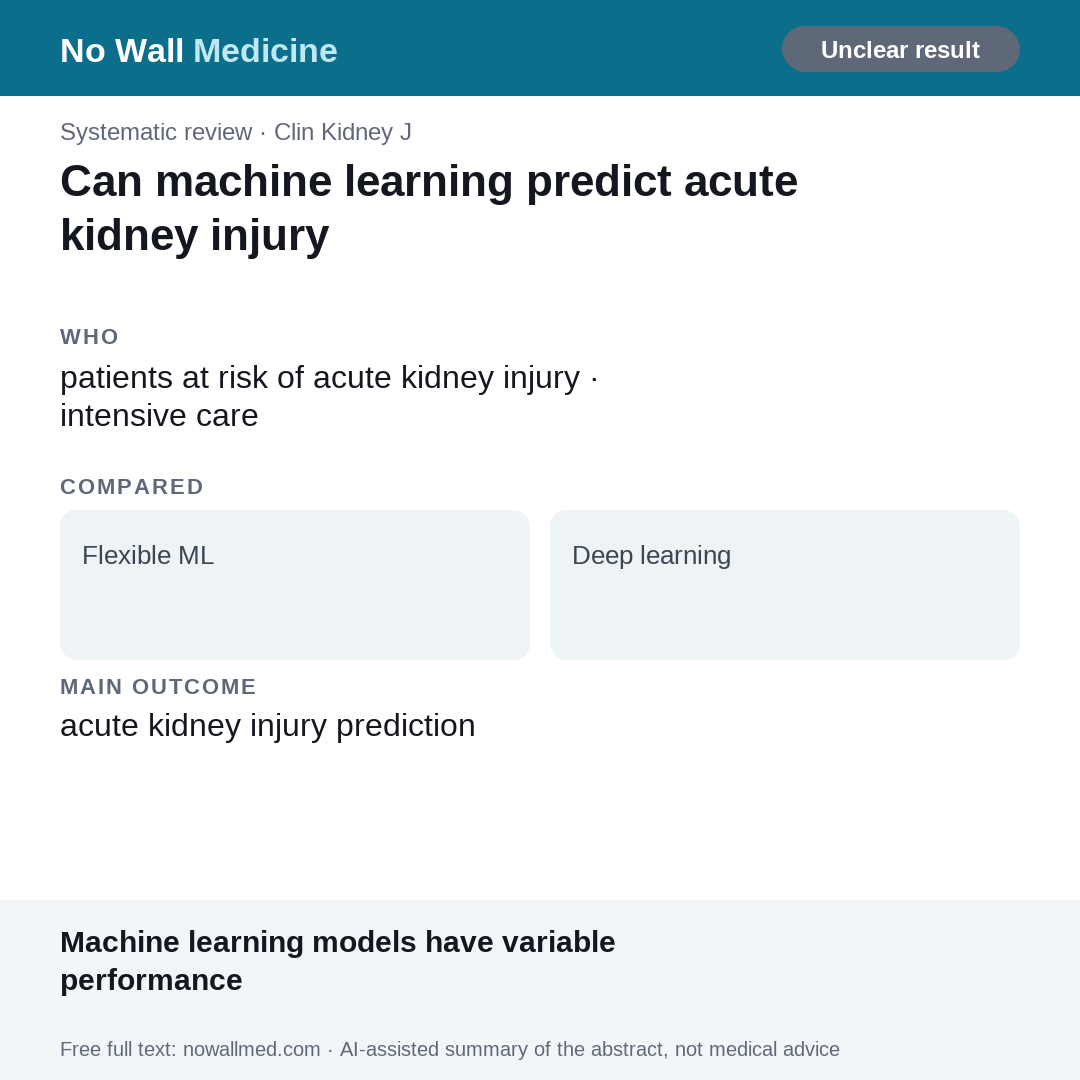
Key points
- Forty-six studies using machine learning to predict acute kidney injury were critically appraised for performance and methodological soundness.
- High risk of bias was identified in 39 of the 46 studies, with external validation and interpretability rarely considered.
- Predictive performance varied widely, with area under receiver operating curves ranging from 0.49 to 0.99 across the included studies.
Why it matters: The methodological quality and reproducibility of machine learning models for acute kidney injury prediction were not previously systematically assessed.
Limitation the authors note: Reproducibility was limited as data and code were usually unavailable in the included studies.
Discussion prompts
- Would these patients look like yours? Who was left out?
- Is the main outcome one that matters to patients?
- Is the difference large enough to change what you do?
Cite: Vagliano I, Chesnaye NC, Leopold JH, Jager KJ, Abu-Hanna A, Schut MC. Machine learning models for predicting acute kidney injury: a systematic review and critical appraisal. Clin Kidney J. 2022. doi:10.1093/ckj/sfac181
Free full text: PubMed Central · Summary and visual abstract: nowallmed.com/a/machine-learning-models-for-predicting-acute-kidney-injury-a-1s6yblw/ (AI-assisted from the abstract; check the paper before relying on it).