Machine learning models show high predictive capacity for cancer-associated thrombosis despite high risk of bias
Machine learning models for risk prediction of cancer-associated thrombosis: a systematic review and meta-analysis
Meta-analysis of 32 studiesBenefit found
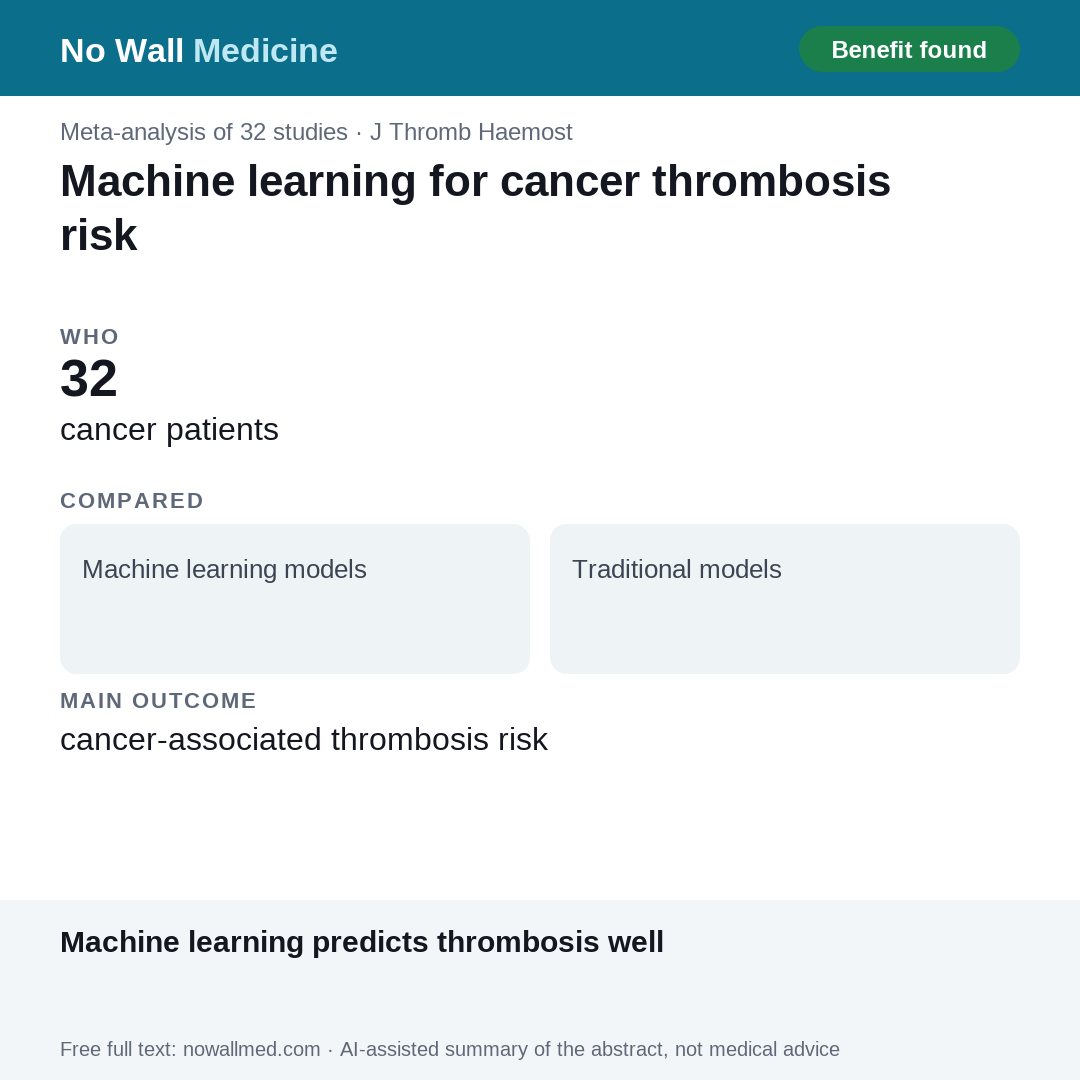
Machine learning for cancer thrombosis risk
Who
32
cancer patients
Compared
Machine learning models
Traditional models
Main outcome
cancer-associated thrombosis risk
Bottom line: Machine learning predicts thrombosis well
Limitation: high risk of bias
J Thromb Haemost · 2024-11-15Download image
Why it matters: A comprehensive assessment of how well machine learning models predict the risk of cancer-associated thrombosis was lacking.
Key points
- Researchers analyzed 32 studies to evaluate how well machine learning models predict cancer-associated thrombosis, which is blood clotting related to cancer.
- A meta-analysis of 21 studies demonstrated that machine learning models have a high predictive capacity for this condition.
- Most of the included literature exhibited a high risk of bias, although the applicability of the models was deemed acceptable.
Limitation the authors note: Most of the included literature exhibited a high risk of bias.
Headline and key points written with AI from the paper’s abstract, with every number checked against it. Read the paper before relying on them.
Was this summary helpful?
Subject terms
Cite this article
Chen K, Zhang Y, Zhang L, Zhang W, Chen Y. Machine learning models for risk prediction of cancer-associated thrombosis: a systematic review and meta-analysis. J Thromb Haemost. 2024. doi:10.1016/j.jtha.2024.11.001
Spotted a mistake? Suggest a correction
Top studies every Monday
The week’s key trials and guidelines in your specialties, plus any topics you follow. By email, free.
Get the weekly digest