Magnesium hydroxide compared to macrogol or electrolytes for preventing constipation in incurable cancer patients
Magnesium hydroxide versus macrogol/electrolytes in the prevention of opioid-induced constipation in incurable cancer patients: study protocol for an open-label, randomized controlled trial (the OMAMA study)
Open-label, randomized, multicenter studyUnclear result
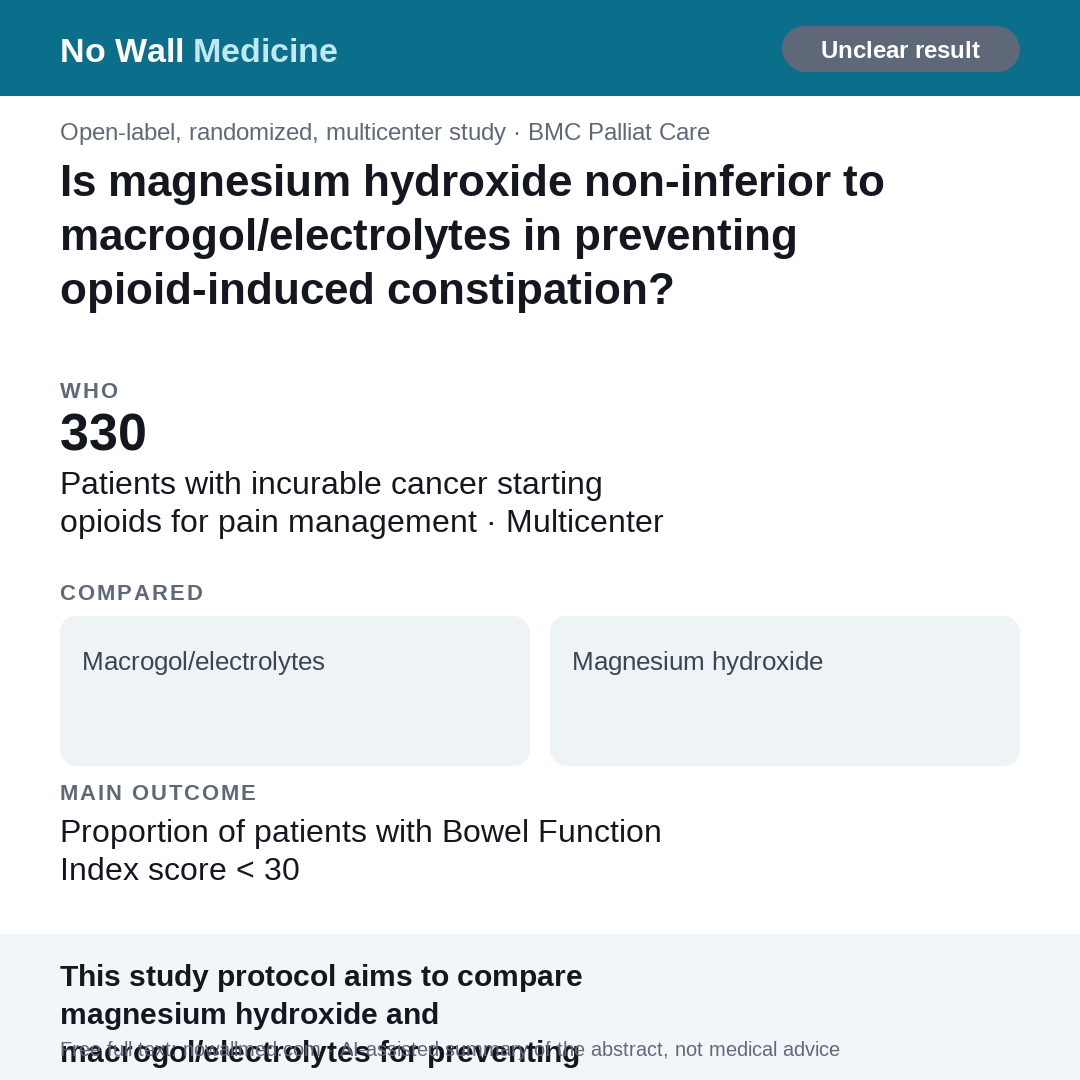
Is magnesium hydroxide non-inferior to macrogol/electrolytes in preventing opioid-induced constipation?
Who
330
Patients with incurable cancer starting opioids for pain management · Multicenter
Compared
Macrogol/electrolytes
Magnesium hydroxide
Main outcome
Proportion of patients with Bowel Function Index score < 30
Bottom line: This study protocol aims to compare magnesium hydroxide and macrogol/electrolytes for preventing constipation.
BMC Palliat Care · 2023-03-14Download image
Clinical question: Is magnesium hydroxide non-inferior to macrogol/electrolytes in preventing opioid-induced constipation?
Why it matters: Evidence from randomized controlled trials is largely lacking regarding whether magnesium hydroxide or macrogol/electrolytes are better for preventing constipation in patients using opioids.
Key points
- The OMAMA study will enroll 330 patients with incurable cancer starting opioids for pain management to compare magnesium hydroxide with macrogol/electrolytes.
- The primary goal is to determine if magnesium hydroxide is non-inferior to macrogol/electrolytes regarding the proportion of patients with a Bowel Function Index score below 30 on day 14.
- Researchers will also assess side effects, patient satisfaction, pain scores, quality of life, and cost-effectiveness.
Headline and key points written with AI from the paper’s abstract, with every number checked against it. Read the paper before relying on them.
Was this summary helpful?

Subject terms
Cite this article
Kistemaker KRJ, de Graeff A, Crul M, de Klerk G, van de Ven PM, van der Meulen MP. Magnesium hydroxide versus macrogol/electrolytes in the prevention of opioid-induced constipation in incurable cancer patients: study protocol for an open-label, randomized controlled trial (the OMAMA study). BMC Palliat Care. 2023. doi:10.1186/s12904-023-01143-2
Spotted a mistake? Suggest a correction
Top studies every Monday
The week’s key trials and guidelines in your specialties, plus any topics you follow. By email, free.
Get the weekly digest