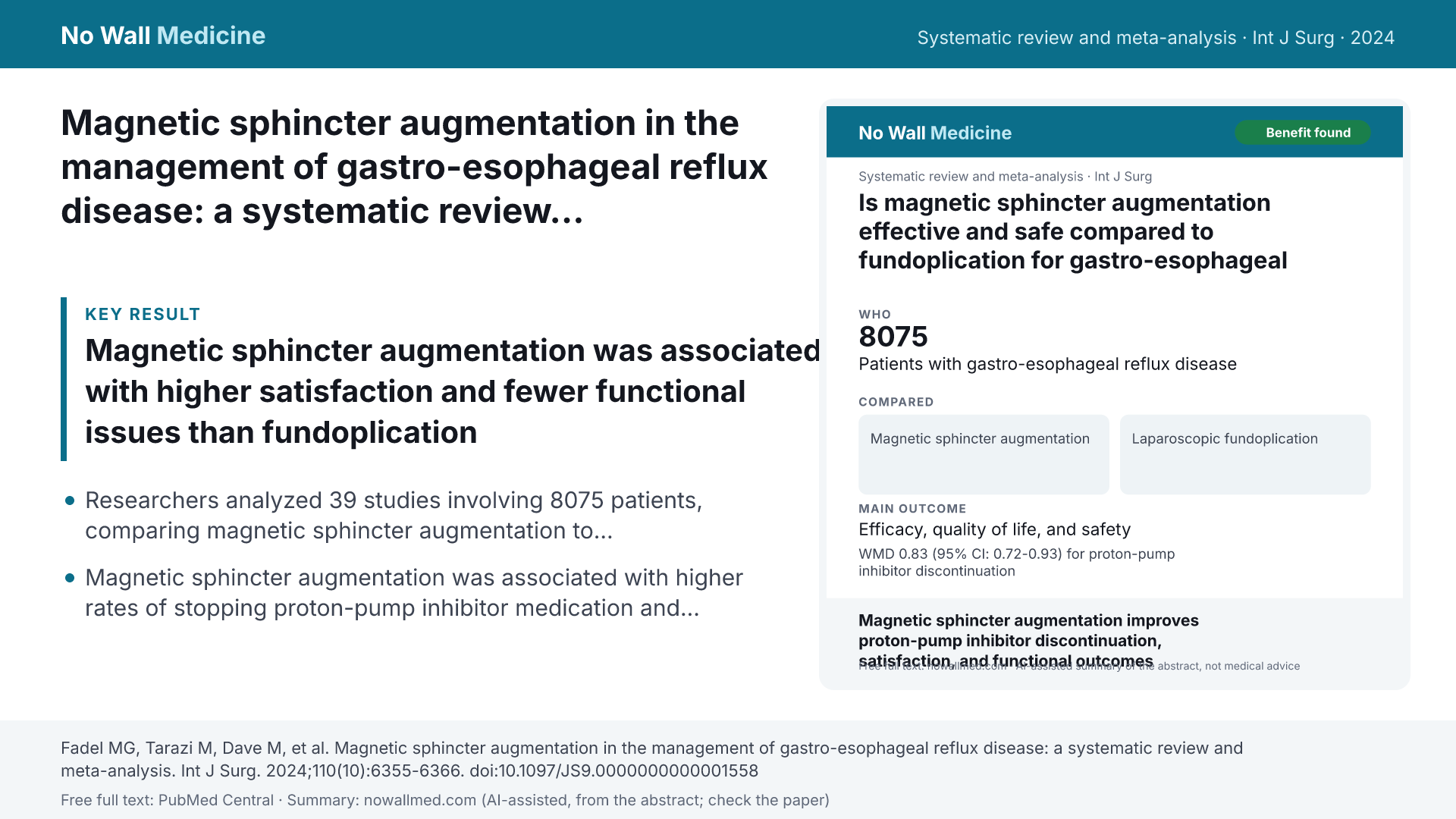
Magnetic sphincter augmentation was associated with higher satisfaction and fewer functional issues than fundoplication
Magnetic sphincter augmentation in the management of gastro-esophageal reflux disease: a systematic review and meta-analysis
Systematic review and meta-analysisBenefit found
Is magnetic sphincter augmentation effective and safe compared to fundoplication for gastro-esophageal reflux disease?
Who
8075
Patients with gastro-esophageal reflux disease
Compared
Magnetic sphincter augmentation
Laparoscopic fundoplication
Main outcome
Efficacy, quality of life, and safety
Result: WMD 0.83 (95% CI: 0.72-0.93) for proton-pump inhibitor discontinuation
Bottom line: Magnetic sphincter augmentation improves proton-pump inhibitor discontinuation, satisfaction, and functional outcomes compared to fundoplication, but has higher dysphagia rates.
Limitation: Randomized controlled trials directly comparing magnetic sphincter augmentation with fundoplication are necessary.
Int J Surg · 2024-10-01 · Save PNG
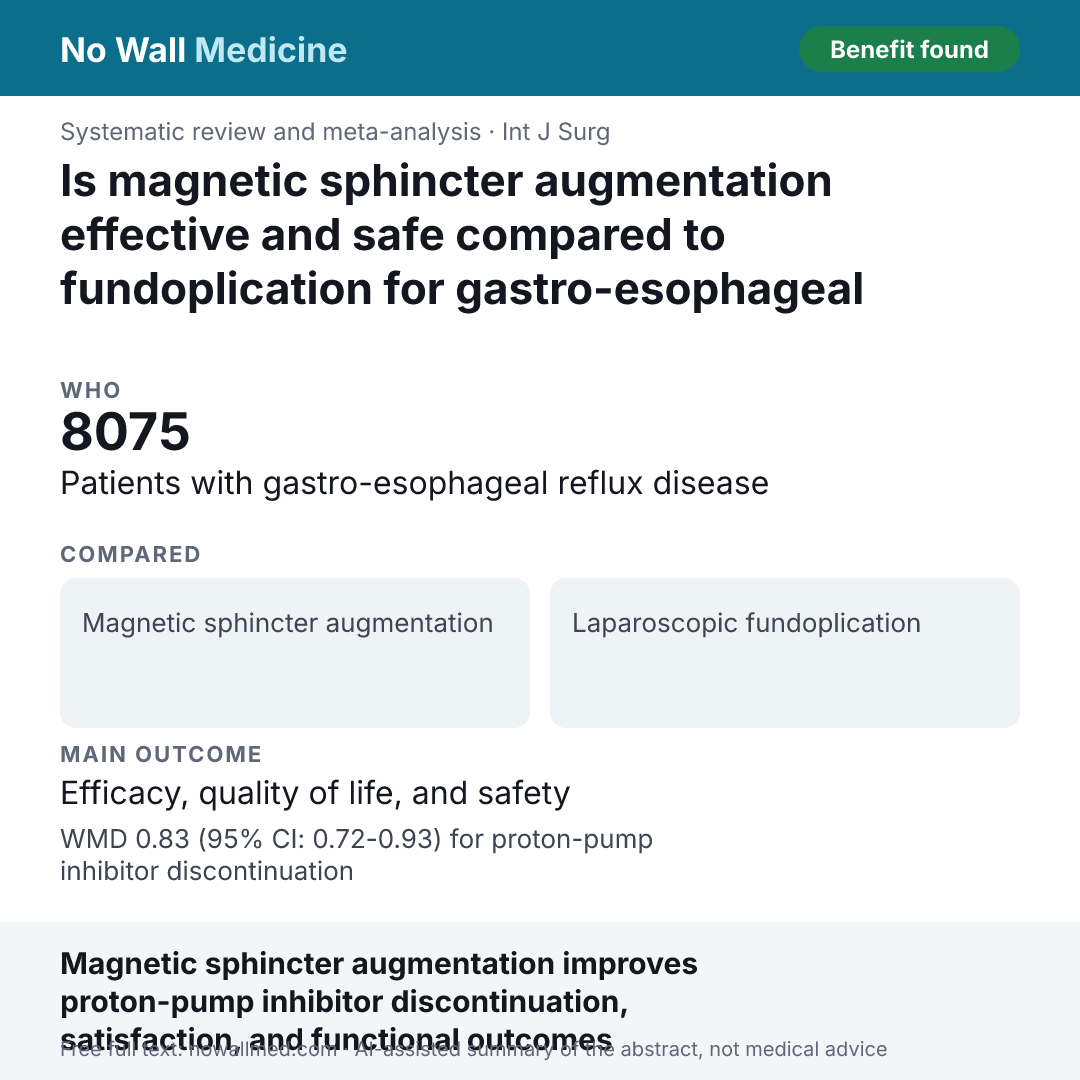
Clinical question: Is magnetic sphincter augmentation effective and safe compared to fundoplication for gastro-esophageal reflux disease?
Key points
- Researchers analyzed 39 studies involving 8075 patients, comparing magnetic sphincter augmentation to laparoscopic fundoplication for gastro-esophageal reflux disease.
- Magnetic sphincter augmentation was associated with higher rates of stopping proton-pump inhibitor medication and higher patient satisfaction compared to fundoplication.
- Magnetic sphincter augmentation was associated with better ability to belch, less vomiting, and less bloating, but higher rates of dysphagia, or difficulty swallowing.
Limitation the authors note: The authors state that randomized controlled trials directly comparing the two procedures are necessary to determine the management pathway.
Headline and key points written with AI from the paper’s abstract, with every number checked against it. Read the paper before relying on them.
Was this summary helpful?
Subject terms
Headline, design, result, key points, caveat and citation as plain text.
Cite this article
Fadel MG, Tarazi M, Dave M, et al. Magnetic sphincter augmentation in the management of gastro-esophageal reflux disease: a systematic review and meta-analysis. Int J Surg. 2024;110(10):6355-6366. doi:10.1097/JS9.0000000000001558
Spotted a mistake? Suggest a correction