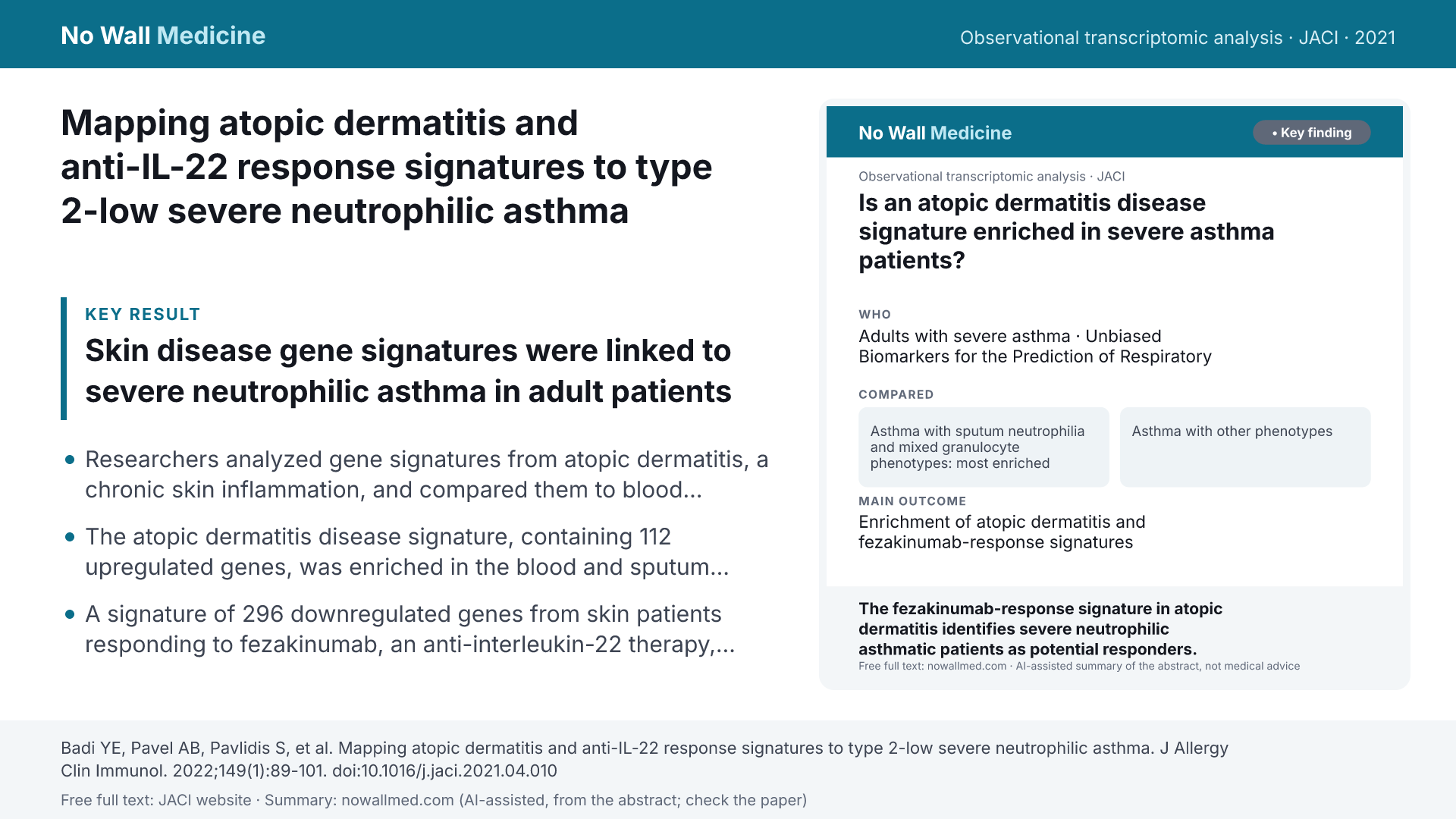
Mapping atopic dermatitis and anti-IL-22 response signatures to type 2-low severe neutrophilic asthma
Key result: Skin disease gene signatures were linked to severe neutrophilic asthma in adult patients
Observational transcriptomic analysisKey finding
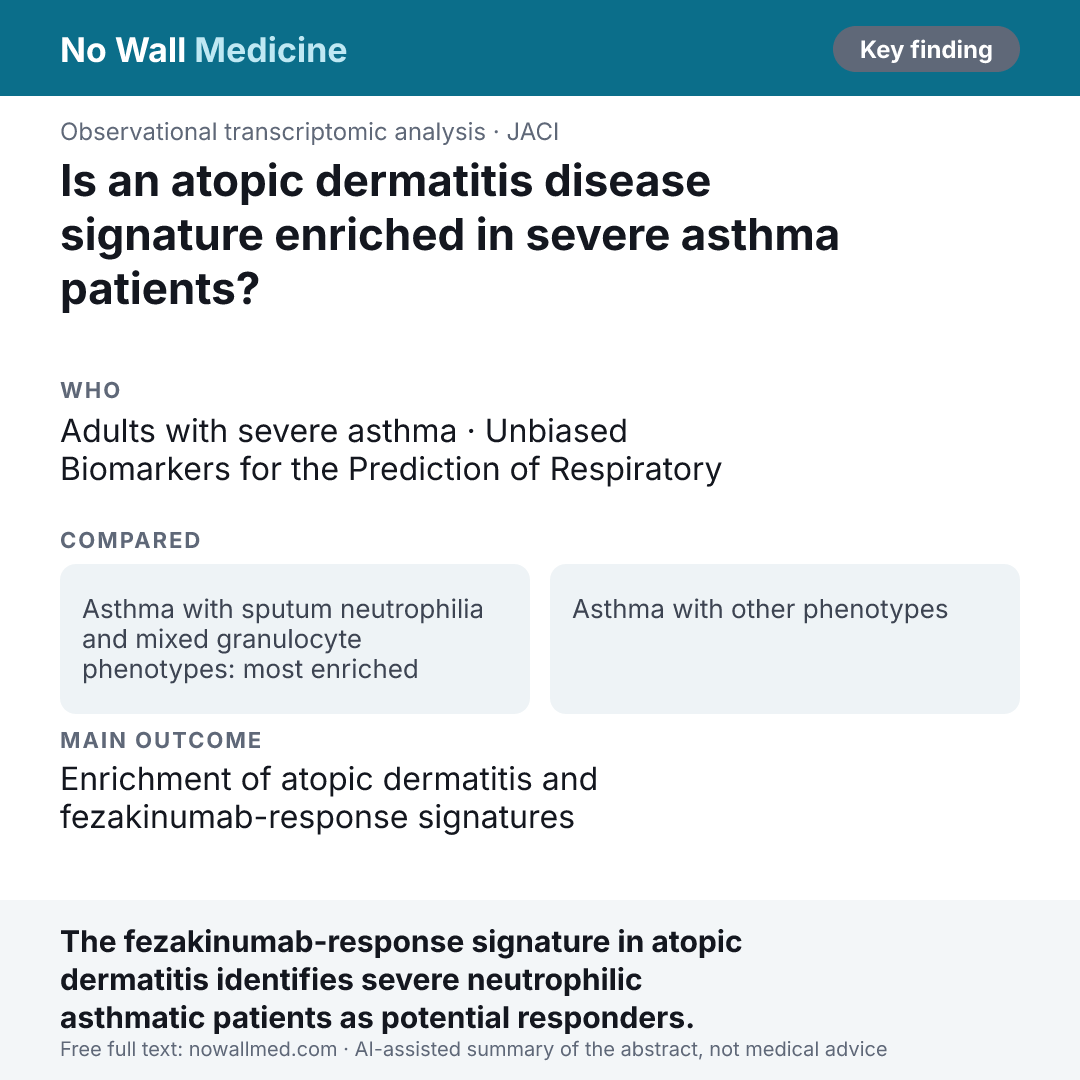
Is an atopic dermatitis disease signature enriched in severe asthma patients?
Who
Adults with severe asthma · Unbiased Biomarkers for the Prediction of Respiratory Disease Outcomes cohort
Compared
Asthma with sputum neutrophilia and mixed granulocyte phenotypes: most enriched
Asthma with other phenotypes
Main outcome
Enrichment of atopic dermatitis and fezakinumab-response signatures
Bottom line: The fezakinumab-response signature in atopic dermatitis identifies severe neutrophilic asthmatic patients as potential responders.
JACI · 2021-04-20 · Save PNG
Key points
- Researchers analyzed gene signatures from atopic dermatitis, a chronic skin inflammation, and compared them to blood and sputum samples from adults with severe asthma.
- The atopic dermatitis disease signature, containing 112 upregulated genes, was enriched in the blood and sputum of asthma patients with increasing severity.
- A signature of 296 downregulated genes from skin patients responding to fezakinumab, an anti-interleukin-22 therapy, was enriched in the blood and sputum of neutrophilic asthma patients.
Discussion prompts
- Would these patients look like yours? Who was left out?
- Is the main outcome one that matters to patients?
- Is the difference large enough to change what you do?
Cite: Badi YE, Pavel AB, Pavlidis S, et al. Mapping atopic dermatitis and anti-IL-22 response signatures to type 2-low severe neutrophilic asthma. J Allergy Clin Immunol. 2022;149(1):89-101. doi:10.1016/j.jaci.2021.04.010
Free full text: JACI website · Summary and visual abstract: nowallmed.com/a/mapping-atopic-dermatitis-and-anti-il-22-response-signatures-to-type-l0zu5a/ (AI-assisted from the abstract; check the paper before relying on it).