Mapping schistosomiasis risk in Southeast Asia: a systematic review and geospatial analysis
Systematic review and meta-analysisUnclear result
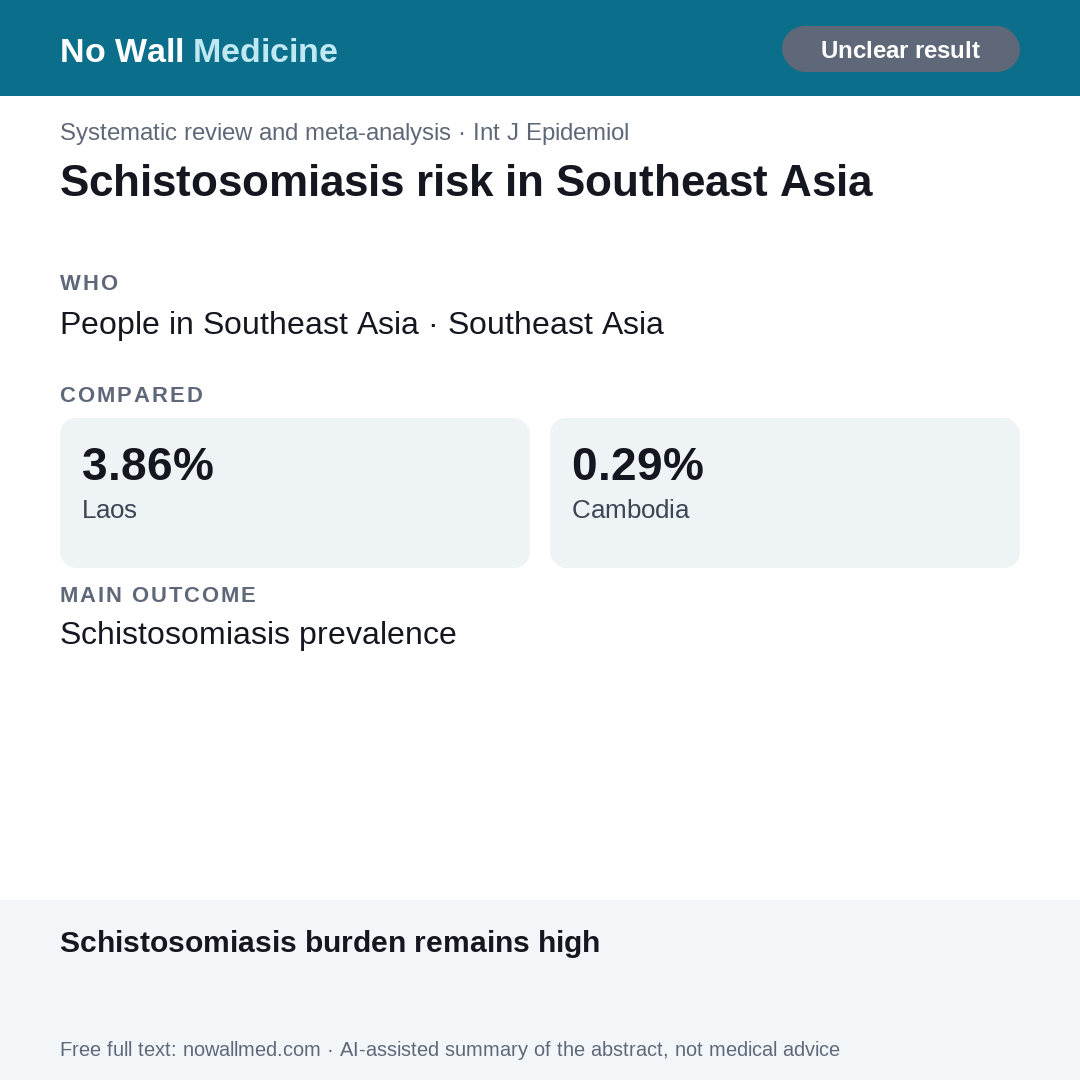
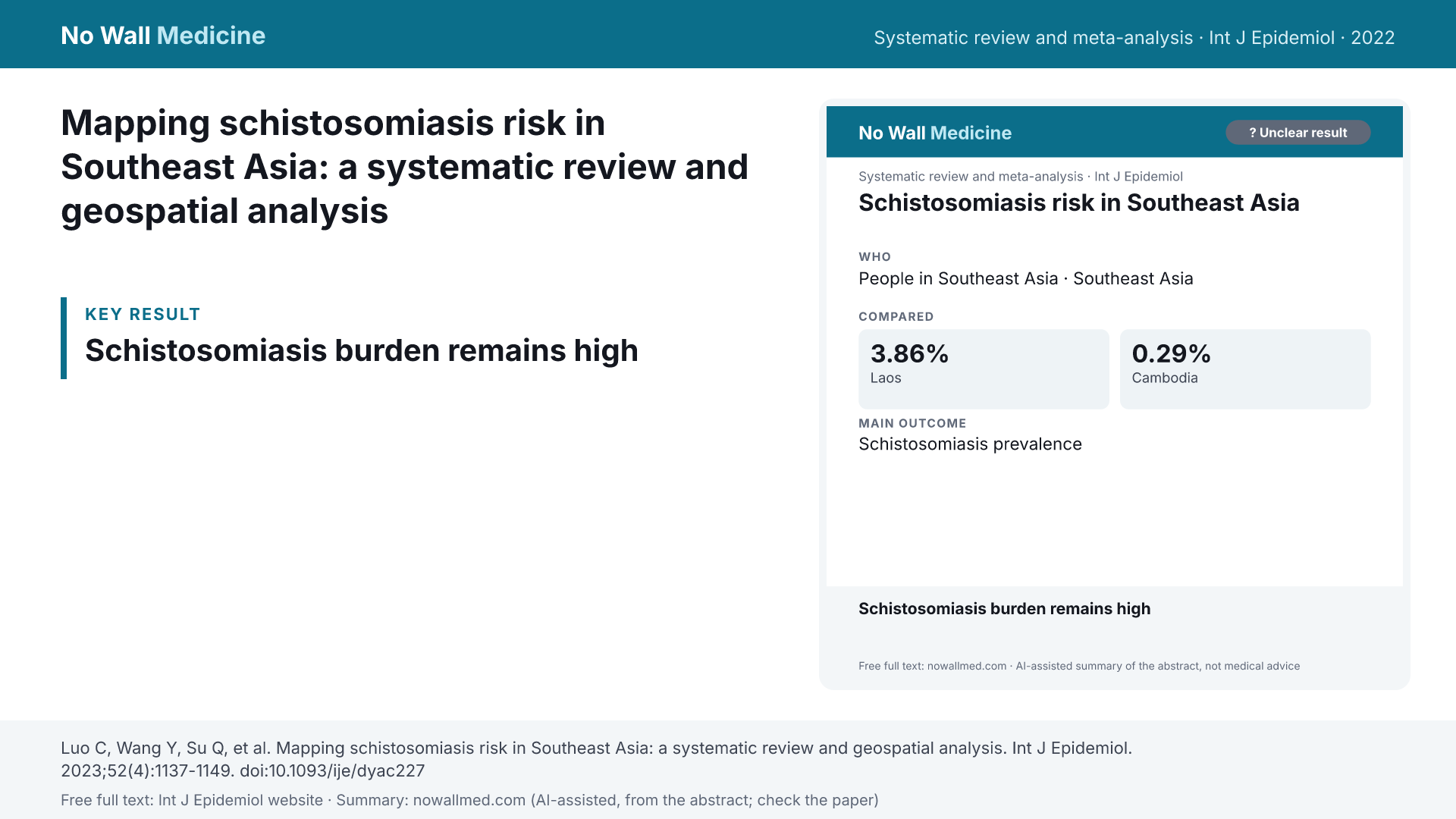
Schistosomiasis risk in Southeast Asia
Who
People in Southeast Asia · Southeast Asia
Compared
3.86%Laos (95% CrI: 3.40-4.31)
0.29%Cambodia (95% CrI: 0.22-0.36)
Main outcome
Schistosomiasis prevalence
Bottom line: Schistosomiasis burden remains high
Int J Epidemiol · 2022-12-09Download image
Abstract
Background
Schistosomiasis is a water-borne parasitic disease estimated to have infected >140 million people globally in 2019, mostly in sub-Saharan Africa. Within the goal of eliminating schistosomiasis as a public health problem by 2030 in the World Health Organization (WHO) Roadmap for neglected tropical diseases, other regions cannot be neglected. Empirical estimates of the disease burden in Southeast Asia largely remain unavailable. Methods
We undertook a systematic review to identify empirical survey data on schistosomiasis prevalence in Southeast Asia using the Web of Science, ScienceDirect, PubMed and the Global Atlas of Helminth Infections, from inception to 5 February 2021. We then conducted advanced Bayesian geostatistical analysis to assess the geographical distribution of infection risk at a high spatial resolution (5 × 5 km) using the prevalence, number of infected individuals and doses needed for preventive chemotherapy. Results
We identified 494 Schistosoma japonicum surveys in the Philippines and Indonesia, and 285 in Cambodia and Laos for S. mekongi. The latest estimates suggest that 225 [95% credible interval (CrI): 168-285] thousand in the endemic areas of Southeast Asian population were infected in 2018. The highest prevalence of schistosomiasis was 3.86% (95% CrI: 3.40-4.31) in Laos whereas the lowest was 0.29% in Cambodia (95% CrI: 0.22-0.36). The estimated number of praziquantel doses needed per year was 1.99 million (95% CrI: 1.92-2.03 million) for the entire population in endemic areas of Southeast Asia. Conclusions
The burden of schistosomiasis remains far from the WHO goal and our estimates highlighted areas to target with strengthened interventions against schistosomiasis.
Subject terms
Cite this article
Luo C, Wang Y, Su Q, et al. Mapping schistosomiasis risk in Southeast Asia: a systematic review and geospatial analysis. Int J Epidemiol. 2022. doi:10.1093/ije/dyac227
Spotted a mistake? Suggest a correction