Mass azithromycin distribution and antibiotic resistance in the gut and nasopharynx: a cluster-randomized trial
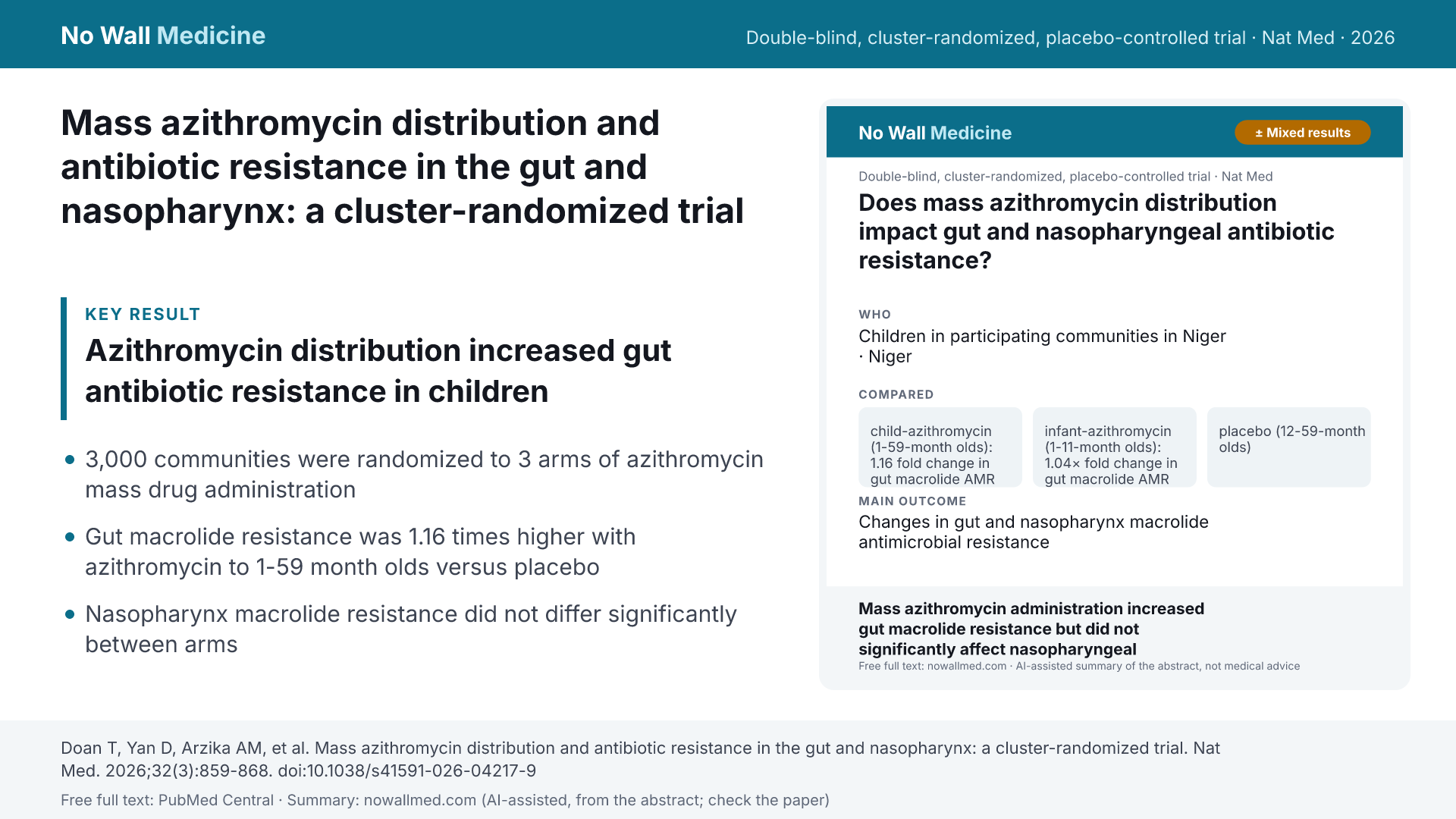
Key result: Azithromycin distribution increased gut antibiotic resistance in children
Double-blind, cluster-randomized, placebo-controlled trialMixed results
Does mass azithromycin distribution impact gut and nasopharyngeal antibiotic resistance?
Who
Children in participating communities in Niger · Niger
Compared
child-azithromycin (1-59-month olds): 1.16 fold change in gut macrolide AMR
infant-azithromycin (1-11-month olds): 1.04× fold change in gut macrolide AMR
placebo (12-59-month olds)
Main outcome
Changes in gut and nasopharynx macrolide antimicrobial resistance
Result: 1.16, 95% confidence interval (CI): 1.06-1.28
Bottom line: Mass azithromycin administration increased gut macrolide resistance but did not significantly affect nasopharyngeal resistance.
Nat Med · 2026-03-17
Key points
- 3,000 communities were randomized to 3 arms of azithromycin mass drug administration.
- Gut macrolide resistance was 1.16 times higher with azithromycin to 1-59 month olds versus placebo.
- Nasopharynx macrolide resistance did not differ significantly between arms.
Why it matters: Guidelines need evidence on antibiotic resistance from mass azithromycin distribution
Discussion prompts
- Would these patients look like yours? Who was left out?
- Is the main outcome one that matters to patients?
- Is the difference large enough to change what you do?
Cite: Doan T, Yan D, Arzika AM, et al. Mass azithromycin distribution and antibiotic resistance in the gut and nasopharynx: a cluster-randomized trial. Nat Med. 2026;32(3):859-868. doi:10.1038/s41591-026-04217-9
Free full text: PubMed Central · Summary and visual abstract: nowallmed.com/a/mass-azithromycin-distribution-and-antibiotic-resistance-in-the-gut-a4kf26/ (AI-assisted from the abstract; check the paper before relying on it).