Two compressed prolonged exposure therapy formats effectively reduce combat-related posttraumatic stress disorder symptoms
Massed vs Intensive Outpatient Prolonged Exposure for Combat-Related Posttraumatic Stress Disorder: A Randomized Clinical Trial
Randomized clinical trialBenefit found
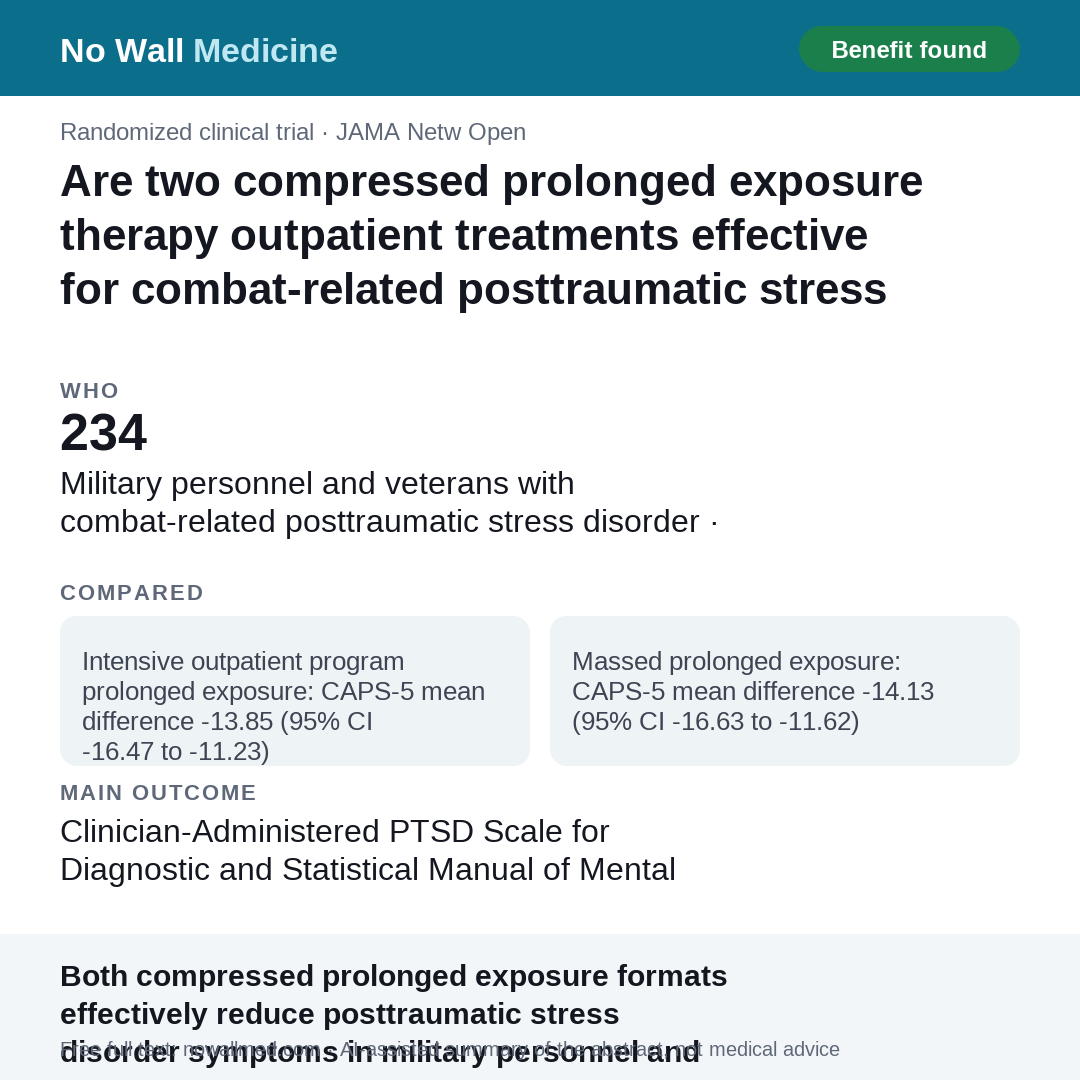
Are two compressed prolonged exposure therapy outpatient treatments effective for combat-related posttraumatic stress disorder?
Who
234
Military personnel and veterans with combat-related posttraumatic stress disorder · 4 sites in Texas
Compared
Intensive outpatient program prolonged exposure: CAPS-5 mean difference -13.85 (95% CI -16.47 to -11.23)
Massed prolonged exposure: CAPS-5 mean difference -14.13 (95% CI -16.63 to -11.62)
Main outcome
Clinician-Administered PTSD Scale for Diagnostic and Statistical Manual of Mental Disorders Fifth Edition scores
Bottom line: Both compressed prolonged exposure formats effectively reduce posttraumatic stress disorder symptoms in military personnel and veterans.
JAMA Netw Open · 2023-01-03Download image
Clinical question: Are two compressed prolonged exposure therapy outpatient treatments effective for combat-related posttraumatic stress disorder?
Why it matters: It is unknown whether different compressed formats of prolonged exposure therapy, a treatment for posttraumatic stress disorder, are equally effective for military personnel and veterans.
Key points
- The study randomized 234 military personnel and veterans to either intensive outpatient program prolonged exposure therapy or massed prolonged exposure therapy over 3 weeks.
- Both groups showed decreased PTSD symptom scores at the 1-month follow-up, with 48% of intensive outpatient participants and 62% of massed therapy participants achieving diagnostic remission.
- Between 1 and 6 months, PTSD symptoms increased in the massed therapy group, while the intensive outpatient group maintained treatment gains.
Headline and key points written with AI from the paper’s abstract, with every number checked against it. Read the paper before relying on them.
Was this summary helpful?
Subject terms
Cite this article
Peterson AL, Blount TH, Foa EB, Brown LA, McLean CP, Mintz J. Massed vs Intensive Outpatient Prolonged Exposure for Combat-Related Posttraumatic Stress Disorder: A Randomized Clinical Trial. JAMA Netw Open. 2023. doi:10.1001/jamanetworkopen.2022.49422
Spotted a mistake? Suggest a correction
Top studies every Monday
The week’s key trials and guidelines in your specialties, plus any topics you follow. By email, free.
Get the weekly digest