Indocyanine green angiography was associated with more frequent intraoperative debridement during breast reconstruction
Mastectomy Skin Flap Stability Prediction Using Indocyanine Green Angiography: A Randomized Prospective Trial
Randomized prospective trialMixed results
Does intraoperative indocyanine green angiography impact breast reconstruction skin flap outcomes?
Who
64
Patients undergoing immediate breast reconstruction · at the authors' institution
Compared
experimental group undergoing indocyanine green angiography: 82.8% partial-thickness necrosis
control group undergoing gross inspection alone: 55.6% partial-thickness necrosis
Main outcome
skin flap necrosis and skin erosion
Bottom line: Indocyanine green angiography enables more active intraoperative debridement, potentially contributing to a lower incidence of advanced skin necrosis.
Aesthet Surg J · 2023-07-12Download image
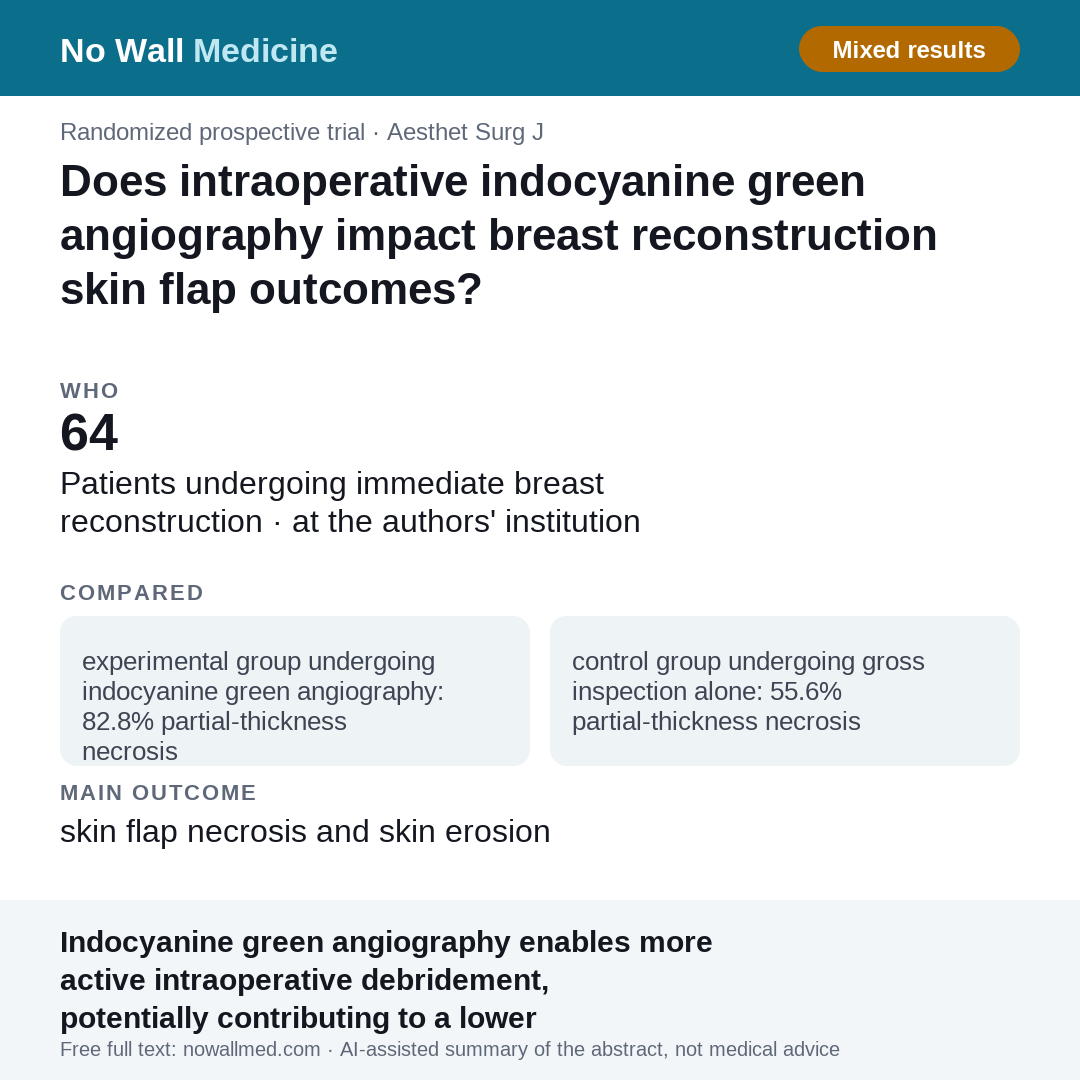
Clinical question: Does intraoperative indocyanine green angiography impact breast reconstruction skin flap outcomes?
Why it matters: It is unknown if using indocyanine green angiography during surgery improves clinical outcomes or skin flap stability compared to standard visual inspection alone.
Key points
- Researchers prospectively studied 64 patients undergoing immediate breast reconstruction, comparing 39 patients using indocyanine green angiography (a tool to visualize blood flow) to 25 patients using only visual inspection.
- Intraoperative debridement (removal of dead tissue) was more frequent in the indocyanine green angiography group at 51.3% compared to 48.0% in the control group.
- The indocyanine green angiography group had a higher rate of partial-thickness skin necrosis at 82.8% compared to 55.6% in the control group.
Headline and key points written with AI from the paper’s abstract, with every number checked against it. Read the paper before relying on them.
Was this summary helpful?
Subject terms
Cite this article
Kim MJ, Mok JH, Lee IJ, Lim H. Mastectomy Skin Flap Stability Prediction Using Indocyanine Green Angiography: A Randomized Prospective Trial. Aesthet Surg J. 2023. doi:10.1093/asj/sjad226
Spotted a mistake? Suggest a correction
Top studies every Monday
The week’s key trials and guidelines in your specialties, plus any topics you follow. By email, free.
Get the weekly digest