Different materials used to block blood vessels before surgery show varying levels of blood loss
Materials Employed in Preoperative Embolization for Nasopharyngeal Angiofibroma: A Meta-Analysis
ENT (Otolaryngology)Adult and pediatric
Meta-analysis of 40 studiesMixed results
How do different preoperative embolization materials affect outcomes and complications in nasopharyngeal angiofibroma?
Who
448
448 male patients with juvenile nasopharyngeal angiofibroma
Compared
Gelfoam: no complications
Coils: 515.3 mL (95% CI 109.2-2417.5)
Polyvinyl Alcohol: 455.6 mL (95% CI 313.9-661.2)
Onyx: 493.0 mL (95% CI 334.9-725.6)
Main outcome
intraoperative blood loss and complications
Bottom line: Different embolization materials may result in varying intraoperative blood loss and complication rates for nasopharyngeal angiofibroma treatment.
Limitation: Additional studies should be conducted to rigorously evaluate the differences.
Laryngoscope · 2025-08-22Download image
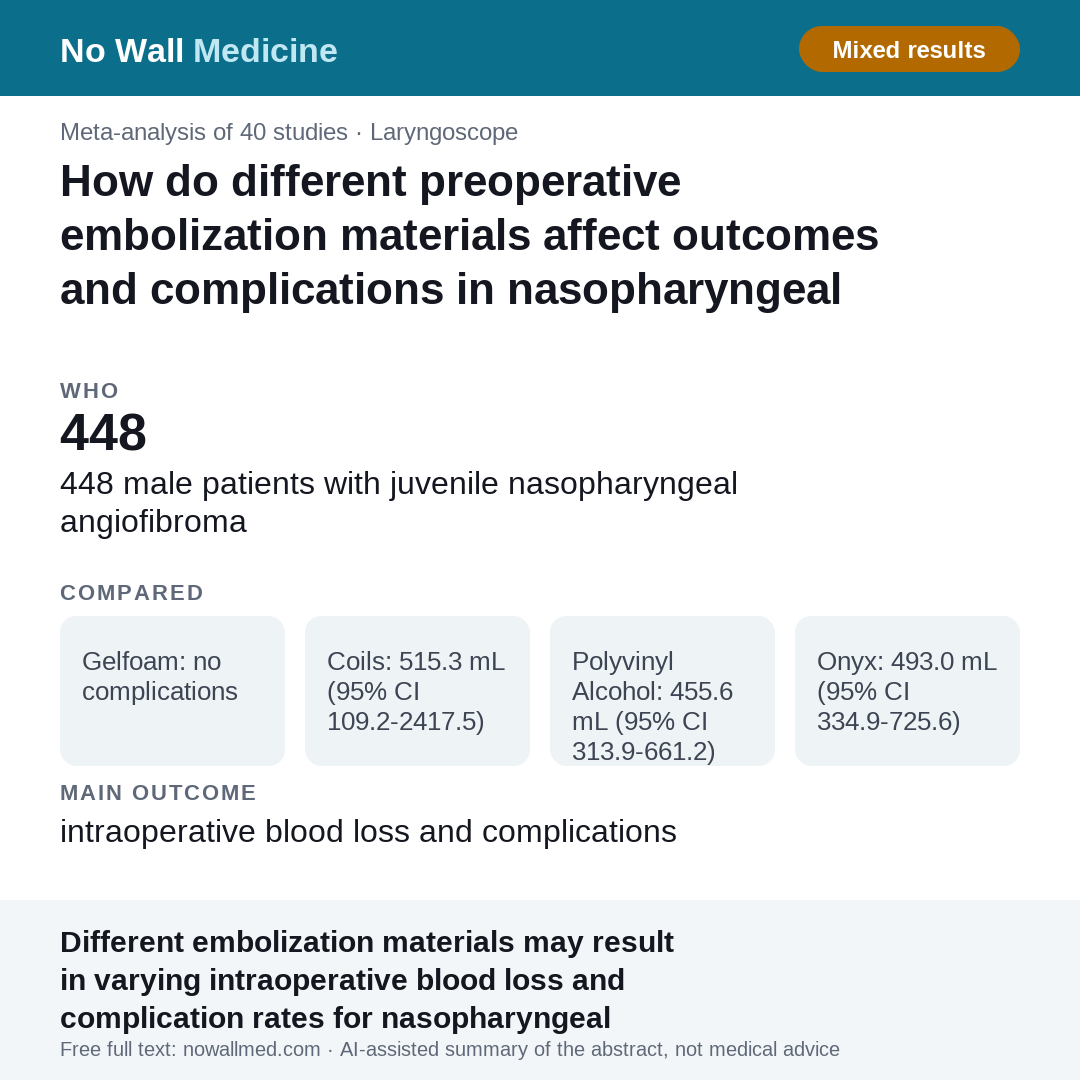
Clinical question: How do different preoperative embolization materials affect outcomes and complications in nasopharyngeal angiofibroma?
Why it matters: The choice of material used for preoperative embolization, or blocking blood vessels, remains a topic of debate for managing juvenile nasopharyngeal angiofibroma.
Key points
- Researchers analyzed 40 studies involving 448 male patients with juvenile nasopharyngeal angiofibroma, a vascular tumor in the nose and throat.
- Polyvinyl alcohol was the most common material used at 59.2%, while gelfoam was associated with no complications.
- The highest mean intraoperative blood loss was 515.3 mL for coils, followed by 504.8 mL for cyanoacrylate glue and 493.0 mL for Onyx.
Headline and key points written with AI from the paper’s abstract, with every number checked against it. Read the paper before relying on them.
Topics
Cite this article
Patel PA, Walker AM, Nguyen SA, Schlosser RJ, Curtis CJ, Nanu DP. Materials Employed in Preoperative Embolization for Nasopharyngeal Angiofibroma: A Meta-Analysis. Laryngoscope. 2025. doi:10.1002/lary.70073
Spotted a mistake? Suggest a correction