Maternal BMI is positively associated with human milk fat: a systematic review and meta-regression analysis
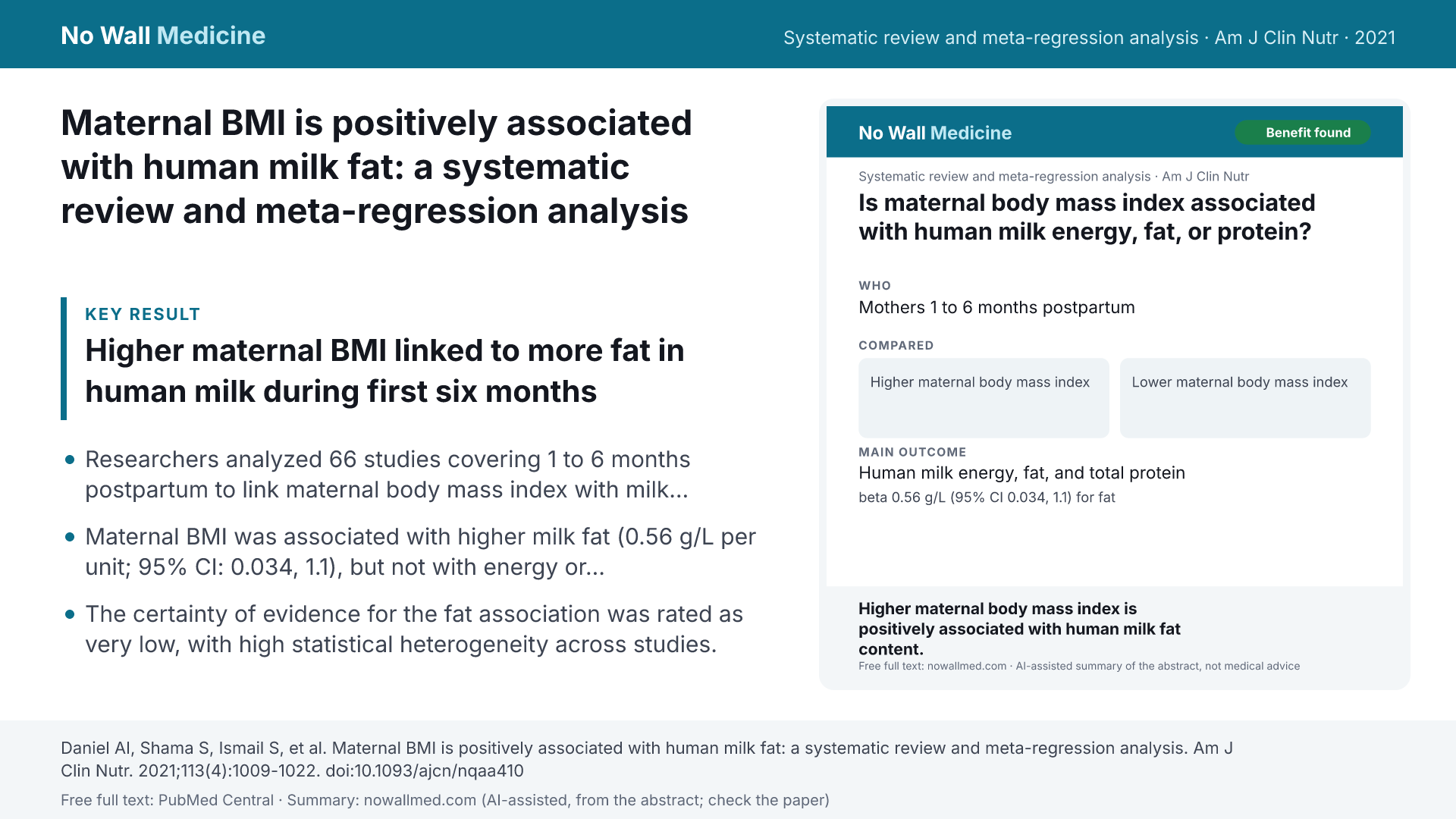
Key result: Higher maternal BMI linked to more fat in human milk during first six months
Systematic review and meta-regression analysisBenefit found
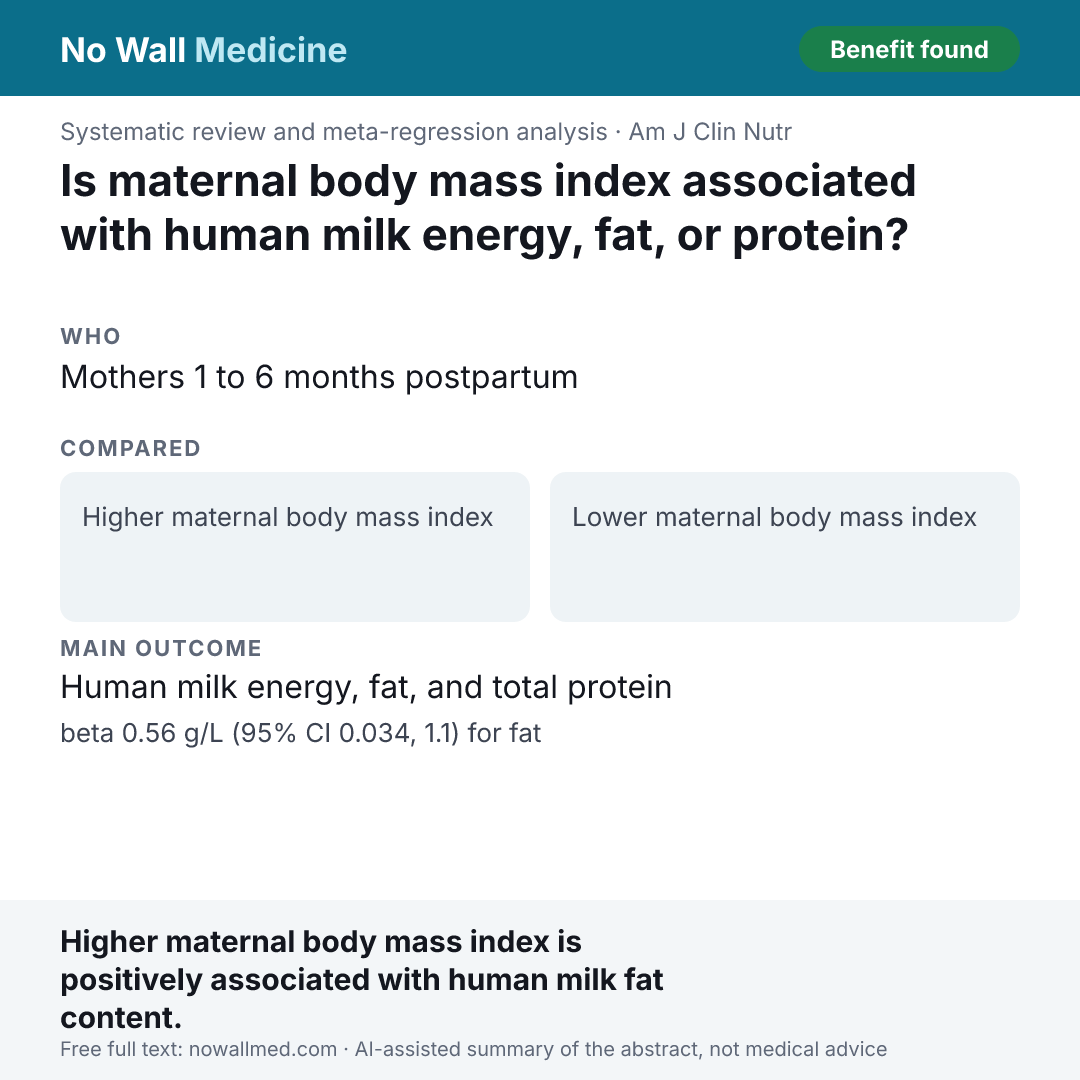
Is maternal body mass index associated with human milk energy, fat, or protein?
Who
Mothers 1 to 6 months postpartum
Compared
Higher maternal body mass index
Lower maternal body mass index
Main outcome
Human milk energy, fat, and total protein
Result: beta 0.56 g/L (95% CI 0.034, 1.1) for fat
Bottom line: Higher maternal body mass index is positively associated with human milk fat content.
Am J Clin Nutr · 2021-03-07 · Save PNG
Key points
- Researchers analyzed 66 studies covering 1 to 6 months postpartum to link maternal body mass index with milk energy, fat, and protein.
- Maternal BMI was associated with higher milk fat (0.56 g/L per unit; 95% CI: 0.034, 1.1), but not with energy or total protein.
- The certainty of evidence for the fat association was rated as very low, with high statistical heterogeneity across studies.
Why it matters: Lack of robust estimates of human-milk nutrient composition and influential maternal factors are barriers to informing nutrition policies and programs.
Discussion prompts
- Would these patients look like yours? Who was left out?
- Is the main outcome one that matters to patients?
- Is the difference large enough to change what you do?
Cite: Daniel AI, Shama S, Ismail S, et al. Maternal BMI is positively associated with human milk fat: a systematic review and meta-regression analysis. Am J Clin Nutr. 2021;113(4):1009-1022. doi:10.1093/ajcn/nqaa410
Free full text: PubMed Central · Summary and visual abstract: nowallmed.com/a/maternal-bmi-is-positively-associated-with-human-milk-fat-a-1ydqs85/ (AI-assisted from the abstract; check the paper before relying on it).