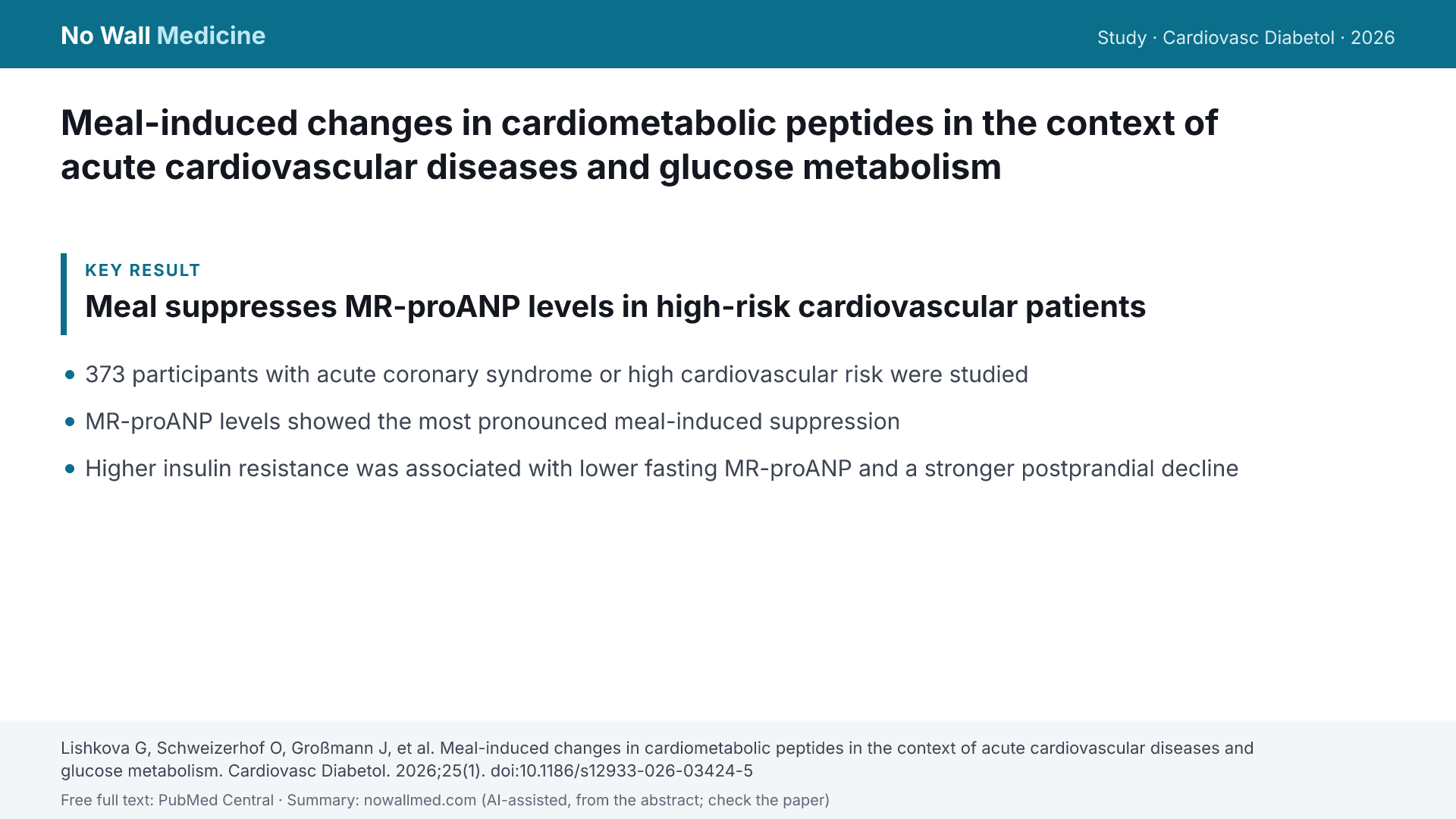
Meal suppresses MR-proANP levels in high-risk cardiovascular patients
Meal-induced changes in cardiometabolic peptides in the context of acute cardiovascular diseases and glucose metabolism
Why it matters: Doctors have had limited understanding of how human metabolism affects cardiovascular biomarkers after meals
Key points
- 373 participants with acute coronary syndrome or high cardiovascular risk were studied.
- MR-proANP levels showed the most pronounced meal-induced suppression.
- Higher insulin resistance was associated with lower fasting MR-proANP and a stronger postprandial decline.
Limitation the authors note: The study had a single cohort design and a relatively short follow-up period of approximately 3 months
Study type: Observational study: it can show a link, but not prove that one thing causes another.
Headline and key points written with AI from the paper’s abstract, with every number checked against it. Read the paper before relying on them.
Was this summary helpful?
Subject terms
Cite this article
Lishkova G, Schweizerhof O, Großmann J, et al. Meal-induced changes in cardiometabolic peptides in the context of acute cardiovascular diseases and glucose metabolism. Cardiovasc Diabetol. 2026;25(1). doi:10.1186/s12933-026-03424-5
Spotted a mistake? Suggest a correction