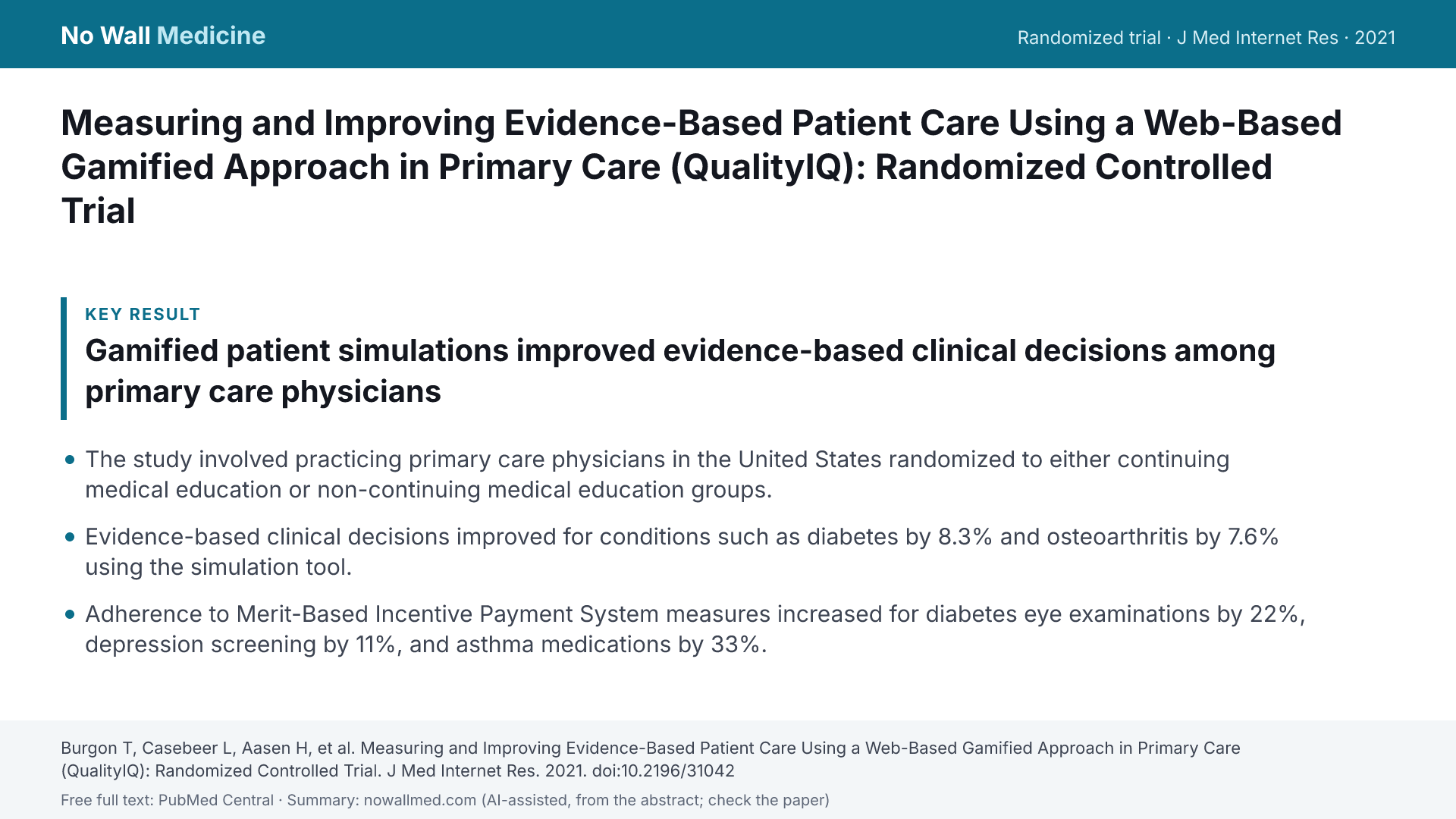
Measuring and Improving Evidence-Based Patient Care Using a Web-Based Gamified Approach in Primary Care (QualityIQ): Randomized Controlled Trial
Key result: Gamified patient simulations improved evidence-based clinical decisions among primary care physicians
Key points
- The study involved practicing primary care physicians in the United States randomized to either continuing medical education or non-continuing medical education groups.
- Evidence-based clinical decisions improved for conditions such as diabetes by 8.3% and osteoarthritis by 7.6% using the simulation tool.
- Adherence to Merit-Based Incentive Payment System measures increased for diabetes eye examinations by 22%, depression screening by 11%, and asthma medications by 33%.
Why it matters: Unwarranted variability in clinical practice can lead to poor patient outcomes and low-value care.
Discussion prompts
- Would these patients look like yours? Who was left out?
- Is the main outcome one that matters to patients?
- Is the difference large enough to change what you do?
Cite: Burgon T, Casebeer L, Aasen H, et al. Measuring and Improving Evidence-Based Patient Care Using a Web-Based Gamified Approach in Primary Care (QualityIQ): Randomized Controlled Trial. J Med Internet Res. 2021. doi:10.2196/31042
Free full text: PubMed Central · Summary and visual abstract: nowallmed.com/a/measuring-and-improving-evidence-based-patient-care-using-a-web-based-1u73vq9/ (AI-assisted from the abstract; check the paper before relying on it).