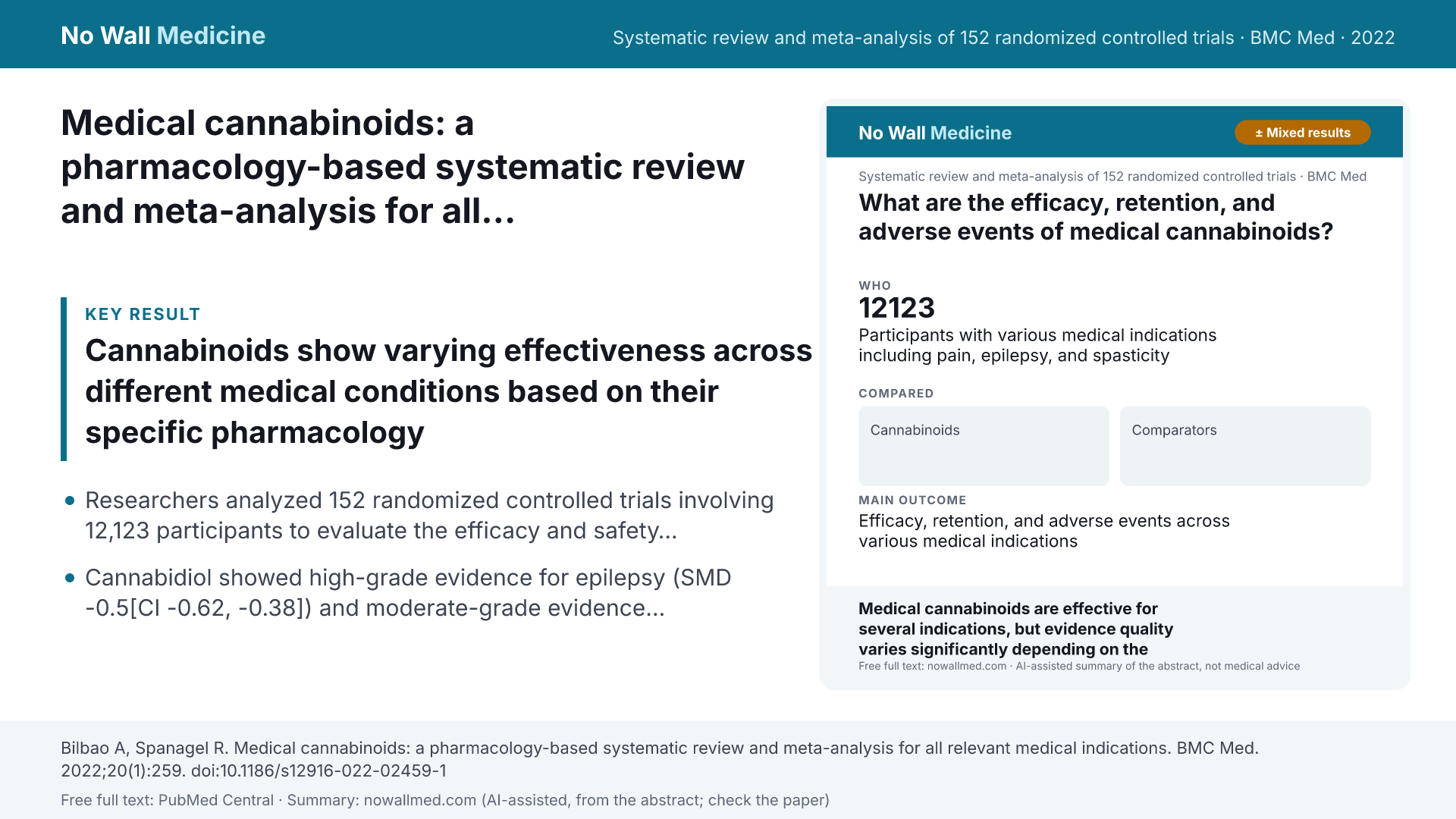
Cannabinoids show varying effectiveness across different medical conditions based on their specific pharmacology
Medical cannabinoids: a pharmacology-based systematic review and meta-analysis for all relevant medical indications
Systematic review and meta-analysis of 152 randomized controlled trialsMixed results
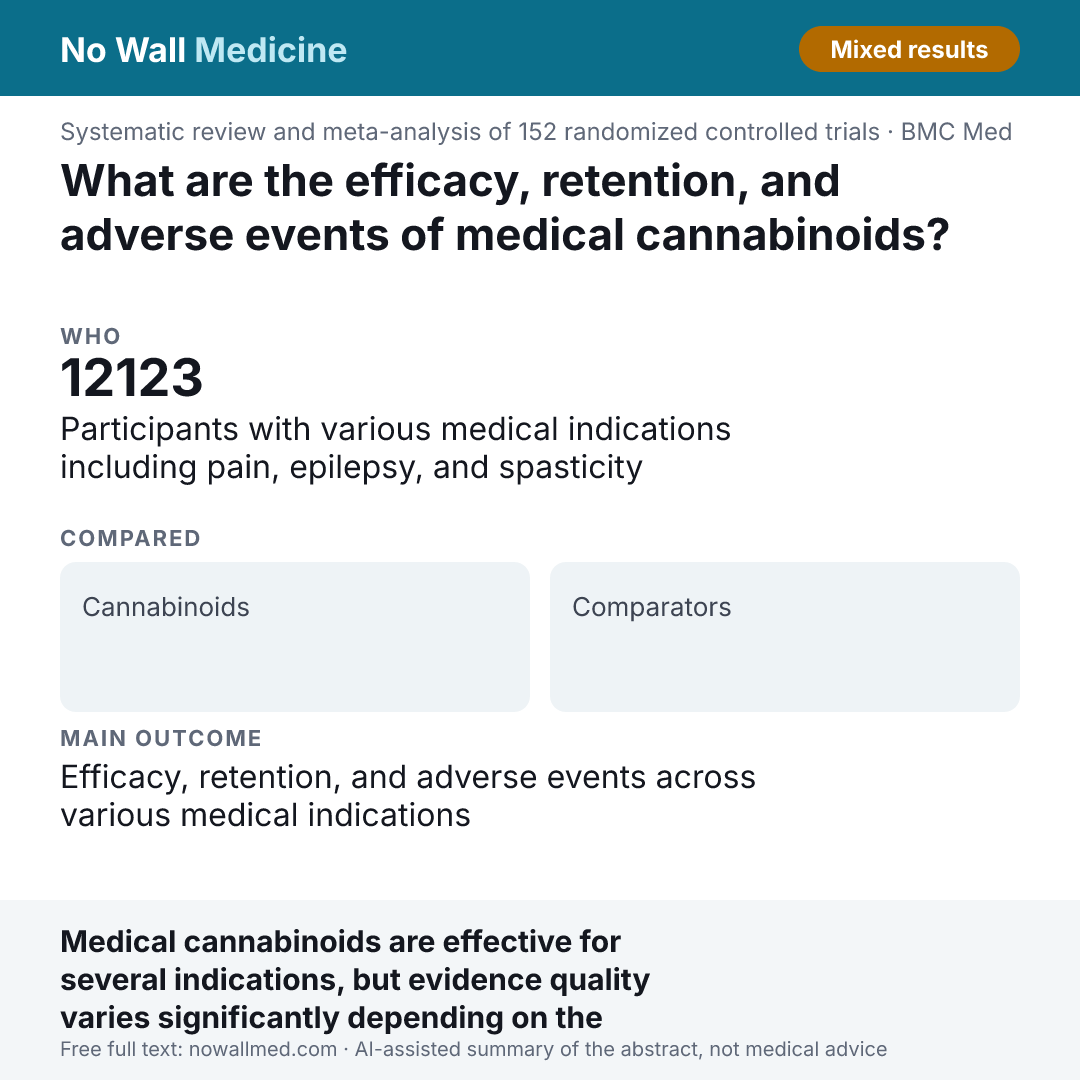
What are the efficacy, retention, and adverse events of medical cannabinoids?
Who
12123
Participants with various medical indications including pain, epilepsy, and spasticity
Compared
Cannabinoids
Comparators
Main outcome
Efficacy, retention, and adverse events across various medical indications
Bottom line: Medical cannabinoids are effective for several indications, but evidence quality varies significantly depending on the cannabinoid type.
Limitation: Significant therapeutic effects show large variability in the grade of evidence.
BMC Med · 2022-08-19 · Save PNG
Clinical question: What are the efficacy, retention, and adverse events of medical cannabinoids?
Why it matters: The therapeutic effects and safety of different medical cannabinoids vary depending on their specific pharmacological properties and the conditions being treated.
Key points
- Researchers analyzed 152 randomized controlled trials involving 12,123 participants to evaluate the efficacy and safety of dronabinol, nabilone, cannabidiol, and nabiximols.
- Cannabidiol showed high-grade evidence for epilepsy (SMD -0.5[CI -0.62, -0.38]) and moderate-grade evidence for Parkinsonism (-0.41[CI -0.75, -0.08]).
- Dronabinol and nabiximols showed moderate evidence for conditions including chronic pain, appetite, spasticity, sleep, and substance use disorders.
Headline and key points written with AI from the paper’s abstract, with every number checked against it. Read the paper before relying on them.
Was this summary helpful?
Subject terms
Headline, design, result, key points, caveat and citation as plain text.
Cite this article
Bilbao A, Spanagel R. Medical cannabinoids: a pharmacology-based systematic review and meta-analysis for all relevant medical indications. BMC Med. 2022;20(1):259. doi:10.1186/s12916-022-02459-1
Spotted a mistake? Suggest a correction