Adverse event rates were similar between guideline-directed medical therapies and placebo in heart failure trials
Medication-Attributable Adverse Events in Heart Failure Trials
Meta-analysis of 17 clinical trialsNo clear difference
Are adverse event rates different between guideline-directed medical therapies and placebo in heart failure?
Who
Patients with heart failure with reduced ejection fraction
Compared
Guideline-directed medical therapies: 75% to 85% reported at least 1 adverse event
Placebo
Main outcome
Rates of reported adverse events
Bottom line: Adverse event rates are similar between active medication and control in heart failure trials.
JACC Heart Fail · 2023-02-01Download image
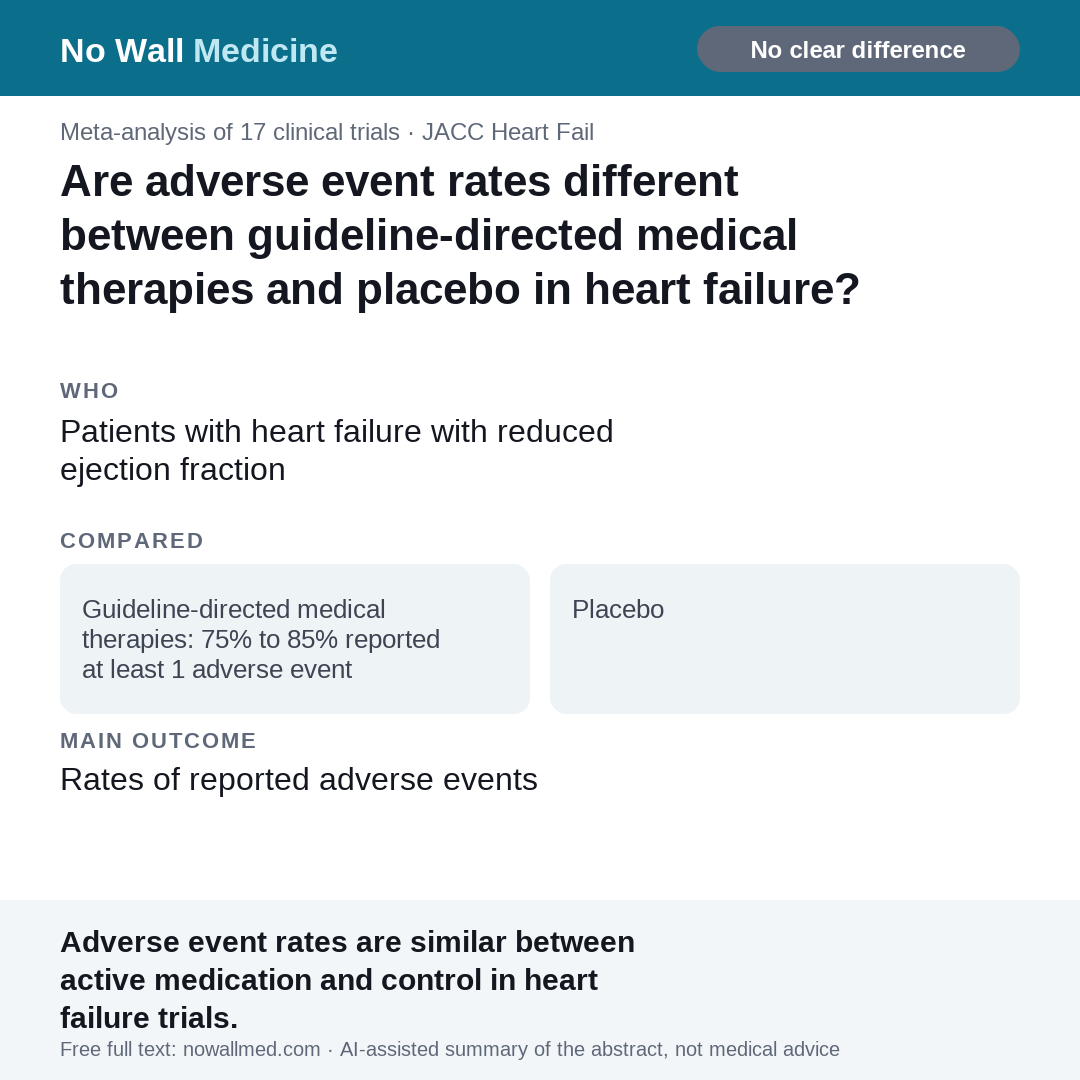
Clinical question: Are adverse event rates different between guideline-directed medical therapies and placebo in heart failure?
Why it matters: Concerns regarding the tolerability and side effects of guideline-directed medical therapies may lead to suboptimal use of these treatments in heart failure patients.
Key points
- Researchers analyzed 17 landmark clinical trials for heart failure with reduced ejection fraction to compare adverse event rates between medication and placebo groups.
- Between 75% and 85% of participants reported at least one adverse event, though most differences in event frequency were not statistically significant.
- Angiotensin-converting enzyme inhibitors were associated with a higher frequency of adverse events at 87.0% compared to 82.0% for placebo.
Headline and key points written with AI from the paper’s abstract, with every number checked against it. Read the paper before relying on them.
Was this summary helpful?
Subject terms
Cite this article
Harrington J, Fonarow GC, Khan MS, Hernandez A, Anker S, Böhm M. Medication-Attributable Adverse Events in Heart Failure Trials. JACC Heart Fail. 2023. doi:10.1016/j.jchf.2022.11.026
Spotted a mistake? Suggest a correction
Top studies every Monday
The week’s key trials and guidelines in your specialties, plus any topics you follow. By email, free.
Get the weekly digest