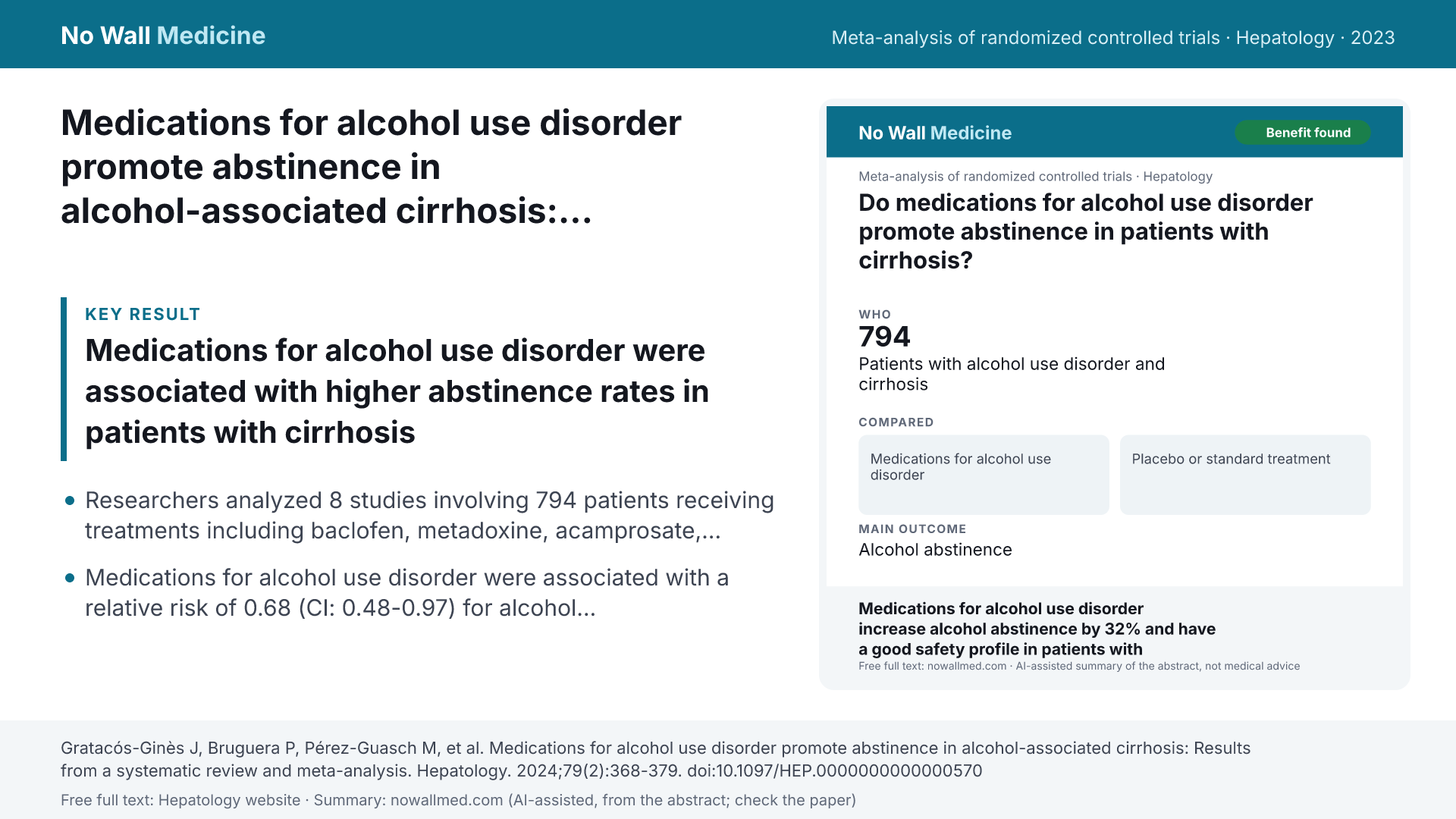
Medications for alcohol use disorder were associated with higher abstinence rates in patients with cirrhosis
Medications for alcohol use disorder promote abstinence in alcohol-associated cirrhosis: Results from a systematic review and meta-analysis
Meta-analysis of randomized controlled trialsBenefit found
Do medications for alcohol use disorder promote abstinence in patients with cirrhosis?
Who
794
Patients with alcohol use disorder and cirrhosis
Compared
Medications for alcohol use disorder
Placebo or standard treatment
Main outcome
Alcohol abstinence
Result: relative risk 0.68 (CI: 0.48-0.97)
Bottom line: Medications for alcohol use disorder increase alcohol abstinence by 32% and have a good safety profile in patients with cirrhosis.
Hepatology · 2023-08-25 · Save PNG
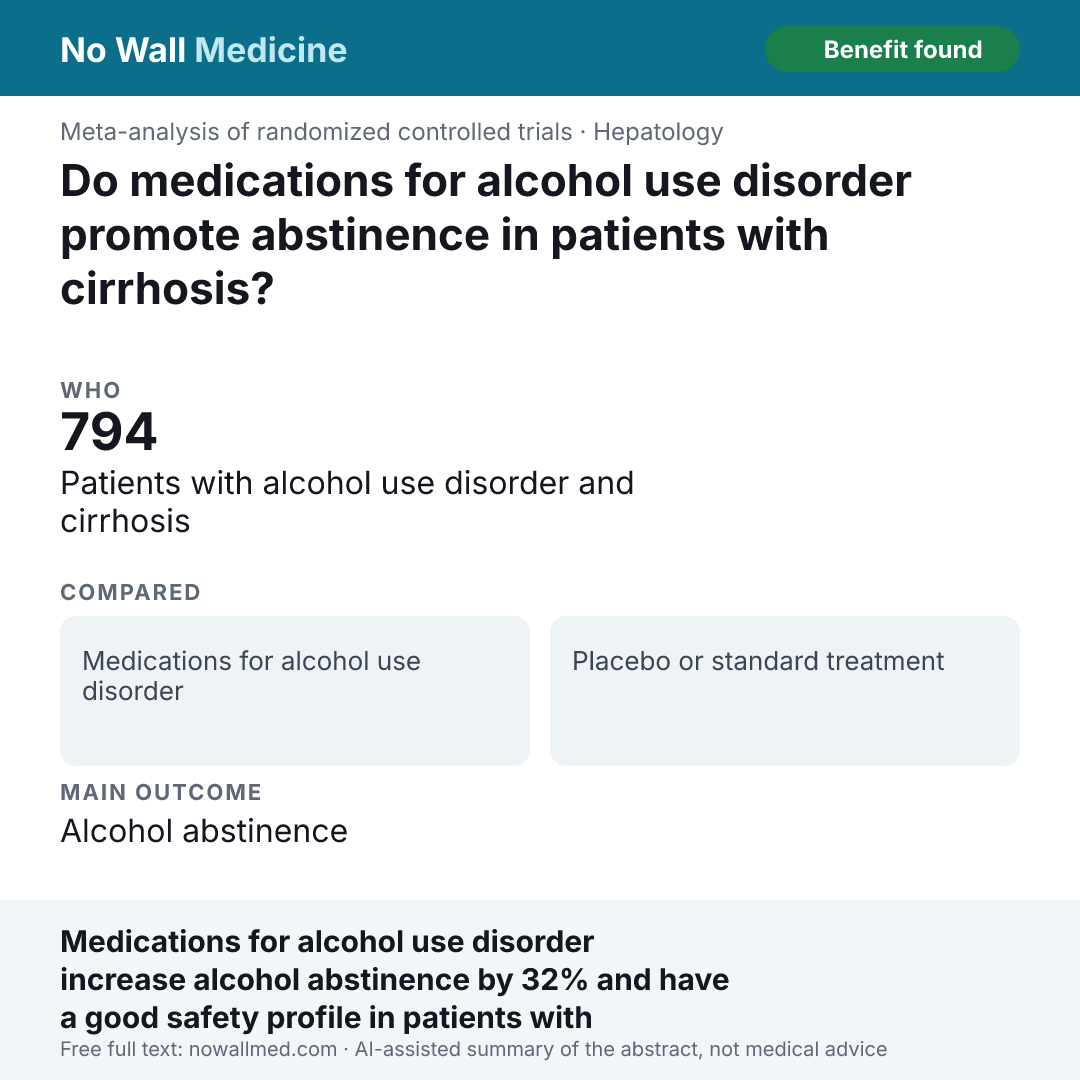
Clinical question: Do medications for alcohol use disorder promote abstinence in patients with cirrhosis?
Why it matters: The efficacy and safety of medications for alcohol use disorder in patients with cirrhosis were not well established due to scarce evidence.
Key points
- Researchers analyzed 8 studies involving 794 patients receiving treatments including baclofen, metadoxine, acamprosate, or fecal microbiota transplant for alcohol use disorder and cirrhosis.
- Medications for alcohol use disorder were associated with a relative risk of 0.68 (CI: 0.48-0.97) for alcohol consumption, which increased alcohol abstinence by 32% compared to placebo or standard treatment.
- Of 165 serious adverse events reported in patients treated with these medications, only 5 (3%) were possibly or probably related to the study drugs.
Headline and key points written with AI from the paper’s abstract, with every number checked against it. Read the paper before relying on them.
Was this summary helpful?
Subject terms
Headline, design, result, key points, caveat and citation as plain text.
Cite this article
Gratacós-Ginès J, Bruguera P, Pérez-Guasch M, et al. Medications for alcohol use disorder promote abstinence in alcohol-associated cirrhosis: Results from a systematic review and meta-analysis. Hepatology. 2024;79(2):368-379. doi:10.1097/HEP.0000000000000570
Spotted a mistake? Suggest a correction