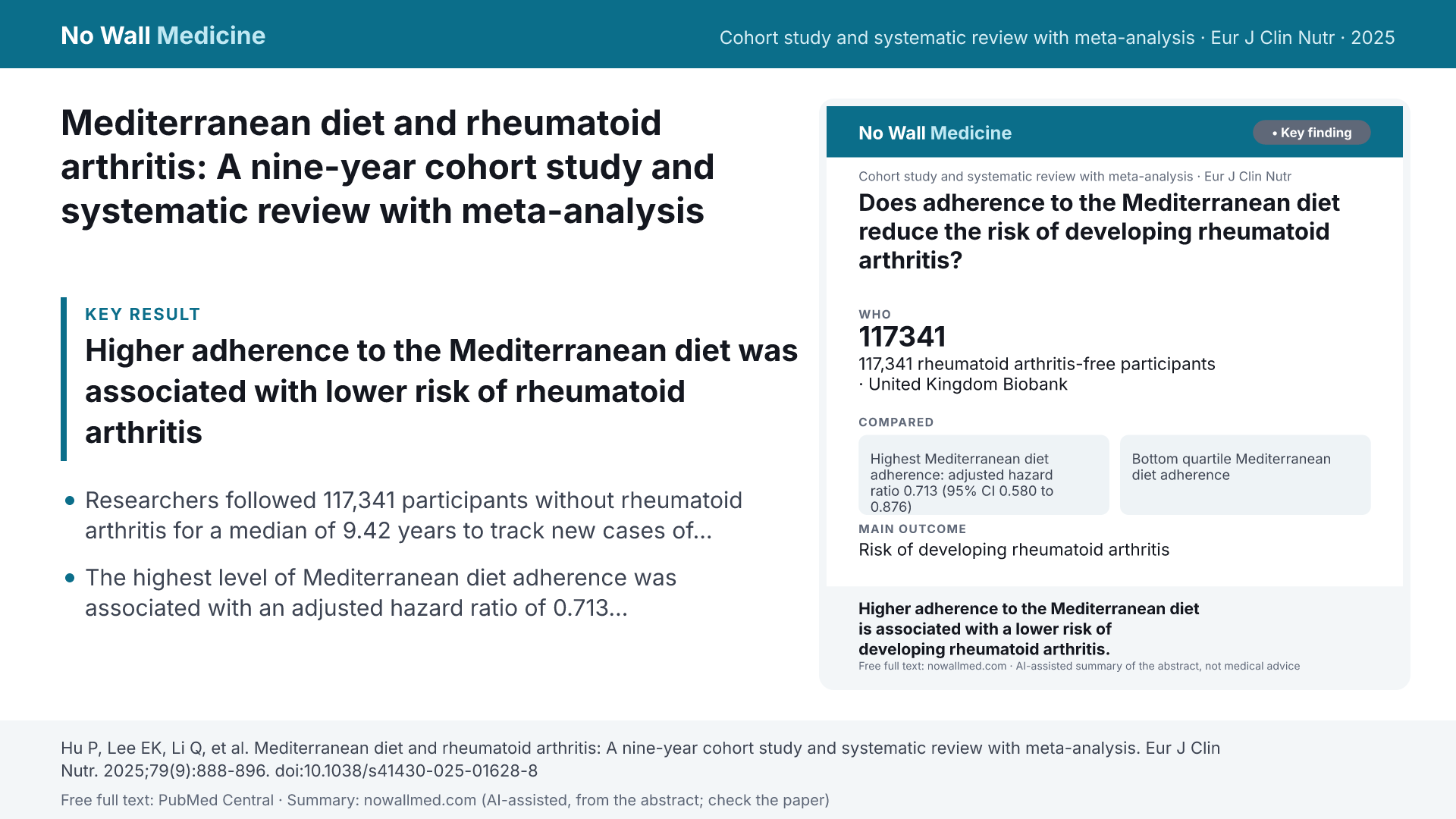
Higher adherence to the Mediterranean diet was associated with lower risk of rheumatoid arthritis
Mediterranean diet and rheumatoid arthritis: A nine-year cohort study and systematic review with meta-analysis
Cohort study and systematic review with meta-analysisBenefit found
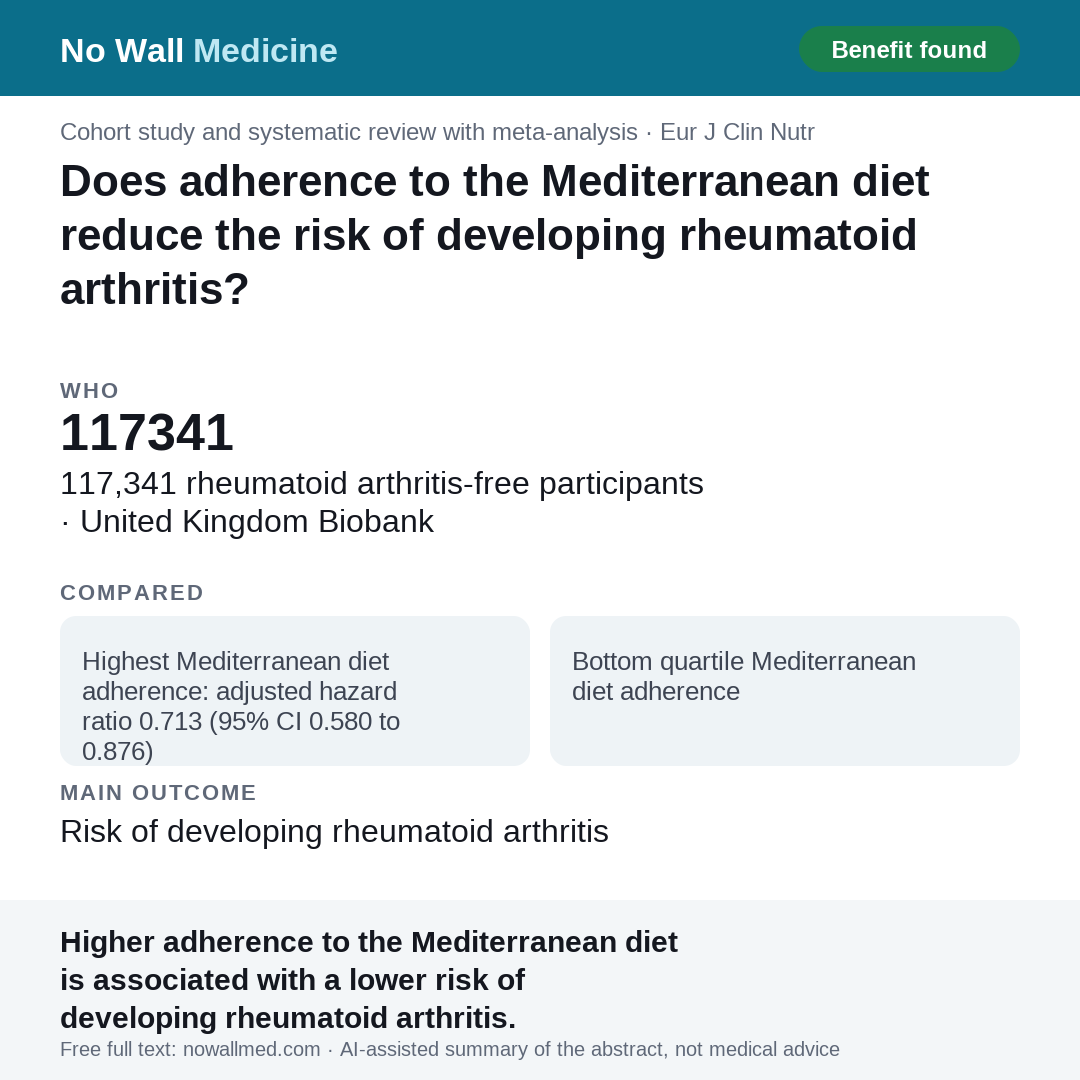
Does adherence to the Mediterranean diet reduce the risk of developing rheumatoid arthritis?
Who
117341
117,341 rheumatoid arthritis-free participants · United Kingdom Biobank
Compared
Highest Mediterranean diet adherence: adjusted hazard ratio 0.713 (95% CI 0.580 to 0.876)
Bottom quartile Mediterranean diet adherence
Main outcome
Risk of developing rheumatoid arthritis
Result: pooled odds ratio 0.838 (95% CI 0.758 to 0.926)
Bottom line: Higher adherence to the Mediterranean diet is associated with a lower risk of developing rheumatoid arthritis.
Eur J Clin Nutr · 2025-05-07Download image
Clinical question: Does adherence to the Mediterranean diet reduce the risk of developing rheumatoid arthritis?
Why it matters: Little is known about how following a Mediterranean diet affects the risk of developing rheumatoid arthritis.
Key points
- Researchers followed 117,341 participants without rheumatoid arthritis for a median of 9.42 years to track new cases of the disease.
- The highest level of Mediterranean diet adherence was associated with an adjusted hazard ratio of 0.713 for developing rheumatoid arthritis.
- A meta-analysis of six studies showed a pooled odds ratio of 0.838 for the highest versus lowest adherence to the diet.
Headline and key points written with AI from the paper’s abstract, with every number checked against it. Read the paper before relying on them.
Was this summary helpful?
Subject terms
Cite this article
Hu P, Lee EK, Li Q, et al. Mediterranean diet and rheumatoid arthritis: A nine-year cohort study and systematic review with meta-analysis. Eur J Clin Nutr. 2025. doi:10.1038/s41430-025-01628-8
Spotted a mistake? Suggest a correction