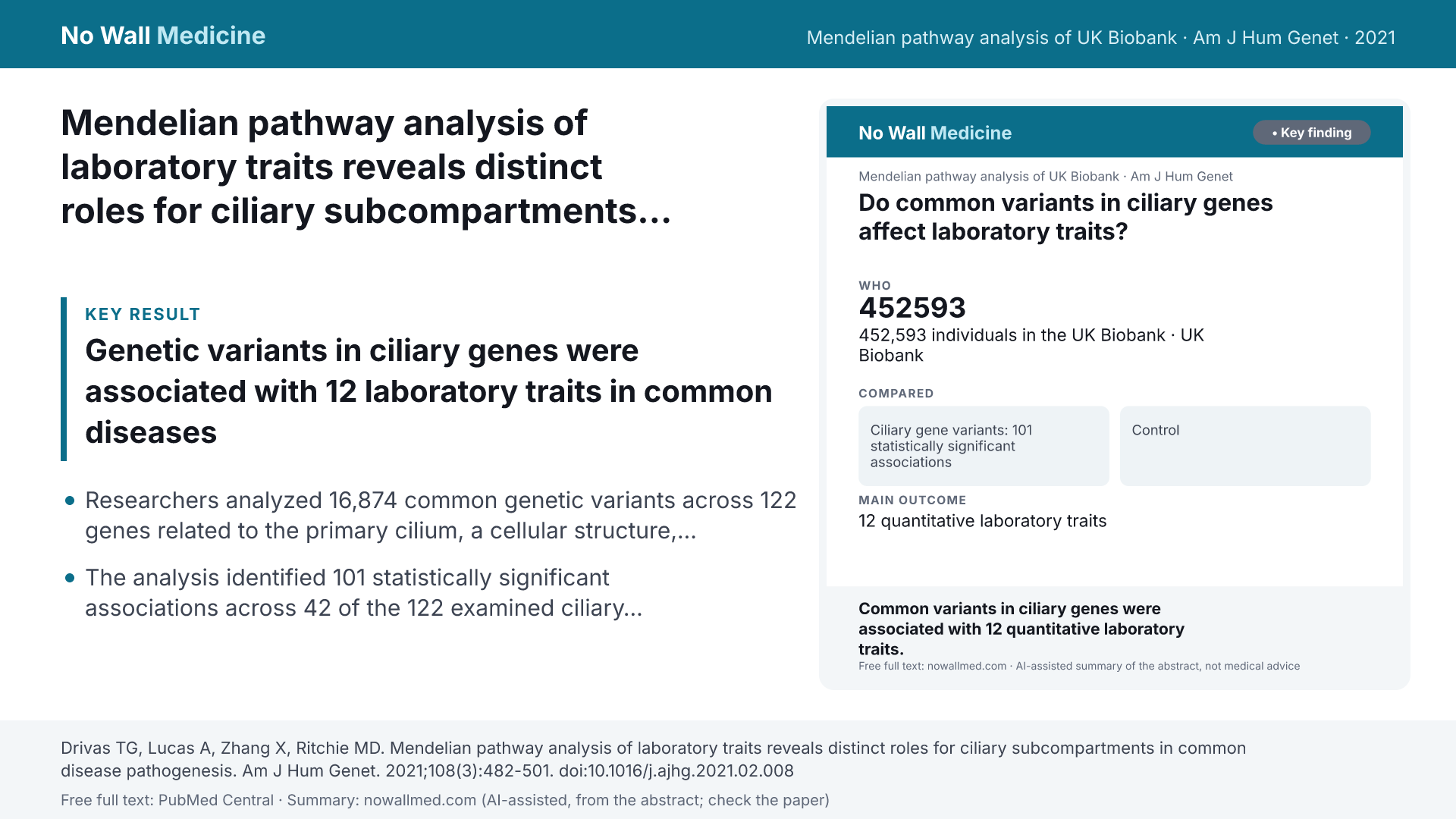
Mendelian pathway analysis of laboratory traits reveals distinct roles for ciliary subcompartments in common disease pathogenesis
Key result: Genetic variants in ciliary genes were associated with 12 laboratory traits in common diseases
Key points
- Researchers analyzed 16,874 common genetic variants across 122 genes related to the primary cilium, a cellular structure, in 452,593 individuals from the UK Biobank.
- The analysis identified 101 statistically significant associations across 42 of the 122 examined ciliary genes, including eight novel associations that were replicated.
- Different parts of the cilium, known as subcompartments, were associated with distinct sets of laboratory phenotypes.
Why it matters: The contribution of the primary cilium to the development of common complex diseases remains largely unknown despite its known role in rare ciliopathy syndromes.
Discussion prompts
- Would these patients look like yours? Who was left out?
- Is the main outcome one that matters to patients?
- Is the difference large enough to change what you do?
Cite: Drivas TG, Lucas A, Zhang X, Ritchie MD. Mendelian pathway analysis of laboratory traits reveals distinct roles for ciliary subcompartments in common disease pathogenesis. Am J Hum Genet. 2021;108(3):482-501. doi:10.1016/j.ajhg.2021.02.008
Free full text: PubMed Central · Summary and visual abstract: nowallmed.com/a/mendelian-pathway-analysis-of-laboratory-traits-reveals-distinct-1hfe71y/ (AI-assisted from the abstract; check the paper before relying on it).