Prevalence of anxiety, depression, and psychological distress estimated during COVID-19 and other epidemics
Mental disorders following COVID-19 and other epidemics: a systematic review and meta-analysis
Systematic review and meta-analysisMixed results
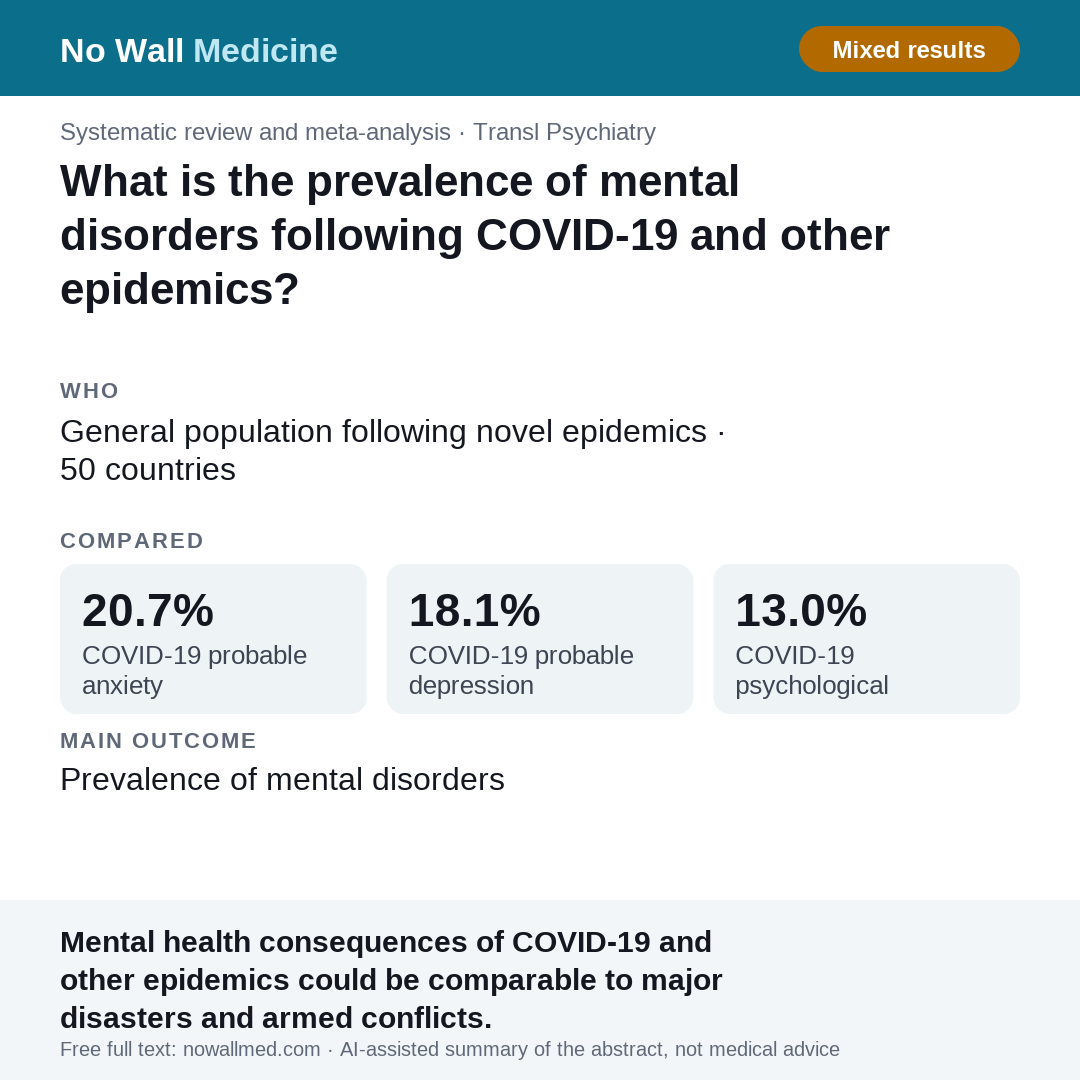
What is the prevalence of mental disorders following COVID-19 and other epidemics?
Who
General population following novel epidemics · 50 countries
Compared
20.7%COVID-19 probable anxiety (95% CI 12.9-29.7)
18.1%COVID-19 probable depression (13.0-23.9)
13.0%COVID-19 psychological distress (0-34.1)
Main outcome
Prevalence of mental disorders
Bottom line: Mental health consequences of COVID-19 and other epidemics could be comparable to major disasters and armed conflicts.
Limitation: The considerable heterogeneity in our analysis indicates that more random samples are needed.
Transl Psychiatry · 2022-05-17Download image
Clinical question: What is the prevalence of mental disorders following COVID-19 and other epidemics?
Key points
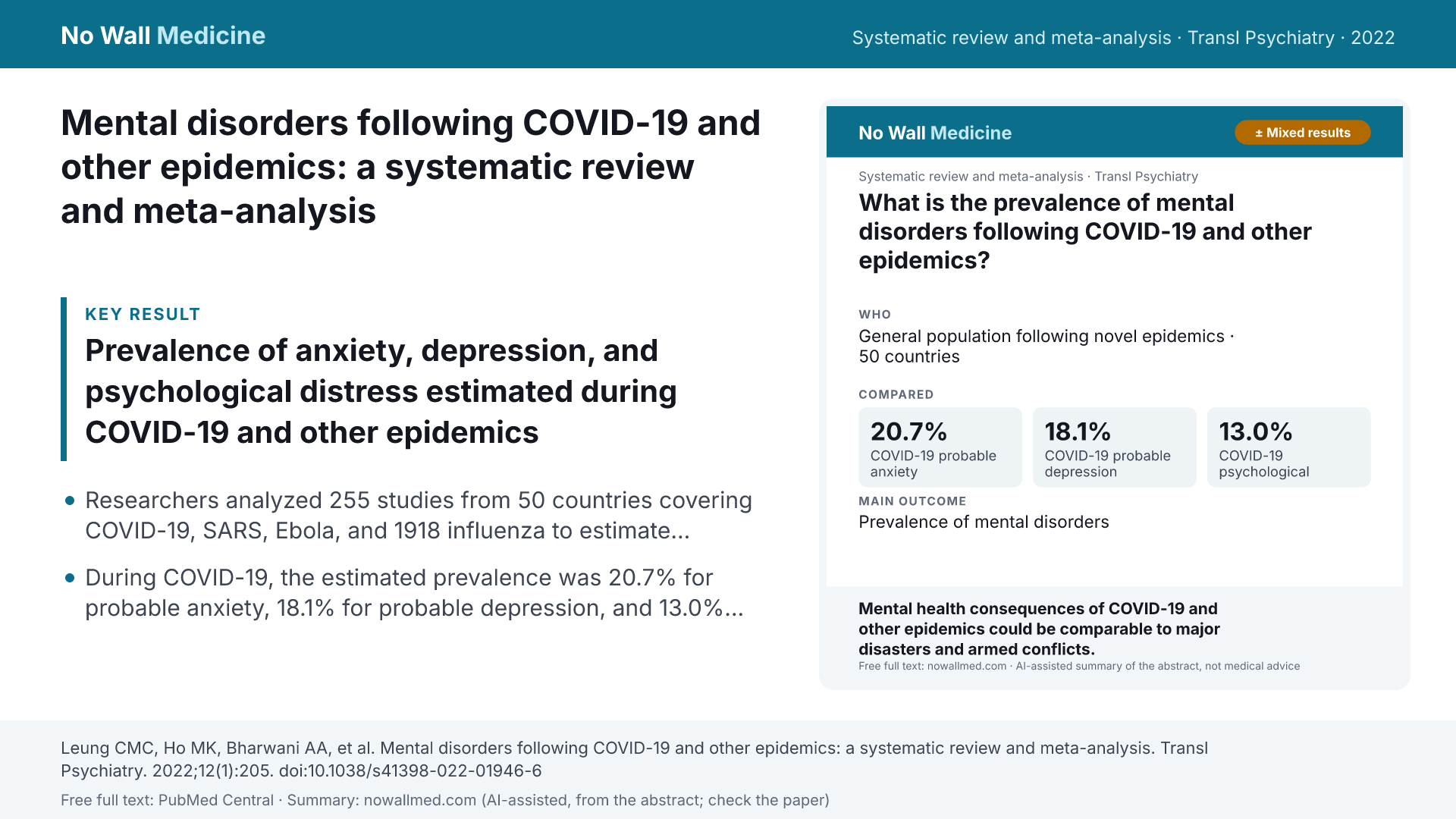
- Researchers analyzed 255 studies from 50 countries covering COVID-19, SARS, Ebola, and 1918 influenza to estimate mental health outcomes.
- During COVID-19, the estimated prevalence was 20.7% for probable anxiety, 18.1% for probable depression, and 13.0% for psychological distress.
- Poorer mental health was associated with female sex, lower income, pre-existing medical conditions, social media use, and loneliness.
Limitation the authors note: The considerable heterogeneity in the analysis indicates that more random samples are needed.
Headline and key points written with AI from the paper’s abstract, with every number checked against it. Read the paper before relying on them.
Was this summary helpful?
Subject terms
Cite this article
Leung CMC, Ho MK, Bharwani AA, et al. Mental disorders following COVID-19 and other epidemics: a systematic review and meta-analysis. Transl Psychiatry. 2022. doi:10.1038/s41398-022-01946-6
Spotted a mistake? Suggest a correction