Mepolizumab was associated with lower histologic severity scores in adults and adolescents with eosinophilic oesophagitis
Mepolizumab Improves Histologic Severity as Measured by the EoEHSS in Adolescents and Adults With Eosinophilic Oesophagitis in a Multicenter, Randomised, Double-Blind, Placebo-Controlled Clinical Trial
Randomized, double-blind, placebo-controlled clinical trialBenefit found
Does mepolizumab improve histologic severity in adolescents and adults with eosinophilic oesophagitis?
Who
Adolescents and adults with eosinophilic oesophagitis · Multicenter
Compared
Mepolizumab 300 mg: grade 0.39 ± 0.14
Placebo: grade 0.56 ± 0.21
Main outcome
Eosinophilic oesophagitis Histologic Scoring System grade and stage
Bottom line: Mepolizumab significantly lowered eosinophilic oesophagitis histologic scoring system grade and stage compared to placebo.
Limitation: Improvement was primarily limited to the eosinophil-dependent histologic scoring system features.
Aliment Pharmacol Ther · 2025-05-29Download image
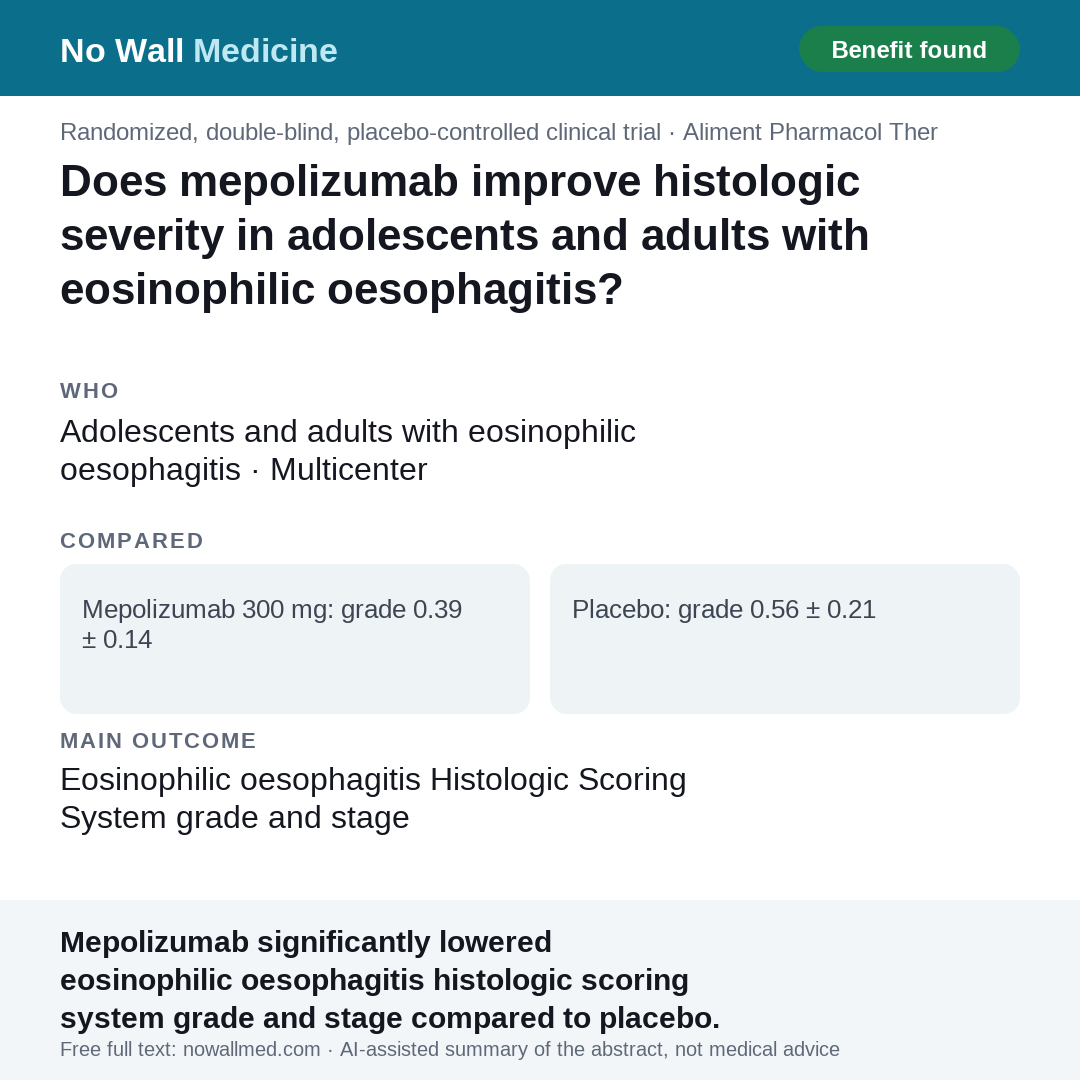
Clinical question: Does mepolizumab improve histologic severity in adolescents and adults with eosinophilic oesophagitis?
Why it matters: The effect of mepolizumab on the eosinophilic oesophagitis histologic scoring system, which measures tissue damage, was previously unknown.
Key points
- Researchers performed a secondary analysis of a randomized trial comparing monthly 300 mg subcutaneous mepolizumab to a placebo in adolescents and adults with eosinophilic oesophagitis.
- Mepolizumab was associated with significantly lower histologic scoring system grade (0.39 ± 0.14 vs. 0.56 ± 0.21; p < 0.001) and stage (0.37 ± 0.14 vs. 0.53 ± 0.20; p < 0.001).
- The histologic scoring system scores correlated with endoscopic severity, but improvements were primarily limited to features dependent on eosinophils, which are a type of white blood cell.
Headline and key points written with AI from the paper’s abstract, with every number checked against it. Read the paper before relying on them.
Was this summary helpful?
Cite this article
Maniaci JL, Iuga A, Bookhout CE, Cortright LM, Walker KB, Moist SE. Mepolizumab Improves Histologic Severity as Measured by the EoEHSS in Adolescents and Adults With Eosinophilic Oesophagitis in a Multicenter, Randomised, Double-Blind, Placebo-Controlled Clinical Trial. Aliment Pharmacol Ther. 2025. doi:10.1111/apt.70216
Spotted a mistake? Suggest a correction
Top studies every Monday
The week’s key trials and guidelines in your specialties, plus any topics you follow. By email, free.
Get the weekly digest