Mepolizumab was associated with lower steroid use in patients with chronic rhinosinusitis with nasal polyps
Mepolizumab Reduces Systemic Corticosteroid Use in Chronic Rhinosinusitis With Nasal Polyps
Randomized, double-blind, phase III trialBenefit found
Does mepolizumab reduce systemic corticosteroid use in severe chronic rhinosinusitis with nasal polyps?
Who
Adults with severe chronic rhinosinusitis with nasal polyps
Compared
mepolizumab: 25.4% [20.0-32.1]
placebo: 37.5% [31.1-44.6]
Main outcome
probability of requiring systemic corticosteroids for nasal polyps
Bottom line: Mepolizumab reduces the probability of requiring systemic corticosteroids and lowers total prednisolone-equivalent oral corticosteroid dose.
J Allergy Clin Immunol Pract · 2023-08-14Download image
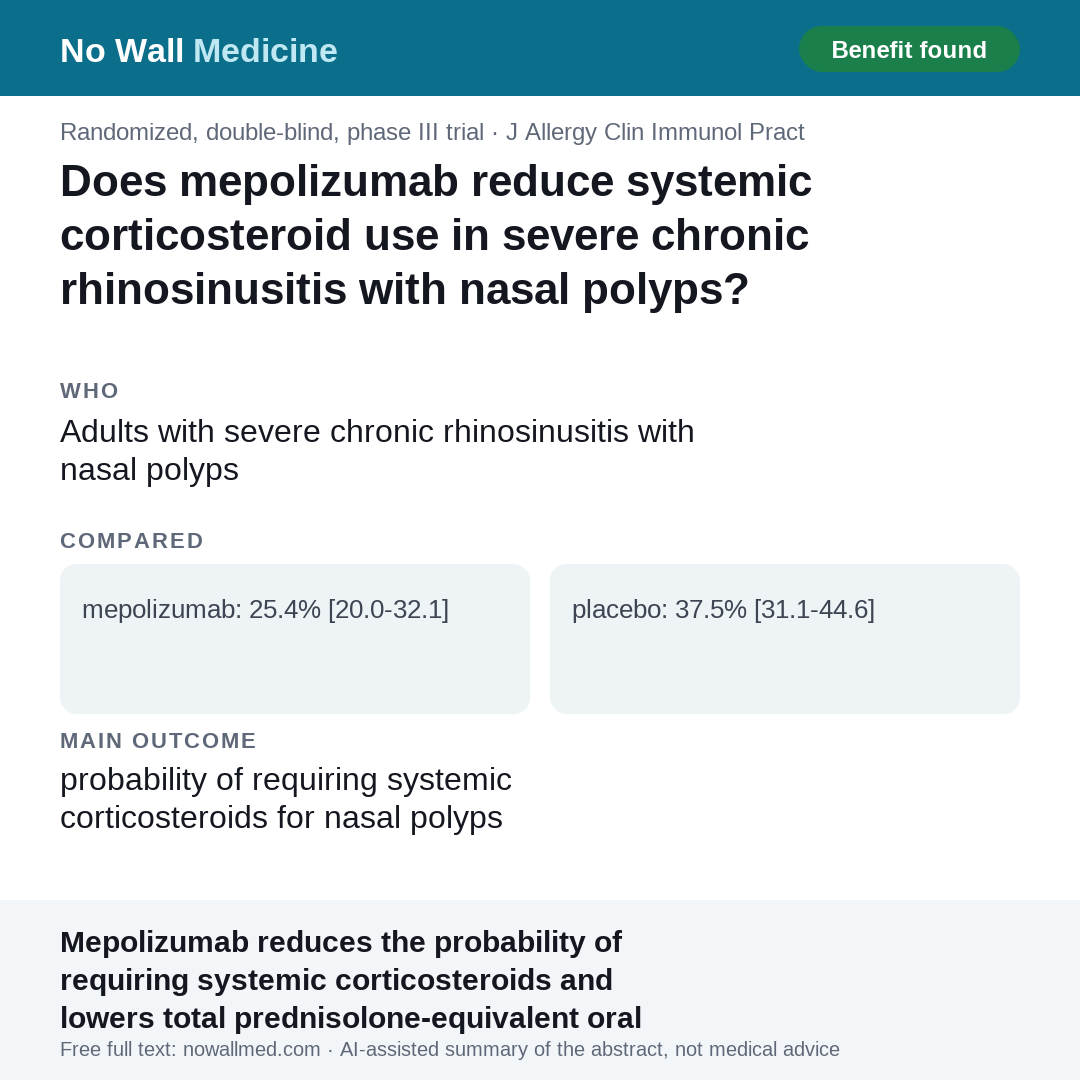
Clinical question: Does mepolizumab reduce systemic corticosteroid use in severe chronic rhinosinusitis with nasal polyps?
Why it matters: Systemic corticosteroids are associated with short- and long-term adverse effects, and it is unclear how mepolizumab affects steroid use based on a patient's prior steroid history.
Key points
- The phase III SYNAPSE randomized trial studied adults with severe chronic rhinosinusitis with nasal polyps receiving either mepolizumab or a placebo for 52 weeks.
- The probability of needing systemic corticosteroids for nasal polyps by week 52 was 25.4% for mepolizumab compared to 37.5% for placebo.
- In patients requiring at least one dose of systemic corticosteroids, the mean annual prednisolone-equivalent oral corticosteroid dose was 438.9 ± 350.40 mg with mepolizumab versus 505.2 ± 455.091 mg with placebo.
Headline and key points written with AI from the paper’s abstract, with every number checked against it. Read the paper before relying on them.
Was this summary helpful?
Subject terms
Cite this article
Chupp G, Alobid I, Lugogo NL, Kariyawasam HH, Bourdin A, Chaker AM. Mepolizumab Reduces Systemic Corticosteroid Use in Chronic Rhinosinusitis With Nasal Polyps. J Allergy Clin Immunol Pract. 2023. doi:10.1016/j.jaip.2023.08.015
Spotted a mistake? Suggest a correction
Top studies every Monday
The week’s key trials and guidelines in your specialties, plus any topics you follow. By email, free.
Get the weekly digest